2025 ASA President
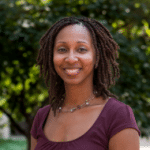
Adia Harvey Wingfield
Presidential Address – Video
Adia Harvey Wingfield is the Mary Tileston Hemenway Professor of Arts and Sciences in the Department of Sociology and the co-director of the Program of Public Scholarship at Washington University in St. Louis. She is a remarkable individual and scholar who knows how to make the most of every moment. Since she began her career as an assistant professor, she has written seven books, served as president of both the Southern Sociological Association and Sociologists for Women in Society, written a plethora of op-eds and articles for popular media outlets, received numerous awards for her scholarship, and has helped reestablish a sociology program. Remarking on Wingfield’s research contributions, University of Texas sociologist Christine Williams shares, “No other sociologist has done more to bring an intersectional perspective to the study of work.”
Establishing the Agenda
Wingfield, whose research focuses on intersectional racial and gender inequalities in professional occupations, completed her undergraduate studies at the prestigious HBCU (historically Black college and university) Spelman College in Atlanta, GA. After graduating, she attended Johns Hopkins University and received her PhD in sociology. Her work at Johns Hopkins led to the publication of her first book, Doing Business with Beauty: Black Women, Hair Salons, and the Racial Enclave Economy (Rowman & Littlefield 2008). In the book, she relies on interviews and ethnographic data to examine one of the fastest-growing groups of entrepreneurs—Black women. In talking to us about the importance of the book, her friend and colleague, Rutgers University sociologist Enobong (Anna ) Branch, shares, “Wingfield demonstrated how Black women utilized the lucrative racial enclave economy to gain autonomy and financial security, contested traditional models of entrepreneurship through alternative sources of financing, and created a counter-frame to Eurocentric norms that uphold the beauty of Black women.”
After obtaining her PhD, Wingfield worked as an assistant professor of sociology at Hollins University from 2004 to 2006. In 2006, she joined the sociology department at Georgia State University (GSU), where she served as an assistant professor until 2012. Reflecting on their shared time at GSU, her former colleague, sociologist Donald Reitzes, recounts, “During the next nine years, she did it all, and it is fair to say grew and prospered professionally…It was a joy to witness the ease and grace that accompanied her success.”
It was during her time at GSU Wingfield wrote some of her most popular articles: “The Modern Mammy and the Angry Black Man: African American Professionals’ Experiences with Gendered Racism in the Workplace” (2007); “Racializing the Glass Escalator: Reconsidering Men’s Experiences with Women’s Work” (2010) (which won the Distinguished Article Award from ASA’s Race, Gender, and Class Section); and “Are Some Emotions Marked ‘Whites Only’? Racialized Feeling Rules in Professional Workplaces” (2010). “Adia’s most significant articles reveal how the cultural norms embedded in organizations perpetuate inequality,” says University of Michigan sociologist Karyn Lacy, a friend and colleague of Wingfield’s. “By drawing on populations largely overlooked by most researchers, Adia’s body of work highlights the importance of studying social phenomena through an intersectional lens, one that is attentive to race, class, and gender dynamics. Indeed, her scholarship is itself an indication of how much more we could learn about the world if we commit to diversifying educational institutions and workplaces to include scholars of color.”
In 2012, Wingfield received the Distinguished Early Career Award from the American Sociological Association’s (ASA) Section on Racial and Ethnic Minorities. That same year, she published her book, No More Invisible Man: Race and Gender in Men’s Work (Temple University Press 2012). A spiritual successor to Doing Business with Beauty, No More Invisible Man received the 2014 Distinguished Book Award from the ASA’s Race, Gender, and Class Section.
Career Transitions and Gaining Recognition
In 2014, Wingfield helped reestablish the sociology program at Washington University in St. Louis. Her colleague, sociologist Jake Rosenfeld says, “Put simply, without Adia’s leadership, the Department of Sociology at Washington University would not look anything like its present state. She was recruited for her brilliant scholarship, of course, but also for her vision of what comprises a cutting-edge, twenty-first-century sociology department.” Though the department started with four faculty members, today, the department is home to 15 full-time faculty members and 20 graduate students.
Adia Harvey Wingfield knows how to make the most of every moment; we mean it. For example, while serving as president of two major sociological associations and rebuilding an academic department, she published Flatlining: Race, Work, and Health Care in the New Economy (University of California Press 2019). Harvard University sociologist Frank Dobbin points out that Flatlining asks, “What does it mean…to be expected to solve problems of systemic bias against your own group that you had no part in creating?” This book, which received the 2019 C. Wright Mills Award from the Society for the Study of Social Problems (SSSP) and the 2021 Distinguished Contribution to Scholarship Book Award from the American Sociological Association’s Race, Gender, and Class Section, introduces readers to two innovative concepts: “racial outsourcing” and “equity work.” In discussing the book, Christine Williams notes that hospitals are not the only sites where Black employees are expected to do most of the work associated with promoting equity and diversity. She shares, “The argument applies to virtually all large bureaucratic work organizations…When a mostly white department at a university hires a few Black professors, for example, they often end up advising all the students of color. Thanks to this book, we now have a name and a theory for this widespread institutionalized practice.”
Recognizing her substantial contributions to the field, she was awarded the Distinguished Career Award by the ASA’s Race, Gender, and Class Section in 2021. Reflecting on Wingfield’s academic career, Frank Dobbin shares, “[She] has pioneered an important new field in sociology, investigating the experiences of Black Americans at work, from hairdressers in Doing Business with Beauty to doctors, nurses, and health-care technicians in Flatlining…She has produced a brilliant, and fundamentally original, body of work.” In 2022, she was honored with the Cox-Johnson-Frazier Award from the American Sociological Association. This prestigious award is designated for individuals whose work reflects the intellectual traditions of notable African American scholars Oliver Cox, Charles S. Johnson, and E. Franklin Frazier. It is given to scholars and institutions whose research focuses on social justice issues, including work addressing the experiences of African Americans and other populations affected by racial discrimination.
Despite these magnificent achievements and accolades, Wingfield is not one to rest on her laurels. In 2023, she published Gray Areas: How the Way We Work Perpetuates Racism and What We Can Do to Fix It (Amistad 2023). Frank Dobbin sums up Gray Areas by writing, “Wingfield argues that it isn’t simply the formal organization of work and careers that sustain racial inequality at work. Just as important are the ‘gray areas’ in the workplace—informal relationships, unspoken expectations, and social networks.”
A Deep Commitment to Mentorship
Wingfield couples her successful scholarship with a deep commitment to mentorship and teaching. Melinda Mills, who worked with Wingfield as a graduate student at Georgia State University, recalls her admiration for Wingfield’s insistence on treating graduate students as full partners in the research process. Mills recalls how Wingfield treated her ideas with respect and recognition, and how she was able to “synthesize [their] voices in a way that felt authentic and accurate to both of our perspectives.” Mills is not alone in her fond memories of working with Wingfield—many former students, who have gone on to successful careers tell us how Wingfield consistently exceeded the expectations of her mentorship role.
A recurring theme among Wingfield’s mentees is how she was instrumental in key moments in their academic careers, and several tell us they would not be where they are today without Wingfield’s support. One of the authors of this biography, Koji Chavez, says “Adia believed in me when I did not—without her encouragement I would not have become a professor.” Taura Taylor, who was once a graduate student under Wingfield and is now an assistant professor at Morehouse College, tells us that “Adia, to this day, will answer any questions I may have about my career path or how to advise my students.” Brandon Jackson, another author of this biography, states, “I have known Adia since 2010. I can’t count how many letters of recommendation she has written for me or how many versions of my writing she has provided feedback on!”
A key aspect of Wingfield’s mentorship is demonstrating to her students that they can produce excellent research, teaching, and public sociology while being a compassionate and caring person with a full life outside of work. Multiple mentees reiterated this point, but perhaps Taura Taylor said it best: “Adia is a doer, and her actions are the most impressionable instruction of all. She never boasts, she never makes others feel less than her, and she displays no traces of imposter syndrome. She is a phenom, one whose academic and professional ascent is admirable…and Adia is a whole person. She loves hip-hop, The Wire, SpelHouse Homecoming, and most of all, her family and friends. To admire Adia Harvey Wingfield is to admire an embodiment of acumen, self-assuredness, and authenticity.” Wingfield is truly an inspiration to the next generation of scholars.
Wingfield’s mentorship continues today as Washington University in St. Louis builds its graduate program. Current graduate student Antonia Roach tells us that Wingfield “even with managing so much, still makes time for her students. She’s always responsive and open to jumping on a quick Zoom meeting to discuss any questions I might have… She holds space for me, and the circumstances life brings.” Wingfield’s influence is still felt among her mentees who now thrive outside of academia. “The theory of racial tasks work that Adia developed and allowed me to contribute to, remains among my favorite projects,” Renée Skeete tells us. “I routinely share it with colleagues in my workplace because it remains deeply relevant. Nearly two decades after I began my graduate career, Adia remains one of my most important professional influences.”
Bringing Sociology to the Public
A core aspect of Wingfield’s professional career is a dedication to communicating sociology to a wider audience—what is the point of sociology if no one outside of academia reads it? Wingfield has made significant contributions to the public discourse as a Contributing Writer for the Atlantic. She has also published articles in notable outlets such as the Harvard Business Review, Vox, National Public Radio, Slate, Inside Higher Ed, and Fortune Magazine. Additionally, she has appeared on various podcasts, blogs, and TEDx presentations. One component of Wingfield’s public sociology seeks to make her work accessible to a public audience. Wingfield has written several opinion pieces regarding racial inequality in the workplace and its reasons, drawing from her research on workplace inequality.
Wingfield also draws on her sociological expertise to bring a sociological perspective to key issues of public debate. Wingfield has written several opinion pieces to describe the racial implications of the overturning of Roe v. Wade, including the heightened risks for Black physicians and how companies may inadvertently contribute to racial inequality as white women tend to have abortion benefits while women of color do not.
Wingfield’s talent is not only in applying a sociological eye to social problems; she also proposes sociologically driven solutions. She has contributed to public discourse regarding the short-term strategies companies can use to address the impacts of the COVID-19 pandemic on women’s workforce participation, as well as how academic departments can cultivate a racially diverse faculty, drawing from her experience at Washington University in St. Louis. It is no surprise then, that in 2018, Dr. Wingfield received the Public Understanding of Sociology Award from the American Sociological Association.
In short, Wingfield is an emissary of sociology who clearly and effectively communicates sociological thought for public consumption and contributes thoughtfully to public discourse. As Frank Dobbin praises, “Wingfield documents her argument, based on years of research, using in-depth interviews to build a strong narrative arc that has drawn in workers and CEOs alike. Thus, she is not only the new ASA president, but also the new face of public sociology.” In a time when sociology as a discipline is under attack, Wingfield demonstrates the relevance and importance of sociology for our world today.
2025 Meeting Theme: Reimagining the Future of Work
Taura Taylor best sums up how exciting this year’s ASA conference will be: “Fellow classmates were just as amazed and dazzled by Wingfield as I was, so much so that her name became a verb used among us to exemplify exceptional performance: ‘I Adiaed that paper! I’m going to Adia my presentation today. You Adiaed that!’ I am sure anyone who has had the pleasure of meeting her is not too shocked by her newest role as president of the American Sociological Association. Adia is about to Adia ASA!”
The 120th ASA Annual Meeting will be held August 8-12, 2025, in Chicago, and Wingfield has chosen the theme “Reimagining the Future of Work.” Wingfield challenges sociologists to envision what the future of work will be: Is it a dystopian future of exploitation and entrenched economic inequality? A more optimistic model where affirming, decent, rewarding work is available to all who want it? Something in between? Or something completely new and different? Wingfield pushes sociology to tackle big societal questions and, more importantly, pushes sociologists to make their work relevant and exciting.
The above profile was written by Koji Chavez, Indiana University- Bloomington, and Brandon A. Jackson, John Jay College, City University of New York.