
Teresa Irene Gonzales, Loyola University Chicago (CHAIR)
 A native of Mexican Chicago, Teresa Irene Gonzales is an Assistant Professor of Sociology at Loyola University Chicago. She received her doctorate and master’s degrees from the University of California Berkeley in Sociology, and her bachelor’s degree from Smith College in Latin American & Latina/o Studies with a concentration on literature and history. Her work is situated at the intersections of feminist, urban, and organizational theories with a focus on race and structural racism. Given her interests, she focuses on three major areas: a) marginalized communities’ access to public goods through an interrogation of trust relationships, social cohesion, and civic engagement, b) the use of race and class-based narratives to inform local public decisions, and c) the playful reimagination of public place that centers Black and Brown individuals in the public sphere. Gonzales has over ten years of experience analyzing community responses to racial and income marginalization in the United States, with several publications, including her book Building a Better Chicago: Race and Community Resistance to Urban Redevelopment (NYU Press 2021). She has received many prestigious awards, grants, and fellowships for her scholarship, including from the National Science Foundation, the Institute for Citizens & Scholars, and the Ford Foundation. Gonzales firmly believes in the capacity of sociology to redress social injustices and inequalities.
Hua-Yu Sebastian Cherng, New York University
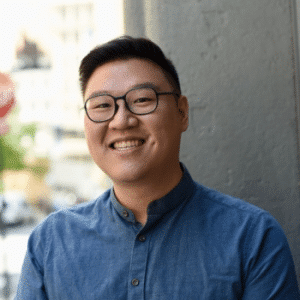 Hua-Yu Sebastian Cherng (程华宇) serves as the Vice Dean of Research and Equity, responsible for both NYU Steinhardt’s Office of Research and Office of Diversity, Equity, and Belonging, and is Professor of International Education at New York University‘s Steinhardt School of Culture, Education, and Human Development. Cherng’s interests include comparative perspectives on race, ethnicity, and (im)migration, focusing on the US and China. His earlier work examined the social support in the lives of marginalized youth, and revealed how resources such as teacher support can be more critical to non-dominant youth but are often less readily available. His current work unpacks educational “truths,” such as the notion that high test scores early on predict later STEM outcomes or college advising as an equalizing force for students of color. His research has garnered over $11 million in grants from funders such as the National Science Foundation, the National Institutes of Health, the William T. Grant Foundation, and the Spencer Foundation, and has been featured in popular presses such as CNN, NPR, TIME, Business Insider, Huffington Post, Metro, and Essence. Before his return to higher education, he taught algebra and geometry at a public charter school and Upward Bound in San Francisco.
Maria Krysan, University of Illinois Chicago
 Maria Krysan is an LAS Distinguished Professor in the Department of Sociology at the University of Illinois Chicago. Professor Krysan has spent decades teaching, researching, and writing about residential segregation and racial attitudes. Her 2017 award-winning book with Kyle Crowder, Cycle of Segregation: Social Processes and Residential Stratification draws on in-depth interviews, large-scale survey data, and previously published research to propose an innovative framework for understanding the causes of racial residential segregation. This book served as a springboard for Krysan’s growing engaged work. For this, she has been inspired by, and fortunate to partner with, Tonika Lewis Johnson, a Chicago social justice artist and creator of the Folded Map Project.
Krysan’s writing has been published in conventional academic outlets as well as nonacademic publications such as The Hill Reporter, Crain’s Chicago Business, Visible Magazine, and Block Club Chicago. She has been interviewed by and/or cited in such media as WBEZ (Chicago’s NPR station), Chicago Tribune, Chicago Sun Times, Newsweek, CityLab, Houston Chronicle, CNN, WGN, TeenVogue, Vox.Com, Washington Post, New York Times, and the L.A. Times. She also frequently presents her work outside of academia, both sharing her expertise with, and learning from, conversations with and presentations to advocates, mayors, legislators, housing agencies, real estate agents, researchers, K-12/college students, foundation staff, lawyers, library patrons, and so on.
Steve McKay, University of California, Santa Cruz
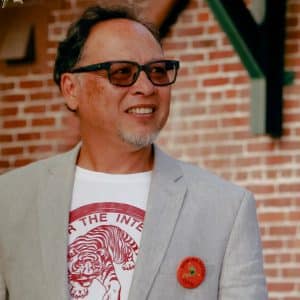 Steve McKay is Professor of Sociology and Faculty Director of the Center for Labor and Community at the University of California, Santa Cruz. His research interests include labor and labor movements, migration, race, masculinity, and community-engaged research. He is the author of Satanic Mills or Silicon Islands? The Politics of High-Tech Production in the Philippines (2006), and co-editor of Precarity and Belonging: Labor, Migration, and Noncitizenship (2021) and New Routes for Diaspora Studies (2012). Since 2014, he has co-led an array of community-initiated student-engaged research (CISER) projects, including: a transnational digital community archive of Filipino farmworker history (Watsonville is in the Heart/Saritaan); a mixed-method study of the affordable housing crisis (No Place Like Home); a multi-media project of low-wage labor (Working for Dignity), and an large-scale ethnography of immigrant and mixed-status families (We Belong/Pertenecemos). His research has been supported by the Ford Foundation, the National Endowment for the Humanities, the Andrew Mellon Foundation, the William T. Grant Foundation, and the Henry Luce Foundation.
Carrie L. Smith, Millersville University

Carrie Lee Smith is an Associate Professor in the Department of Criminology, Sociology, & Anthropology at Millersville University (PA), and served as the coordinator of the university’s Center for Public Scholarship & Social Change from 2020-2025. She has partnered extensively with community partners on program evaluation in various areas, including affordable housing, neighborhood quality of life, prison needs assessment, and law enforcement citizen academies. Over the past decade, she has collaborated with Lancaster County’s Family Services Advocate (a program focused on supporting and advocating for children affected by parental incarceration), assessing familial needs and service delivery effectiveness. She has also served on the county’s Reentry Coalition, co-facilitating the Family Services & Reunification impact group. In 2019, Carrie ran for and won election to municipal office, serving as Millersville Borough president from 2020-2022.
In addition to community-engaged sociology, her research and teaching focus on the sociology of reproduction and birth, medical sociology, and sociology of the family. She is co-editor (with Donna King) of Men Who Hate Women and Women Who Kick Their Asses: Stieg Larsson’s Millennium Trilogy in Feminist Perspective (2012) and is a recipient of the Eastern Sociological Society’s 2022 Public Sociology Award.
Mark R. Warren, University of Massachusetts Boston
 Mark R. Warren is professor of public policy and public affairs at the University of Massachusetts Boston. He is a sociologist and community engaged scholar who studies and works with community, parent and youth organizing groups seeking to promote racial equity, educational justice, and community liberation. Mark is the author of six books, most recently Willful Defiance: The Movement to Dismantle the School-to-Prison Pipeline. Mark has co-founded several networks promoting activist scholarship, community organizing, and education justice, including the People’s Think Tank on Educational Justice, the Urban Research Based Action Network, and the Special Interest Group on Community and Youth Organizing in the American Educational Research Association. He has won a number of awards, including a Guggenheim Fellowship, and is a Fellow of the American Educational Research Association. He is married to Roberta Udoh, a pre-K teacher in Boston Public Schools, and together they have raised two beautiful daughters. You can learn more about Mark at www.Mark-Warren.org.