Details about the 2026 ASA Annual Meeting Plenary Sessions are available below. All plenary events will be streamed live. Recordings will be posted to the Annual Meeting Video Archive following the conference.
America the Beautiful? The Serious Role of Humor in Social Justice
Blythe Roberson
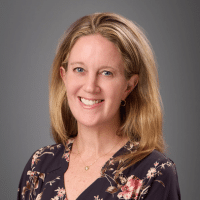
Lauren Feldman
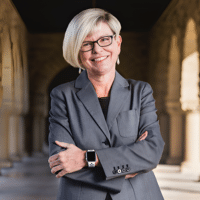
Shelley J. Correll
Friday, August 7 | 5:00–6:30 p.m.
ASA President Shelley Correll will be in conversation with comedian, humor writer, and author, Blythe Roberson, about her recent book “America the Beautiful? One Woman in a Borrowed Prius on the Road Most Traveled.” Roberson’s book is a sharp, funny, and deeply perceptive travel narrative about visiting America’s national parks—made all the more striking by how rare it still is for women to write in this genre. Her book offers incisive sociological insights into racism, sexism, colonization, and climate change, all while making you laugh (sometimes uncomfortably so). Joining the conversation, Professor Lauren Feldman—co-author (with Caty Borum) of A Comedian and an Activist Walk into a Bar: The Serious Role of Comedy in Social Justice—will reflect on the unique role of humor and comedy in illuminating injustices and offering vehicles for social change. Set in New York City, a legendary home of comedy, this session embraces the idea that humor is not a distraction from serious analysis, but one of its most effective tools.
Free copies of the book, “America the Beautiful?” will be available for the first 80 attendees.
Presider: Shelley Correll, Stanford University
Panelists: Blythe Roberson, comedian, humor writer, author; and Lauren Feldman, Professor and Chair of Journalism & Media Studies in the School of Communication & Information at Rutgers University
Better Together: Research Partnerships for Real World Impact
Erin Kelly
Andria Lazaga
Stefanie DeLuca
Perri Johnson
Rashawn Ray
Shelley J. Correll
Saturday, August 8 | 12:00–1:30 p.m.
This plenary session highlights the power—and necessity—of collaboration between academics and practitioners in addressing complex social problems. Featuring three academic–practitioner partnerships focused on housing, policing, and organizational change, the panelists will explore what academics and non-academics can learn from one another: how practitioners’ experiential knowledge can sharpen research relevance, how academic tools can deepen understanding and evaluation, and how collaboration can lead to positive social change and reveal new scientific insights.
Presider: Shelley Correll, Stanford University
Panelists: Erin Kelly, Massachusetts Institute of Technology; Andria Lazaga, King County Housing Authority; Stefanie DeLuca, Johns Hopkins University; Perri Johnson, St. Louis Metropolitan Police Department, retired; and Rashawn Ray, University of Maryland.
ASA Awards Presentation and Presidential Address: “Theories of Change: Charting Pathways from Research to Impact”
Sunday, August 9 | 4:00–6:00 p.m.
Join us as we recognize the 2025 ASA Award recipients. Following the ceremony, ASA President Shelley Correll will deliver the Presidential Address: “Theories of Change: Charting Pathways from Research to Impact.”
About the Presidential Address:
In our discipline’s long history, sociologists have produced an impressive body of empirically validated theories that explain how the status quo is reproduced. For example, from gender bias to overwork, past research offers theories that explain why women remain underrepresented in leadership positions. Yet, by comparison, we have developed far fewer theories that explain how disrupt the status quo, theories that explain how to get beyond these barriers.
In this address, Correll argues that we need more research that is solutions-focused —research that develops and evaluates theories of change, not just theories of the status quo. While there are many approaches to such work, she highlights the strengths and benefits of building research partnerships with stakeholders outside the academy.
Drawing on research Correll has conducted in the tech industry over the past decade, she demonstrates how these collaborations can generate new insights into entrenched social problems while also identifying concrete, theoretically grounded pathways to change.
The address concludes by urging sociologists to match the theoretical rigor we bring to understanding social problems with an equally rigorous commitment to discovering how to solve them. At a time when universities face growing scrutiny, solutions-focused research has the potential to demonstrate the capacity of universities to fulfill their core mission of producing knowledge that contributes meaningfully to society.
How Can Sociology Build a Better World?
Rosabeth Moss Kanter
Monica Prasad
Michelle Jackson
Adina Sterling
Shelley J. Correll
Monday, August 10 | 12:00–1:30 p.m.
Sociology excels at diagnosing social problems—but what would it mean to focus on solving them? This plenary session brings together scholars who teach and write about how to advance social change. What is the value of interventions and nudges relative to larger scale change? Can we effectively tackle a castle head on? What approaches are most effective? Can teaching sociology inspire learners to strengthen communities and create more equitable organizations? Panelists will explore how social scientists can mobilize theory, research, strategy and pedagogy to move beyond diagnosing problems to create lasting social change. This session encourages sociologists to envision a better world and reflect on what it would take to make that vision a reality.
Presider: Shelley Correll, Stanford University
Panelists: Rosabeth Moss Kanter, Harvard University; Monica Prasad, Johns Hopkins University; Michelle Jackson, Stanford University; and Adina Sterling, Columbia University
Our website uses cookies to improve your browsing experience, to increase the speed and security for the site, to provide analytics about our site and visitors, and for marketing. By proceeding to the site, you are expressing your consent to the use of cookies. To find out more about how we use cookies, see our Privacy Policy