
Meet the 2025-2026 Minority Fellowship Program Fellows. Click here to view previous cohorts.
 Humberto Flores
Graduate Institution: University of California, Santa Barbara
Humberto Flores is a PhD candidate in the Department of Sociology at the University of California, Santa Barbara. His research interests broadly focus on urban sociology, policing, race, ethnicity, and gender. Drawing on in-depth interviews and ethnography, his dissertation, titled “Got it Bad Cause I’m Brown:” Hyper-policing Latinx Neighborhoods, Legal Cynicism, and the Shift Towards Alternatives to Law Enforcement, examines police illegitimacy and non-police-based alternative governance within Latino communities. Thus, Flores’ research explores the complexities of the relationship between Latino neighborhoods and law enforcement, focusing on how policing contributes to a broader sense of alienation and distrust, fostering the development of community-based systems of social control and collective accountability. By centering on the unique histories and survival strategies of multiple generations of Latino men and women, this project provides an innovative, multi-layered ethnographic portrait that reflects broader dynamics within Latino communities in California. Flores earned his BA in sociology at the University of California, Los Angeles, and his MA in sociology at the University of California, Riverside. In addition to his research, Flores engages in film photography as a means of documenting the everyday lives and social realities of his community.
 Alexander Holt
Graduate Institution: University of Texas at Austin
Alexander J. Holt is a Doctoral Candidate in Sociology and Doctoral Portfolio Candidate in African and African Diaspora Studies at the University of Texas at Austin. Through individual and collaborative research at the disciplinary and methodological crossroads of Sociology, Black Studies, Critical Pedagogy, and Social Work, he maps the intersectional contours and impacts of Black diasporic vulnerability and agency in the United States. He also examines how Black sociality and cultural creativity is used to challenge conditions of symbolic, political, and social subjugation. Current projects mobilize theoretical, empirical, and embodied understandings of Blackness, trauma, wellbeing, and care, to reconcile and challenge epistemic and ontological oppression across time. Holt’s dissertation, Busing Towards Futurity: Contemporary Youth, Culture, and Wellbeing in Constrained Thirdspace, leverages multiple qualitative methods to examine school buses in the American South as critical psycho-emotional and socio-developmental spaces where the logics that structure youth behavior and sociality may either loosen—enabling unique interactions that foster agency and creativity—or tighten—enforcing social conformity and fermenting vulnerability. He received his BA in Sociology with minors in French and American Ethnic Studies from Wake Forest University in 2020 and his MA in Sociology from UT Austin in 2023.
 Melissa Horner
 Melissa Horner
Graduate Institution: University of Missouri
Melissa is a citizen of the Manitoba Métis Federation and a Turtle Mountain Band of Chippewa descendant. She also has settler lineages including German and English. Melissa grew up in Montana and loves spending time with her family, shooting her bow, traveling, reading, hunting, and hiking with her dog Koy, all of which shape the cultural and relational experiences that inform her research, teaching, and creativity. Melissa is a PhD candidate in Sociology at the University of Missouri and is a former high school English teacher in Montana. She remains an educator and believes in the power of teaching sociology to better understand the current status quo in order to dream about alternative futures. Melissa’s research centers the experiences of Native Senators and Representatives in the Montana Legislature. She examines how ongoing settler colonialism hinders the work these legislators do while also exploring how their Indigenous knowledge and cultures persist in Montana lawmaking. Melissa is an alumna of the Robert Wood Johnson Foundation’s Health Policy Research Scholars. She values collaboration, including bringing together subfields and communities that are often isolated from each other, in part because the project of ongoing settler colonialism never intended them/us to unite.
Angelica Lopez
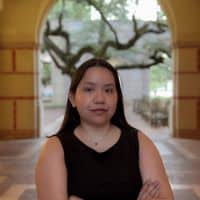
Graduate Institution: Arizona State University
Angelica Lopez is a PhD candidate in sociology at Arizona State University. She holds an M.A. in Sociology and a B.A. in Sociology and Psychology (double major) from the University of Houston. Her research focuses on health disparities among racial and ethnic minorities, with her latest work examining educational returns and cognitive health among Mexico’s Indigenous-speaking populations. Lopez’s dissertation, Structural Racism and Latine Health, includes three articles that explore how different dimensions of structural racism, including health institutions, policy, and residential segregation, shape healthcare access and outcomes for Latine individuals in the United States. Her work has been published in Sociological Perspectives, Journal of Latinx Psychology, Sleep Epidemiology, SSM–Population Health, The Journals of Gerontology, and the Journal of School Violence. Beyond academia, Lopez has applied her expertise as a quantitative race and health scholar through collaborations as a data analyst with the Sankofa Research Institute and the Asian American Health Coalition. Outside of her research, she enjoys reading, playing video games, building Lego sets, and spending time with her family.
Kendall Riley
 Kendall Riley
 Graduate Institution: University of Iowa
Kendall Riley is a PhD candidate in sociology at the University of Iowa. Her research investigates how the social environment shapes physical health and perpetuates racial disparities in health. Her dissertation, Women’s Aging in the Shadow of the Carceral State, develops multi-institutional measures of the state-level social environment to capture how states mobilize coercive, surveilling, and punitive control across institutions in the carceral state and the robustness of each state’s social safety net. By combining 12 state-level data sources with biological and self-reported health indicators, Riley explores how laws, policies, and institutions geospatially pattern unhealthy aging among Black and White women across the U.S. Riley’s work has been published in Social Science and Medicine, Journal of Aging and Health, and the Journal of Crime and Justice. Her research has been supported by the American Society of Criminology’s Ruth D. Peterson Fellowship for Racial and Ethnic Diversity. She is also a fellow with the National Science Foundation’s Graduate Research Fellowship Program. Riley received her M.A. in sociology from the University of Iowa and dual B.S. degrees in human biology and psychology from Indiana University Bloomington. In her spare time, Riley enjoys cooking, weightlifting, visiting family and friends, and reading.
Jozef Robles
 Jozef Robles
Graduate Institution: University of California, Irvine
Jozef Callan Robles is a PhD candidate in sociology at the University of California, Irvine. His research draws on ethnographic and in-depth interview methods to examine how racialization and immigrant illegality intersect across life stages—both within the U.S. and transnationally—to produce distinct forms of exclusion for immigrant communities. His dissertation, The Transformative Effects of U.S. Immigration Law Post Legal Status Regularization: A Comparative Analysis, investigates how formerly undocumented Mexican and Korean immigrants in California and Texas make sense of their legal transitions and lives after gaining legal status, and how their distinct social positions—as well as the socio-political context—shape their racialized identities and interactions with immigration enforcement agencies. Robles’ work has been published in the Journal of Ethnic and Migration Studies and Critical Sociology, and has received support from the Russell Sage Foundation, the Institute for Humane Studies, and the UC Berkeley Latinx Research Center. Robles has served as an instructor of record at CSU Fullerton, where he has taught courses such as Race and Ethnic Relations and the Sociology of Emotions. Outside of research and teaching, he enjoys CrossFit, road trips with his husband, and discovering new coffee shops and sights along the way.