
We are pleased to introduce you to the distinguished winners of ASA’s 2026 awards. Every year, awardees are honored during a ceremony at the ASA Annual Meeting. Each of the pieces below was submitted by the relevant award selection committee, and we thank the committees for their good work.
Cox-Johnson-Frazier Award
Prudence L. Carter, Brown University
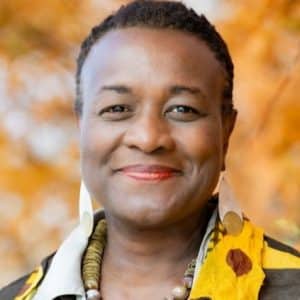 The Cox-Johnson-Frazier Award Committee is pleased to announce that Prudence L. Carter has been selected as the recipient of the 2026 Award. This award honors scholars whose work reflects the intellectual and moral commitments of Oliver Cox, Charles S. Johnson, and E. Franklin Frazier. Their work extended beyond the production of knowledge as an end, aiming instead to transform social conditions and improve the lives of historically disadvantaged populations. In this spirit, the award recognizes a sustained record of contributions to social justice; engagement in institution building and public-facing work; and a consistent focus on populations shaped by histories of racial and ethnic inequality.
Professor Carter’s career exemplifies these principles. A leading sociologist of education, she has produced a body of scholarship that not only advances sociological understanding of inequality but also reshapes how inequality is conceptualized and addressed. Her work consistently centers the experiences of racially minoritized youth while situating them within broader historical and institutional contexts.
Her first book, Keepin’ It Real: School Success Beyond Black and White (2005), marked a significant intervention in the study of race and education. Through a comparative analysis of Black and Latinx youth in New York City, Professor Carter challenged deficit-oriented narratives and unsettled the taken-for-granted use of white students as the normative benchmark. In doing so, she broadened sociological understandings of cultural capital and demonstrated how structural inequalities shape educational experiences.
In Stubborn Roots: Race, Culture, and Inequality in U.S. and South African Schools (2012), she extended this analysis transnationally. Drawing on a multi-year, mixed-methods comparative study, the book examines how schools in two societies marked by enduring racial stratification reproduce inequality despite formal commitments to integration. This work exemplifies the award’s emphasis on scholarship that not only diagnoses inequality but also clarifies the transformations necessary to address it.
Her co-edited volume, Closing the Opportunity Gap (2013), further illustrates her impact on both scholarly and public discourse. By shifting attention from “achievement gaps” to “opportunity gaps,” Professor Carter redirected analysis toward the institutional and policy conditions that shape educational outcomes. This conceptual reframing has had lasting influence, contributing to more precise and justice-oriented approaches to inequality.
Professor Carter’s contributions extend beyond scholarship to sustained institution building and public engagement. When she was Dean of the Graduate School of Education at the University of California, Berkeley, she strengthened the school’s intellectual community through the recruitment of a diverse cohort of emerging scholars. In her current role as Director of the Center for the Study of Race and Ethnicity in America at Brown University, she has led initiatives in partnership with public school systems to support educators in addressing race and racism in schools. These efforts reflect a clear commitment to translating sociological knowledge into institutional practice.
Her broader service record reinforces this alignment with the award’s criteria. A past President of the American Sociological Association, an elected member of the American Academy of Arts and Sciences, the National Academy of Education, and the Sociological Research Association, Professor Carter has helped shape the direction of sociological research and its public relevance. Her work as a trustee of major educational foundations further reflects her commitment to improving opportunities for disadvantaged populations. Finally, Professor Carter’s impact as a mentor extends the reach of her contributions. She has trained and supported generations of scholars, fostering intellectual communities committed to rigorous and socially engaged research.
In her scholarship, leadership, and sustained commitment to advancing the conditions of historically disadvantaged populations, Professor Carter exemplifies the spirit of the Cox-Johnson-Frazier Award. The Committee is proud to recognize her with this honor!
Dissertation Award
Ed Cornelius, University of Minnesota Twin Cities, for the dissertation titled “Car Wash Legacies: Lawyers, Globalization, and the Restructuring of the Brazilian Penal Field,” completed at University of Toronto
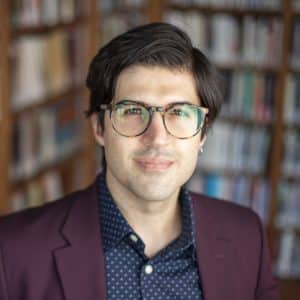 Operation Car Wash, the world’s largest corruption scandal – implicating high-ranking politicians and businesspeople – was a multi-billion-dollar bribery scheme that resulted in prosecutorial and judicial mobilization to change Brazilian criminal law. Initially hailed as a breakthrough against elite crime in the fight for equality, Operation Car Wash paradoxically legitimized neoliberal and imperialist discourses and fostered legal reforms that disproportionately targeted the racialized poor. Dr. Ed Cornelius expertly investigates how this process unfolded in his dissertation. “Car Wash Legacies: Lawyers, Globalization, and the Restructuring of the Brazilian Penal Field.” While scholars have analyzed the political forces shaping Operation Car Wash and its repercussions, this dissertation situates its legacies within historical shifts in criminal law and the globalization of legal ideas. He examines how anti-elite crime actors developed penal ideas throughout their careers and sought to imprint them into Brazilian legislation by spearheading bills influenced by global anticorruption norms and American criminal law. These changes, including plea bargaining, introduced harsher punishments and reduced procedural safeguards for all criminalized Brazilians. At the same time, progressive defense attorneys mobilized European legal doctrine, critical criminology, and the memory of the dictatorship to resist these transformations.
To carry out this project, Dr. Cornelius conducted a discourse-centered field analysis focusing on the role of ideas in field processes and outcomes. As part of over a year of fieldwork in two Brazilian cities, he conducted 116 in-depth interviews, approximately 100 hours of on-site observations, and extensive document analysis to investigate the legal mobilization around two legislative reforms: the 2016 Ten Measures Against Corruption and the 2019 Anti-Crime Package.
Dr. Cornelius shows that legal disputes over these reforms facilitated a “globalization by stealth” of neoliberal and imperialist ideas. Meanwhile, the inertia of the penal field and the discursive elasticity of penal discourse led anticorruption actors’ efforts to “democratize punishment” to recoil against the racialized poor. This inertia also explains elite defense attorneys’ increased prestige and ability to resist American-inspired proposals and collaborate with politicians to “ghostwrite” and “ghost-erase” provisions of the Anti-Crime Package – both protecting elite defendants and mitigating punitive measures against marginalized groups.
This dissertation is methodologically impressive. The data & access to actors are rich; the theoretical innovation and field analyses are notable; and the findings and conclusions are thoughtful and extensive. By bridging the sociology of punishment and law and society scholarship, Cornelius’ work explores how lawyers, legal ideas, and globalization shape the penal state’s material and symbolic construction to highlight the enduring legacies of Operation Car Wash.
Lastly, Dr. Cornelius’ dissertation carries significant political implications. Car Wash Legacies engages with two pressing issues of our time: first, the unprecedented lack of accountability among powerful corporations and states, coupled with a growing public willingness to demand greater oversight; and second, ongoing debates about how to downscale mass incarceration. Eduardo warns that expanding criminal instruments historically used against the powerless to hold elites accountable can easily backfire, reinforcing harm against vulnerable groups. At the same time, his research points to a constructive path forward to societies, such as the United States, which grapple with police violence and seek to curb punitive excess: engaged legal scholarship and advocacy grounded in transnational knowledge-sharing.
Erin Ice, University of Texas at Austin, for the dissertation titled, “My Mother’s Keeper: The Singularity of Caregiving in the U. S.,” completed at University of Michigan
 In the U.S., a consequential debate is currently underway—among policymakers and in the broader public—about who should care for aging and disabled adults, and where this care should take place. This debate is provoked by an emerging care deficit: demographic shifts, as the number of people needing daily assistance has grown, and the shrinking number of available caregivers. Though policymakers and healthcare providers endorse home-based long-term care, there is little public funding for this care and pressure falls on families and friends to keep their loved-ones thriving at home.
Dr. Erin Ice’s dissertation, “My Mother’s Keeper: The Singularity of Caregiving in the U. S.,” asks, “how do friends and family members organize and manage care at home?” Drawing on survey research suggesting that family and friends collaboratively divide caregiving responsibilities, Ice designed an iterative mixed methods study to examine how these caregiving networks operate in practice. To provide population-level patterns in caregiving network organizations, she uses the 2011–2022 National Health and Aging Trends Study surveys. To study networks in depth, she conducted a three-year interview and ethnographic case study of stroke caregiving. Ice also collected vantage points from caregivers, care recipients, and other kin in the same network, and followed networks over time.
Dr. Ice’s sensitivity to social class, gender, racial and other differences in how such caregiving processes function make the qualitative component of her dissertation work a highly novel and valuable contribution to understanding patterns of inequality that she and others have revealed with quantitative data. In particular, given the longstanding and persistent gender gap in responsibility for this form of unpaid, often stressful work, the implications of her project for women in the U.S. and beyond are profound, and are only growing with the rapid aging of the wealthy world.
Through her impressive iterative mixed methods approach, Dr. Ice’s dissertation demonstrates that the singular caregiving form—a single unpaid family member who provides the vast majority of assistance to aging and disabled adults at home—is the foundation of how we care for our elders, not collaborative networks of multiple kin. She traces how this model arises via health care system practices and illuminates the consequences this model has for caregivers and recipients.
Dr. Ice carefully spells out the implications of these findings for policy, demography, the family, and sociological ideas about caregiving, aging, and inequality. Knowing how we are caring for our own in a rapidly aging world has implications at so many levels – at the clinic level, when providing support to those who will be caregiving for the patient when they return home, at the workplace level, when employers are trying to ethically and equitably accommodate caregiving, at the family level, for so many difficult decisions both interpersonal and financial, and at the macroeconomic level, when we account for the true costs of health care and who bears them in the United States. It also has implications for theories of expertise and of interaction between patients, caregivers, and medical care providers that are fundamental to medical sociology. Dr. Ice’s demographic lens and deft use of rich new data bring together audiences who do not always speak directly to one another.
The committee also offers the designation of Honorable Mention to:
Jillian LaBranche, Princeton University, for the dissertation titled “Violence in the Classroom: Negotiating Historical Narratives in Rwanda and Sierra Leone,” completed at University of Minnesota Twin Cities
Distinguished Career Award for the Practice of Sociology
John Fox, McMaster University

This ASA award honors sociologists whose careers have elevated the professional status and public image of sociology while advancing human welfare. Dr. John Fox exemplifies the ideals of this award. As Professor Emeritus and former Senator William McMaster Professor of Social Statistics at McMaster University, Dr. Fox built a career that combined methodological innovation, public service, teaching excellence, and intellectual generosity in ways that profoundly expanded sociology’s reach. As his colleague Allison Leanage noted, “His work fundamentally shaped how sociologists conduct quantitative analysis, teach methods, and apply statistical tools to understand social inequality and human welfare in academic and policy contexts.” Throughout his career, Dr. Fox worked to make sophisticated quantitative methods more understandable, teachable, and usable for sociologists across a wide range of institutional and professional settings.
Fox developed and contributed to widely used software packages that became essential resources for sociologists and other social scientists conducting quantitative research. Most notably, the R Commander graphical user interface enabled students and researchers to use R without extensive programming knowledge. This innovation had enormous practical significance for sociology classrooms and research environments around the world. His book An R Companion to Applied Regression (2010), which was co-authored with Sanford Weisberg, has been cited more than 30,000 times, reflecting its central place in quantitative training. By lowering technical barriers, Fox broadened access to rigorous statistical analysis and enabled countless scholars to participate more fully in empirical sociological research. At a time when advanced quantitative methods often appeared inaccessible, Fox created tools and texts that opened the door to broader participation in data-driven sociology.
Fox also transformed methodological training through his writing and teaching. His books on regression analysis and applied statistics became standard references in graduate and undergraduate programs internationally. Texts such as Regression Diagnostics (1991), Applied Regression Analysis and Generalized Linear Models (1997), and An R Companion to Applied Regression (2002; 2011) were widely adopted because they addressed the realities of working with complex sociological data. What distinguished these works was not only their clarity, but also their consistent connection between statistical methods and substantive sociological questions. His books taught students to view methods as tools for understanding inequality, institutions, politics, organizations, and collective behavior rather than as purely technical exercises.
In addition to his scholarship, Fox made extraordinary contributions through mentorship and disciplinary service. For many years, he taught in the summer methods program at the Inter-university Consortium for Political and Social Research, where he trained researchers from around the world. Thousands of sociologists, political scientists, public health researchers, and graduate students benefited from his workshops. His ability to explain difficult statistical concepts with patience and clarity made him one of the most influential methodological educators in the social sciences.
Fox also helped shape the field through editorial leadership and professional service. He served on the editorial boards of major journals in sociology and sociological methods, helping maintain rigorous standards while supporting accessible and practically useful scholarship. His influence extended far beyond methodological specialists to researchers across nearly every area of sociology.
Dr. John Fox passed away in November of 2025, and colleagues and students remember not only his intellectual accomplishments, but also his generosity, humility, and collaborative spirit. His legacy continues in classrooms, research centers, and applied policy work around the world. Awarding Dr. John Fox the ASA Distinguished Career Award for the Practice of Sociology recognizes a scholar whose work fundamentally expanded sociology’s practical capacities and whose influence will endure for generations to come.
Distinguished Contributions to Teaching Award
Vincent Roscigno, Ohio State University

Over the course of his career, Vincent (Vinnie) Roscigno has made distinguished contributions to the teaching of sociology that have shaped pedagogical practice, professional socialization, and disciplinary awareness at the national level. His work demonstrates how sustained, research informed, and inclusive teaching leadership can influence how sociology is taught, understood, and valued across institutions and career stages.
In Professor Jasmine Whiteside’s letter of nomination cosigned by an additional 49 signatories, she writes, “Vinnie’s efforts have been aimed toward offering mentorship and professional socialization about both teaching and research but also offering intellectual and emotional support especially for those from underrepresented backgrounds who feel isolated and/or neglected by our discipline. Such unwavering energies and unyielding encouragement are a rarity. In doing so, Vinnie has helped create a safe and uplifting space for many of us and many of our own students. Moreover, he has also helped to make ASA a friendlier organization for those who have been historically sidelined and overlooked.”
While it is incredibly obvious that Roscigno is a valued mentor, this award is bestowed for his distinguished contributions to the teaching of sociology. Roscigno has made field level contributions to sociology teaching through scholarly leadership and resource development, particularly in relation to first-generation and working-class (FGWC) students. As Chair of the ASA Task Force on Sociologists of First-Generation and Working-Class Backgrounds, Roscigno led a multiyear effort that produced three peer reviewed publications (in Socius, Sociology of Education, and Sociological Perspectives) that advanced both sociological knowledge and pedagogical insight. These works have helped departments, faculty, and professional organizations better understand how structural inequalities shape educational and career trajectories, and how teaching practices and institutional structures can either reproduce or mitigate those inequalities.
Importantly, this work represents a clear contribution to the scholarship of teaching and learning. The Task Force’s research emphasizes that disparities in academic outcomes are not the result of individual self-selection or ability, but of institutional processes that generate pipeline gaps and uneven access to opportunity. By bringing this analysis into the center of disciplinary conversation, Roscigno has helped sociology educators rethink how teaching practices, curriculum design, and professional socialization affect students and early career scholars—particularly those from historically marginalized backgrounds.
A defining feature of Roscigno’s contributions is his insistence that teaching, research, and service are mutually reinforcing forms of sociological labor. At a time when teaching is often framed as secondary—especially within research intensive contexts—Roscigno offers a powerful counterexample. His career demonstrates that robust research programs can enhance teaching, and that pedagogical leadership can reshape disciplinary norms. By valuing teaching as intellectual work and modeling that commitment publicly, he has influenced colleagues across a wide range of institutions and helped legitimate teaching focused contributions within the profession.
Through leadership in ASA initiatives, publication of research with clear pedagogical implications, and sustained engagement in teaching related workshops and professional forums, Vincent Roscigno has had a significant and enduring impact on the manner in which sociology is taught. His career represents the very best of sociological teaching leadership: analytically rigorous, structurally informed, and committed to expanding opportunity and understanding within the discipline.
Stephen Sweet, Ithaca College
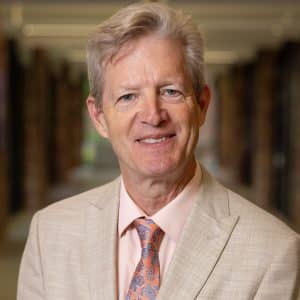 Over the course of a multiple decade career, Stephen Sweet has made sustained contributions to teaching and learning in sociology, shaping not only how sociology is taught, but also how the discipline values, supports, and rewards pedagogical excellence. His career reflects a rare combination of scholarly productivity, editorial leadership, curriculum innovation, and deep commitment to mentoring at all career stages.
As Professor Susan J. Ferguson writes in her letter of nomination, “Stephen Sweet is an amazing colleague who has given generously to students, sociology colleagues, and to the discipline of sociology over the course of his career.” Ferguson notes that while his many contributions to teaching and learning are substantial on their own, the enthusiastic endorsements of respected colleagues further underscore the depth and breadth of his influence. Indeed, Sweet’s work has shaped sociology teaching nationally through both formal scholarship and the professional communities he has helped build.
Sweet’s editorial leadership alone would merit special recognition. As Editor of Teaching Sociology, he guided the journal with intellectual rigor, transparency, and a deep sense of care for authors. Professor Michele Lee Kozimer shares that “Under Dr. Sweet’s editorship, Teaching Sociology was characterized by an efficient, transparent, and deeply humane review process.” Even when submissions were rejected, authors received constructive, developmental feedback. Sweet viewed the journal not merely as a gatekeeping institution, but as a site of mentoring—especially for graduate students and junior faculty.
Sweet’s commitment to pedagogical scholarship is equally evident in his extensive body of work. He has authored four college textbooks, written or co-authored 12 peer reviewed articles and chapters on pedagogy, co-edited the Handbook on Teaching and Learning in Sociology, and co-edited a special issue of the Journal on Cultivating Quantitative Literacy that advanced data literacy in sociology classrooms well before it became a widespread priority in higher education. He has also co-authored ASA’s Navigating the Sociology Major and delivered more than 40 presentations, workshops, and invited talks on teaching, including widely used materials on teaching work and family.
Beyond publications, Sweet has shown exceptional leadership in curriculum development and program review. As a member of the ASA Undergraduate Teaching Taskforce, he played a key role in shaping “The Sociology Major in the Changing Landscape of Higher Education” report and helped develop the Curriculum Mapping Toolkit for Sociology, which has now been used by more than 100 departments and is regularly relied upon by ASA program reviewers. His ongoing leadership in the ASA Program Reviewers and Consultants group—including training reviewers and developing materials—has left a national imprint on the quality and coherence of undergraduate sociology programs.
Sweet’s influence also extends into professional networks that bridge research and teaching. As Executive Officer of the Work and Family Researchers Network (WFRN), he has consistently advocated for the inclusion and recognition of teaching focused scholarship within a research-intensive space. Through WFRN’s Early Career Fellowship program, he has mentored teacher scholars and helped foster a community where pedagogy is valued alongside research.
At the heart of Sweet’s career is mentorship. As Professor Marcie Pitt Catsouphes observes, “Dr. Sweet is an amazing educator. One of his many legacies will be the impact that his teaching and mentorship has had on scholars—from undergraduate student scholars to late career academics.” Sweet has supported countless colleagues formally and informally, creating an environment where others can grow as teachers, scholars, and leaders.
Taken together, Stephen Sweet’s career represents remarkable contributions to teaching and learning in sociology. Through his scholarship, editorial leadership, curricular innovation, and generosity as a mentor, he has profoundly shaped the discipline—and ensured that future generations are equipped to continue advancing excellence in sociological teaching.
Distinguished Scholarly Book Award
Fueling Development: How Black Radical Trade Unionism Transformed Trinidad and Tobago by Zophia Edwards, Johns Hopkins University
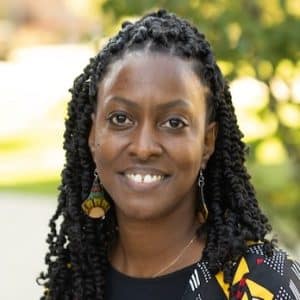 Zophia Edwards is an Assistant Professor of Sociology at Johns Hopkins University, and a scholar of racial capitalism, development, DuBoisian sociology, and labor who uses comparative-historical methods in her work. In Fueling Development: How Black Radical Trade Unionism Transformed Trinidad and Tobago, Edwards offers a masterful and sweeping analysis of the intersections of class, race, nation, and colonialism/post-colonialism across the 20th century. Based on extensive comparative-historical analysis, she develops a framework of “liberation unionism,” which encapsulates how Trinidad and Tobago succeeded, in terms of having high levels of democratic and redistributive development, despite their long histories of colonial exploitation. In doing so, she upends much of conventional thinking on sociology of development and draws upon literatures on race and capitalism.
Emerging during the interwar years, “liberation unionism” is a particular working-class unionism that is simultaneously internationalist, uniting workers across racial, gender, and sectoral lines and advocating for various economic, political, and social transformations, in the midst of a British imperialist order. This is a form of worker organizing deeply rooted in the Black radical tradition and racialized and colonized subjectivity. In particular, Edwards argues “it is a distinctive form of worker organizing that is deeply rooted in independent Black struggles for freedom and self-determination” (p. 14). Moreover, it was rooted in Black liberatory logics and oriented towards internationalism.
Chapter 1 begins by detailing the emergence of liberation unionism in Trinidad and Tobago through discussing the history of resource and labor extraction based on scholarship by DuBois, CLR James, and Walter Rodney. She focuses on three main actors – African and Indian workers, colonial state officials, and private capital – and discusses processes and structures of race-making. Chapters 2 and 3 detail the 1919 and 1937 worker mobilizations during the colonial period, respectively. These mobilizations had various economic, political, and social demands, including wage increases, compulsory education for children, and a representative legislative council. It was these two mobilizations that has long-term implications for Trinidad and Tobago following decolonization.
Chapters 4 and 5 continue this thread, detailing how the failure of unions to gain state control during formal decolonization had long-term implications as they retailed their radicalism and remained organizationally independent. This independence, among other things, compelled the state to provide developmental goods to the masses and weaken ties with foreign and local economic elites. The final empirical chapter, Chapter 6, compares her findings on Trinidad and Tobago with Guyana, another former British colony but with less successful long-term outcomes. In this case, the radical worker party did gain state control but therefore was seen as more of a threat to the UK and the US. In other words, liberational unionism matters, but is always in concert with state power. Including this additional site allows Edwards to apply her theoretical framework more broadly than her initial case studies.
The award committee was impressed with the meticulous detail and sweeping scale of Edward’s research, as well as the broader theoretical implications and how it upended much extant thinking in multiple subfields. Ultimately, Edwards brilliantly demonstrates how even in the midst of colonial and racial domination, working people and their agency still matter.
The committee also offers the designation of Honorable Mentions to:
Policing Patients: Treatment and Surveillance on the Frontlines of the Opioid Crisis by Elizabeth Chiarello, Washington University in St. Louis
Bordering on Indifference: Immigration Agents Negotiating Race and Morality by Irene I. Vega, University of California, Irvine
Early Career Award for Community-Engaged Scholarship
Sarah Brothers, Pennsylvania State University
 The selection committee is proud to recognize Dr. Sarah Brothers, Assistant Professor of Sociology and Public Policy at Pennsylvania State University, as a winner of the inaugural 2026 American Sociological Association’s Early Career Award for Community-Engaged Scholarship. This award honors Dr. Brothers for her transformative work in drug policy and the development of non-extractive research methodologies that center the expertise of marginalized populations.
Since receiving her PhD from Yale University in 2021, Dr. Brothers has established herself as a field-defining scholar whose work does not merely study vulnerable communities but is fundamentally governed by them. The selection committee was particularly impressed by how Dr. Brothers has moved beyond traditional models of participation to prioritize projects initiated by community partners. At the heart of her scholarship is a sustained partnership with the National Survivors Union (NSU), the national union of people who use drugs. Together, they co-developed the Community-Driven Research (CDR) model, which shifts the locus of power from the academy to the community by redistributing epistemic authority to those with lived expertise.
Dr. Brothers’ commitment to collaborative publication is a hallmark of her career. Her partners do not just appear in acknowledgments; they serve as co-authors and lead authors on high-impact pieces in Sociological Methodology, the American Journal of Public Health, and the Harm Reduction Journal. One community partner, Caty Simon, has since co-authored 17 publications through Dr. Brothers’ mentorship and the hidden curricula of the academy. This serves as a testament to the long-term capacity building that defines Dr. Brothers’ approach.
The committee notes that Dr. Brothers is doing the work while simultaneously contributing to our broader understanding of what community-engaged research is. As a core member of four research institutes at Penn State, including the Consortium on Substance Use and Addiction, she is laying the groundwork for other sociologists to follow. By publishing on the process itself, including critical research on the efficacy of Community Advisory Boards, her work skillfully translates complex epistemological concepts into accessible, usable tools. This scholarship has had a direct impact on public policy; her research on methadone treatment barriers during COVID-19 contributed to making pandemic-era treatment flexibilities permanent, a change with life-saving implications for thousands.
What distinguishes Dr. Brothers is her interdisciplinary thought leadership. From her 2024 presentation on the CDR approach at the National Academies workshop, held at the request of the White House Office of National Drug Control Policy, to consultations with the National Institute on Drug Abuse (NIDA), she has successfully advocated for the inclusion of situated, embodied knowledge in national health agendas. As Caty Simon of the NSU Leadership Team observes, Dr. Brothers’ deep commitment to true partnership allowed community members to finally take their place at the tables where their lives were being discussed.
By building an ethical infrastructure for sociology that is as rigorous as it is just, Dr. Brothers has transformed the role of the researcher from a distant observer to a collaborative architect of social change. In honoring her, the ASA recognizes her visionary start to a career of profound impact. Please join the committee in celebrating Dr. Sarah Brothers’ exemplary contributions to the discipline and the public good.
David J. Knight, Yale University
 The selection committee is proud to recognize Dr. David J. Knight, Assistant Professor of Sociology and Black Studies at Yale University, as a winner of the inaugural 2026 American Sociological Association’s Early Career Award for Community-Engaged Scholarship. This award honors Dr. Knight for his visionary leadership in documenting the history of political mobilization within U.S. prisons and for his commitment to horizontal research partnerships with directly impacted communities.
Since earning his PhD in Sociology from the University of Chicago in 2022, Dr. Knight has addressed a profound void in the sociological record: the sophisticated political organizing led by incarcerated people. To bridge this gap, he founded the Movements Against Mass Incarceration Lab and the associated Oral History Project. The committee was struck by the outward-facing nature of these initiatives. By utilizing a public website and digital archives, Dr. Knight ensures his work is not hidden behind academic paywalls but is intentionally democratized for use by activists, educators, and the public. This digital infrastructure connects institutional resources directly to the grassroots movements driving criminal justice reform.
The reach of Dr. Knight’s work is striking for a scholar so early in his career. Supported by a 1.7 million dollar grant from the Mellon Foundation, he has built a collaborative that touches multiple regions of the United States. The Lab maintains multi-year partnerships with six social change organizations, including Barred Business, the California Coalition for Women Prisoners, and Both Sides of the Wall. In these spaces, Dr. Knight serves as a thought partner who provides material and administrative resources to ensure that movement histories are preserved by the people who lived them.
A powerful example of this model is Dr. Knight’s partnership with Renaldo Hudson, who served 37 years in prison before receiving clemency. Through the Movements Lab Social Change Fellows program, Hudson became a vital member of the research team, leading the Death Penalty Project to document abolitionist organizing in Illinois. Hudson observes that Dr. Knight’s approach is defined by mutual collaboration, noting that “the oral history approach to documenting the movements that have happened in U.S. prisons is vitally important because these histories will not be heard if spaces are not created for them to be told.” This collaboration has resulted in a full-length documentary, scheduled for release in June 2026, which will serve as a blueprint for activists in other states. By providing seed grants to incarcerated creatives, Dr. Knight ensures survivors of the prison system can define their history for themselves.
While building this massive public archive, Dr. Knight has simultaneously produced scholarship in the discipline’s leading journals. His 2024 American Sociological Review article, “Contesting the State,” utilizes oral history data to theorize the agency of people behind bars. The committee notes that this archival work is far more than an intellectual exercise; it is an act of honoring and preserving lived experiences that help us better understand the communities and policies that shape the carceral state.
In honoring Dr. David J. Knight, the ASA recognizes a scholar who has skillfully translated complex theoretical concepts into accessible and usable tools for social change. He is poised to remain a leader in the field for years to come. Please join the committee in celebrating Dr. Knight’s remarkable contributions to sociology and the documenting of human rights.
Jessie Bernard Award
Joya Misra, University of Massachusetts Amherst
 To celebrate the selection of Dr. Joya Misra as the recipient of the 2026 Jessie Bernard Award, the American Sociological Association is proud to honor a scholar whose career serves as a masterclass in feminist public sociology. As a Distinguished Professor of Sociology and Public Policy at the University of Massachusetts Amherst, Dr. Misra has spent more than thirty years rewriting the map of sociological understanding regarding the roles of women in society. Her work is characterized by an unmatched level of dedication to advancing feminist consciousness within and beyond the academy, making her a singular choice for this prestigious honor.
Dr. Misra’s scholarship provides the foundational empirical evidence that has irrevocably shaped comparative policy analysis on a global scale. Utilizing a rigorous intersectional lens, she has meticulously documented how gendered policies create differential outcomes across race and class. Her research has been instrumental in interrogating the assumptions that define modern sociological inquiry, particularly through her groundbreaking work on gender and work policy in welfare states and the intersection of race and gender in care work. With nearly 6 million dollars in research funding from organizations like the National Science Foundation and the United Nations, her influence is both prolific and profound. Her influential 2003 article, “The Intersection of Gender and Race in the Labor Market,” which was co-authored with Irene Browne, stands as a testament to her role as a primary architect of modern feminist theory.
Beyond her empirical contributions, Dr. Misra is celebrated as a generational force in the discipline due to her extraordinary commitment to mentorship. Her nomination was a collaborative effort led by a core team of fourteen current and former students who describe her as indefatigable in her desire to help junior scholars thrive. This holistic mentorship spans decades and institutions. She has advised dozens of dissertation and capstone committees, consistently centering the voices of women and scholars from underrepresented groups. By creating practical resources, such as graduate job market seminars that she shares broadly with members of the Sociologists for Women in Society, she has demystified the professional requirements of the field for an entire cohort of sociologists.
Dr. Misra’s legacy is also deeply rooted in her institutional leadership. As the 115th President of the ASA and a former editor of Gender and Society, she has been a tireless architect of the discipline’s feminist infrastructure. During her editorship, she transformed the peer review process into a site of feminist mentorship and worked to incorporate voices from the Global South by translating articles into multiple languages. In every role, Dr. Misra practices what she preaches by advocating for structural changes, such as equitable research assistantship allocation to ensure the academy becomes a more inclusive space. The Jessie Bernard Award is reserved for those who have truly enlarged the horizons of sociology. By combining rigorous scholarly innovation with an enduring ethic of care, Joya Misra has done precisely that, leaving an indelible imprint on the fabric of our discipline.
Public Understanding of Sociology Award
Anna Romina Guevarra, University of Illinois Chicago
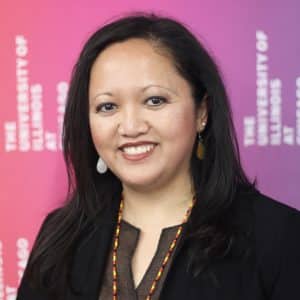 This selection committee is proud to award this year’s ASA Public Understanding of Sociology award to Dr. Anna Romina Guevarra in recognition of her public engagement, policy-related work, and numerous contributions to the public understanding of sociology. Dr. Guevarra is an interdisciplinary sociologist and Professor of Global Asian Studies at the University of Illinois, Chicago. She has engaged with public scholarship in many respects as part of her scholarly work on immigrant and transnational labor, the geopolitics of care work, and critical community studies.
Dr. Guevarra is co-founder of the Dis/Placements public history project in Chicago. This project focuses on the history of people’s displacements in a northside neighborhood of Chicago, and their ongoing struggles over land, housing, health care and education, related to urban renewal policies, racial segregation, gentrification, and state and imperial violence. Her project brought together scholars, activists, residents, artists, students and teachers to develop a public-facing website that visibilizes and maps the movements of local residents. Dr. Guevarra, along with other members of project, have also written OpEds, engaged with the media, curated public murals, conducted workshops, and hosted students interns.
Dr. Guevarra has also made several important contributions to policy changes in Chicago, in Illinois, and beyond. One recommender noted Dr. Guevarra has had a “central impact in Chicago politics” through her work on the Dis/Placements project and her role advocating for a successful bill to teach Asian American Studies in Chicago Schools, a policy which is now being implemented with her support and expert guidance. Dr. Guevarra also worked with community immigrant rights and theater organization to build stories around shared struggles and unjust labor practices, aimed at increasing support for passage of the Illinois Domestic Workers Bill of Rights, which was later passed. She similarly worked on a collaborative oral history project with the Pilipino Worker’s Center in California that helped them advocate for establishing a home care-co-op, and shed light on the struggles of undocumented Filipino migrants. She has provided expert testimony for a human rights tribunal case, which resulted in a landmark ruling in a favor of a Filipina caregiver. She has also coauthored publications with community organizers to help increase their audiences and reach of their work.
Dr. Guevarra has served as a Public Voices Fellow of the OpEd project, and has written and published numerous OpEds related to a range of topics, with many related to the impacts of systemic racism. These have included pieces related to care-work, the history of displacements due to urban renewal projects and race-restrictive covenants, the value of Ethnic studies, Afro-Asian solidarities in light of anti-Asian hate, the connection between the Philippines and Palestine, and local and national legislation and elections. She has also served as an expert resource for journalists, regularly appearing in the press.
Congratulations to Dr. Guevarra, recipient of the 2026 Public Understanding of Sociology Award.
Elizabeth Wrigley-Field, University of Minnesota Twin Cities
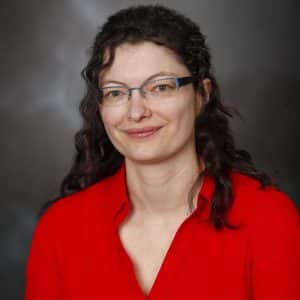
The selection Committee is proud to award the 2026 Public Understanding of Sociology Award to Dr. Elizabeth Wrigley-Field for her impressive work with the media, government, public education and community organizations in translating health equity research into meaningful social action. Dr. Wrigley-Field is Associate Professor of Sociology at the University of Minnesota. Her research addresses health inequities, and she has collaborated with governmental and community organizations to combat them.
In 2020-2021, Dr. Wrigley-Field met regularly with the Minnesota Department of Health Leaders to assist in developing measures of equity in COVID health metrics. When her work uncovered excess mortality among Minnesotan Native Americans, she collaborated with tribal leaders to disseminate this knowledge. She also worked with the Minneapolis Office of Immigrant and Refugee Affairs to prepare reports of the Minneapolis City Council on pandemic mortality in immigrant and refugee populations. She was twice invited to present her research to the director of the NICHD to help inform COVID-19 funding priorities.
Her research and public advocacy on COVID-19 vaccine equity was also particularly influential. In February 2021, she founded the Seward Vaccine Equity Project to distribute vaccines to African immigrants and their families, many of whom lived in communities with high hesitancy about childhood vaccines. The same month, she presented her research on vaccine allocation inequalities related to systemic racism to a group of 100 state health care leaders and workers in Minnesota, influencing crucial vaccination policies in early 2021. She has continued to train local government agencies and country employees on racial disparities in health and health impacts.
In 2022, Dr. Wrigley-Field helped found and lead a second community health organization, the East Phillips Health Team, which advocates for Little Earth, the nation’s only Indigenous-preference Section 8 housing, located in East Phillips, Minneapolis. This organization successfully advocated that the city of Minneapolis reconsider plans to house its entire fleet of diesel vehicles in this neighborhood that already faced excessive air pollution. As part of these efforts, Dr. Wrigley-Field lead-authored a letter of more than 300 health professionals to state legislators. This organization now focuses on distributing air filters, offering lead testing, and distributing information to residents about air pollution and ways to mitigate its risks.
In addition to her leadership in these organizations, Dr. Wrigley-Field regularly writes for the media and serves as an expert for the press. Her research related to racial inequalities during the pandemic, in which she noted non-pandemic U.S. Black mortality rates were higher than White mortality during COVID-19, was widely covered, and had a particularly large impact on the public understanding of racial inequalities. More locally, she ran a “politics of pandemics” book club at her local bookstore, which increased local public understanding of this topic.
Congratulations to Dr. Elizabeth Wrigley-Field, recipient of the 2026 Public Understand of Sociology Award.
W. E. B. Du Bois Career of Distinguished Scholarship Award
Arne L. Kalleberg, University of North Carolina at Chapel Hill
 The selection committee for the 2026 American Sociological Association’s W.E.B. Du Bois Career of Distinguished Scholarship Award honors Arne L. Kalleberg for his extraordinary dedication to the discipline and his field defining contributions to the study of work, labor markets, and inequality. Over a career spanning five decades, Kalleberg has produced more than one hundred influential publications, including landmark articles and widely cited books that have set enduring empirical standards, and guided generations of scholars. His work has had far reaching impact across multiple sociological subfields and has been deeply influential in domestic and global policy debates.
Kalleberg redefined how scholars understand the relationship between work, inequality, and social stability. As one nomination letter observed, “He has been pulling a more individualistic sociology inherited from the mid-twentieth century into a more relational and organizational understanding of inequality, while creating guardrails against the incursion of naïve market models imported into sociology from economics.” Rejecting narrow accounts that reduced job satisfaction to job characteristics alone, he demonstrated that satisfaction is a multidimensional phenomenon shaped by the alignment between workers’ values and the rewards they receive. This insight led to Organizations in America, a landmark analysis of how firms manage labor through hiring, promotion, training, and compensation systems, revealing how organizations systematically structure advantage and disadvantage within the workplace. Kalleberg was among the first to document the erosion of standard employment relationships and to show how the growth of temporary, part-time, and contingent work undermined wages, benefits, security and worker autonomy; dismantling the assumption that nonstandard jobs were voluntary or temporary conditions. This perspective crystalized in Good Jobs, Bad Jobs (2011), where Kalleberg compellingly demonstrated the polarization of labor markets into secure, well-paid jobs and low-wage, unstable employment, alongside a hollowed-out middle—an outcome of globalization, technological change, declining unions, and weakened labor protections.
In his 2008 ASA presidential address, Kalleberg elevated this analysis by conceptualizing precarious employment as a defining and normalized condition of contemporary labor markets, increasingly affecting workers across occupational levels. Turning his attention to broader societal consequences of these transformations, Precarious Lives: Job Insecurity and Well-Being in Rich Democracies (2018) drew on rich cross-national data to show how precarious work restructures family formation, well-being, and political participation, while demonstrating that these outcomes are not inevitable and are the result of institutional and policy choices. Kalleberg is a methodological innovator. He was an early and influential advocate of multilevel modeling, advanced rigorous quantitative approaches to operationalizing institutions, pioneered harmonized cross national indicators of job quality, and innovated the use of hyper network designs to generate representative samples of U.S. workplaces—advances that have been widely adopted and strengthened research on inequality. Collectively, Kalleberg’s scholarship exerted wide-ranging influence across sociology, labor economics, public health, industrial relations, and management studies.
Kalleberg’s research has been supported by prestigious institutions—including the Simon Guggenheim Foundation, Russell Sage Foundation, National Science Foundation, Spencer Foundation, Japan Foundation, and Norwegian Research Council—testifying to its exceptional merit. His many honors include election as a Fellow of the American Association for the Advancement of Science (1997), the ASA Inequality, Poverty and Mobility Section’s Robert M. Hauser Distinguished Scholar Award (2015), and the ASA Organizations, Occupations and Work’s Rosabeth Moss Kanter Distinguished Career Award (2020), and election to the National Academy of Sciences in 2024. He has brought outstanding leadership to the discipline. He held the positions of Secretary and President of ASA, chaired the ASA Organizations, Work, and Occupation section, and served on several ASA committees. Kalleberg has edited Social Forces since 2010, served on major editorial boards, and held elected leadership roles with GSS and PSID.
Congratulations to Arne Kalleberg, recipient of the 2026 ASA W.E.B. Du Bois Career of Distinguished Scholarship Award.