

- Stand up for Sociology with ASA’s Action Center
- Harmful Attack on Public Education Blocked in Federal Court
- Open Letter in Support of Academia Garners Further Support
- ASA Releases New Disciplinary Guidelines for Community-Engaged Scholarship
- Two Weeks Left to Apply for the ASA POP Fellowship!
- 2025 Annual Meeting Information
- Spotlight on the Annual Meeting Location: Sociological Perspective on Health Equity in Chicago
- Call for Proposals: Start an ASA Community
- Announcing the 2025 Carla B. Howery Teaching Enhancement Fund Grant Recipients
- Announcing the 2025 Honors Program Cohort
- Devparna Roy and Daniel Pasciuti Named JWSR Co-Editors
- Update on City & Community Manuscript Submissions
- Karen Gray Edwards, ASA’s Director of Publications, to Retire
NEW! Stand up for Sociology with ASA’s Action Center
Explore ASA’s new Action Center, which includes tools to help you contact your elected officials and advocate for the issues that impact our discipline. You can use our templated Action Alerts to guide your message or personalize it with your experiences or insights to make it more powerful. Our new tool also has phone scripts, so you can call your representatives in Congress or even send a letter to the editor of your local newspaper. We hope you will find ASA’s Action Center helpful as we amplify the voice of sociology together!
Harmful Attack on Public Education Blocked in Federal Court
Educators, students, and public education won a major victory in April when a Baltimore federal court issued a nationwide order pausing an attempt by the Trump administration to censor classroom teaching and undermine diversity, equity, and inclusion programming. The ruling halts enforcement of a February 2025 “Dear Colleague Letter” issued by the U.S. Department of Education, which threatened schools and universities with prosecution or the loss of federal funding for teaching lessons referencing race and racism or supporting inclusive learning environments.
The case American Federation of Teachers, et al. v. U.S. Department of Education, et al., was brought by the American Federation of Teachers (AFT), ASA, and AFT-Maryland, and the Eugene School District 4J. Democracy Forward has provided legal representation. The lawsuit challenged the legality and constitutionality of the administration’s actions, which set an April 24, 2025, deadline for nationwide compliance under the threat of sanctions.
“This injunction is an important step toward preserving educators’ ability to do their jobs effectively and well,” said ASA President Adia Harvey Wingfield.
“This ruling is a win for educators, students, and communities across the nation,” said Skye Perryman, president and CEO of Democracy Forward. “It pauses the chaos unleashed by the Trump administration and protects the values of education, expression, and the rule of law.”
Read the judge’s opinion and the full amended complaint.
Open Letter in Support of Academia Garners Further Support
A coalition of sociology organizations led by ASA has penned an open letter expressing concerns over abruptly canceled federal contracts, looming job losses for sociologists in academia and the public sector, and a climate of fear preventing scholars from exercising their constitutionally protected rights. Signatories warn that these threats harm researchers, diminish public knowledge, and weaken institutions that fuel economic, social, and technological progress. Fifteen other organizations have joined ASA to defend the vital role of sociology in universities and society while condemning federal actions that threaten academic inquiry and free speech. Read more about this effort and the text of the full letter here.
NEW! ASA Releases Disciplinary Guidelines for Community-Engaged Scholarship
 ASA has developed disciplinary guidelines that support community-engaged sociological scholarship. The guidelines are part of ASA’s recent effort to provide resources to sociologists and departments that help support efforts to recognize and reward community-engaged scholarship in tenure and promotion. As part of this effort, ASA launched a new online resource, How to Include Community-Engaged Scholarship in the Tenure and Promotion Process, which provides guidance to scholars, departments, and reviewers who are conducting and evaluating community-engaged scholarship in sociology. The toolkit includes four downloadable guides:
- Including Community-Engaged Scholarship in Tenure and Promotion in Sociology: A Guide for Departments—A step-by-step guide for revising departmental tenure and promotion guidelines.
- ASA Guidelines for Evaluating Community-Engaged Scholarship in Tenure and Promotion: A Summary—Best practices for conducting and assessing community-engaged sociology scholarship.
- How to Incorporate Community-Engaged Scholarship into Your Tenure and Promotion Materials: A Guide for Faculty—Practical advice for scholars seeking recognition of their engaged work.
- How to Incorporate Community-Engaged Scholarship into Your Assessment of Faculty: A Guide for Tenure and Promotion Committees and External Reviewers—Guidance for reviewers assessing community- engaged work.
The new disciplinary guidelines and toolkit are the result of ASA’s year-long Shifting the Academic Ecology to Support Community-Engaged Scholarship in Tenure and Promotion in Sociology Project, generously funded by the William T. Grant Foundation. ASA thanks everyone who contributed, including current and former members of the Sociology Action Network Advisory Panel: Elizabeth Borland, Carol Glasser, Teresa Irene Gonzales, Maria Krysan, Rebecca A. London, Tom Medvetz, Nancy Plankey-Videla, Carrie L. Smith, and Mark R. Warren; and the sociology departments at George Washington University, Howard University, and the University of Maryland-College Park.
NEW! Apply for the ASA POP Fellowship by May 29!
 Turn sociological research into real-world impact—apply for the ASA Policy Outreach Program (POP) Fellowship. Each year, ASA will choose 5–10 sociologists for a one-year fellowship that bridges the gap between academia and public policy. Fellows will gain exclusive professional development and sharpen their skills to communicate research that resonates with lawmakers, think tanks, and the public. Applicants must have a PhD in sociology at the time of application, plus three or more years of experience. The fellowship does not include a stipend or require residency in Washington, D.C., or travel. Applications are due May 29, 2025.
2025 Annual Meeting Information
The ASA 120th Annual Meeting will be held August 8-12, 2025, in Chicago. Please review this important information:
- Registration is open. Please review the registration rates, deadlines, and policies on the Registration page. As a reminder, all participants are required to register. A participant is anyone listed as a presenting author, author, mentor, presenter, presider/table presider, discussant, panelist, moderator, leader, or any similar substantive role on the program. For multiple-authored papers, nonpresenting authors (if thusly noted during submission), and those who will not be attending the Annual Meeting are not required to register.
- Review the online program. Log into the online portal with your ASA username/password. Select “View the Online Program” to browse all programs and meetings by day or type, search for people or keywords, and create your personal schedule of events.
- Attend the ASA Awards Presentation and Presidential Address on Sunday, August 10, 4:00–6:00 p.m. Celebrate the ASA award winners and hear ASA President Adia Harvey Wingfield deliver her presidential address “After DEI: Imagining A Different Future for Race-Based Policies.” The awards and address will be followed by an honorary reception open to all.
- Preconferences are full-day sessions that provide an opportunity for disciplinary peers to gather for an extended period to discuss their work related to a particular field of study, theory, perspective, question, controversy, or professional context. Preconferences will be held Friday, August 8. Registration is required.
- Attend the Department Leaders Preconference, designed for chairs and directors of graduate and undergraduate studies to connect with peers, share insights, and develop strategies needed to navigate conflict, policy shifts, and institutional change. Join us for a day of engagement, practical takeaways, and peer support as we tackle the pressing issues facing sociology departments today. View the agenda. Registration is required.
- Join a tour. Tours are offered as a complement to ASA Annual Meeting programming. Registration is required. Tour spots are limited and may sell out.
- New Annual Meeting Guide Program. A small group of first-time attendees will be paired with an experienced meeting guide to help them confidently navigate the meeting and get the most out of the experience. We are especially in need of more volunteers to be a guide—please complete this form by May 29, 2025. If selected to be a guide, you must register for the Annual Meeting by June 30, 2025, to participate in the program. The responsibilities of Guides are not intended to extend beyond the timeframe of the Annual Meeting. First-time meeting attendees can learn more about joining the program here.
- New (Soc)ial Circles. Join us for an exciting opportunity to connect with fellow sociologists at the Annual Meeting. (Soc)ial Circles will feature a round-robin format of small-group, guided discussion. Bring your lunch, grab a coffee, and dive into conversation. Don’t miss out on this chance to expand your professional circle in a fun and interactive setting. (Soc)ial Circles will be held Sunday, August 10, 2025, 12:00-1:30 p.m.
Spotlight on the Annual Meeting Location: Sociological Perspective on Health Equity in Chicago
By Fernando De Maio, Professor of Sociology, DePaul University
 “This is the world’s healthiest city,” proclaimed a headline in a 1926 editorial in the Chicago Tribune. The claim was based on data published by the city’s public health department, and indeed, the records showed that Chicago had a lower all-cause mortality rate than New York City, Berlin, Philadelphia, Paris, or other global cities. One might have been tempted to celebrate. However, a needed nuance was quickly offered the following year by H.L. Harris Jr., a Chicago-area physician, in an article in the first-ever issue of the Social Service Review, where he disaggregated the mortality data by race and showed that the claim only held true for Chicago’s white population.
Almost 100 years later, researchers working on health equity are fighting much the same battle–advocating for the need to disaggregate data and for careful explanations of why racialized health inequities persist in our cities and in our society more broadly. This is the case for gun violence, certainly. But it is also the case for other major causes of death, including cardiovascular disease, cancer, and Covid-19. In this regard, Chicago is no different than any other city.
Yet in other ways, Chicago’s history tells a particularly important tale of health equity research and activism, often rooted in sociological theory and methods. Chicago’s health equity story is one of collaboration across disciplinary and institutional boundaries–at its best, driven by and accountable to the community. Some good examples of community-driven and collaborative health equity work can be found in the work of the Sinai Urban Health Institute, Health and Medicine Policy Research Group, the Coalition for Immigrant Mental Health, and the Center for Community Health Equity.
Heath research has come a long way from the work of H.L. Harris Jr. or the work of Faris and Dunham in the 1930s, in which they plotted mental disorders by community area in Chicago and Providence, RI, or from the work of a group of medical doctors in 1955 who organized under the banner of the Committee to End Discrimination in Chicago Medical Institutions, and asked “What Color Are Your Germs?” More recently, Chicago is where research and activism led to “economic transfers” of patients being correctly re-conceptualized as patient dumping, ultimately rendering the practice illegal at a national level in the 1980s. Chicago has also been the site of a concerted effort to grapple with Black/white inequities in breast cancer and, in many ways, has been a national example in working toward understanding and addressing racial inequities in life expectancy.
Yet, Chicago remains a deeply divided city—one with social divisions that map onto epidemiological outcomes, as can be observed today using tools such as the Chicago Health Atlas. These divisions are produced by social and economic systems that harm populations; overcoming them is the basis of inspiring efforts like West Side United, which aims to close the life expectancy gap between the west side communities and the downtown “Loop.”
Sociologists from many of the city’s colleges and universities engage in Chicago health equity research and activism. Our collective challenge must be to do more than merely describe patterns of inequity and injustice. Sociological theory and methods have much to offer work on health equity—from core concepts such as structural racism and weathering to critical methodological techniques, from ethnography to multilevel modelling—the sociological toolkit is needed more than ever. Our sociological imagination is at the heart of this work. After all, it is an individual person who suffers from an asthma attack or the symptoms of cardiovascular disease. While individual-level treatment is needed to address the difficulties of that one patient, if we are to address population-level patterns (including the root causes of health inequities), we must look at groups and communities, through history and in their social and political context. This is how we will grapple with health equity as a public issue.
Examining the sociology of health equity in Chicago reveals a rich network of people, communities, and institutions, all with complicated histories and motivations for engaging in this work. On this, the fight for health justice—which many in health equity research and activism would argue is our north star—is like other liberatory struggles, filled with moments of optimism as well as profound despair.
As a sociologist, I have experienced both optimism and despair, often at the same time. I recognize the real dangers in this work, from burnout among colleagues to, more recently, attacks that threaten the intellectual independence and social standing of our universities and research centers. Yet, I remain awed by the potential of our collective work; our community of scholars, students, and partners; and the legacy we are part of. I hope we can continue to build on this legacy in our ASA Annual Meeting in Chicago this summer.
Any opinions expressed in the articles in this publication are those of the author and not the American Sociological Association.
Call for Proposals: Start an ASA Community
ASA Communities are a member-generated organizational structure approved by the Council on the recommendation of the ASA Task Force on Membership. Communities differ from Sections and other ASA groups in three ways:
- Communities create new spaces for connection, belonging, and networking that transcend research foci, and also help members more easily answer the question “Where are the people like me in ASA?”
- Communities provide new avenues for professional development and mentoring that reflect the wide range of employment contexts and lived experiences of the many diverse groups within our membership
- Communities provide a broader range of opportunities for engagement and leadership in ASA.
Communities can be proposed by groups of members with common professional backgrounds, such as sociologists employed outside the U.S., in community colleges, or sociology faculty in high schools. Communities might also be proposed by groups of members with a shared identity, such as Black sociologists or LGBTQ sociologists. The next deadline for proposals is June 1, 2025. Learn how to submit a proposal for a new Community here.
Announcing the 2025 Carla B. Howery Teaching Enhancement Fund Grant Recipients
Makeela J. Wells, Auburn University, and Sarah Shannon, University of Georgia, are the recipients of the 2025 Carla B. Howery Teaching Enhancement Fund Grants.
Wells’s project, “Exploring the Role of Generative AI as a Research Assistant in Undergraduate Sociology Research Methods,” will explore the perceived usefulness and ease of use of AI technologies and their influence on students’ confidence and acceptance, as well as generative AI’s efficacy as a tool in an academic setting. Shannon’s project, “Teaching Methods as Public Sociology,” will build a community of practice for teacher-scholars to engage in reflection and discussion of teaching as a vital form of public sociology.
Announcing the 2025 Honors Program Cohort
ASA is happy to announce the 2025 Honors Program Cohort. The Honors Program provides exceptional undergraduate sociology students with a rich introduction to the professional life of the discipline through participation in special activities at the ASA Annual Meeting. These students have been selected to attend the Annual Meeting in Chicago and present their research, where they will also learn first-hand about the ASA’s programs, initiatives, resources, special interest sections, elected leadership, and governance.
Devparna Roy and Daniel Pasciuti Named JWSR Co-Editors
The ASA Council unanimously approved Daniel Pasciuti and Devparna Roy as the next co-editors of the Journal of World-Systems Research (JWSR). Pasciuti will also take on the role of Book Review Editor for JWSR. Their three-year term begins January 1, 2026.
Roy is an associate professor in sociology and anthropology and the director of the Global Sustainability Program at Nazareth University. Pasciuti is an associate professor of sociology and the associate director of graduate studies in the Sociology Department at Georgia State University. They bring complementary strengths and a shared vision to JWSR, making them an ideal editorial team to lead the journal into its next phase. Their combined expertise, diverse academic backgrounds, and commitment to advancing world-systems analysis position them to enhance the journal’s scholarly impact and global reach.
Strengths of Daniel Pasciuti
 Pasciuti earned his PhD in sociology from Johns Hopkins University in 2013, where he worked under the mentorship of Beverly Silver and Giovanni Arrighi. He also holds an MA in sociology from Johns Hopkins and a BS from the University of California-Riverside. His research focuses on urbanization, global inequality, and governance—core themes within world-systems scholarship. He has published extensively on housing insecurity, urban governance, and global development, demonstrating a strong ability to engage with complex sociological issues through theoretical and empirical lenses.
Pasciuti brings extensive editorial experience, including serving on the editorial boards of journals such as City & Community and SN Social Sciences. Pasciuti has contributed to developing research initiatives such as the Arrighi Center for Global Studies, where he led working groups focused on urban governance and global inequality. His service to the discipline also includes roles such as Urban Network Representative for the Social Science History Association and frequent reviewer for journals such as Urban Affairs Review.
In addition to his academic work, Pasciuti engages in community-based research projects centered on housing and eviction issues in Georgia. He has collaborated on initiatives such as the Homelessness Intervention Pilot Program in Clayton County and the Eviction Response Working Group, part of the Atlanta Eviction Diversion Program, which sought to develop and evaluate citywide responses to housing insecurity. Pasciuti has also worked on a project that examines the increasing use of boarding houses in single-family rental properties across the United States, exploring their implications for urban housing dynamics.
Pasciuti’s work is focused on leveraging sociological research to solve real-world challenges, especially in housing and urban policy. He has helped develop methodologies that bridge academic inquiry and practical application, particularly through involvement in eviction prevention programs and housing policy reform. As the Book Review Editor for JWSR, his expertise in synthesizing and critiquing scholarly work will ensure that the journal continues to feature rigorous, engaging reviews that reflect innovative research in the field.
Strengths of Devparna Roy
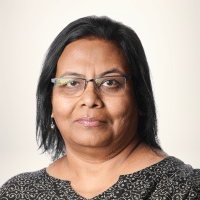 Roy holds a PhD in development sociology from Cornell University, where she specialized in rural and environmental sociology; the history and philosophy of science and technology; and the sociology of state, economy, and society. She also possesses a MSS in sociology of international development from Utah State University, an MSC in biotechnology, a BSC in chemistry, and a postgraduate diploma in social journalism. Her research focuses on agrifood systems, social movements, and development studies, particularly in the Global South. Her work on genetically modified crops, farmers’ movements, and food sovereignty in India critically analyzes the intersections of science, technology, and social justice within the world system.
Roy’s leadership experience in professional organizations, including ASA and the International Sociological Association, demonstrates her ability to build networks and engage with scholars across disciplines. Her focus on mentoring early-career scholars and fostering collaboration further strengthens her ability to lead the journal in a way that supports the professional development of its contributors.
Roy has demonstrated a strong service record to sociology. She serves on the Editorial Board of Future of Food Journal: Journal on Food, Agriculture, and Society, a respected interdisciplinary journal published by the University of Kassel, Germany, and the Federation of German Scientists. In addition to her editorial board role, Roy has acted as a manuscript reviewer for several high-impact, peer-reviewed journals in the social sciences and development studies, including the American Sociological Review, Journal of Development Studies, Journal of Rural Studies, Geoforum, Agriculture and Human Values, Journal of Peasant Studies, Asian Biotechnology and Development Review, and Rural Sociology.
Beyond publishing, Roy served as president of the New York State Sociological Association in 2019 and organized its 67th Annual Meeting under the theme “For the Common Good: Social Justice, Multiple Sovereignties, & Public Engagement.” . Currently, she is the coordinator of the Global South Interest Group in the ASA’s Sociology of Development Section, a group she helped to grow and energize with global dialogues, such as a 2024 online panel featuring prominent scholars from India, South Africa, and Brazil. She also recently chaired the Committee on Racial Inclusion, Equity, and Justice in ASA’s Environmental Sociology Section, where she spearheaded the “Theory and Community-Building Cafes” lecture series highlighting emerging BIPOC scholars. Additionally, she chaired the Feminist Development subsection of the Sociology of Development Section, curating webinars and dialogues on feminist resistance to authoritarianism across different global contexts.
Shared Vision for JWSR
Pasciuti and Roy envision JWSR as a dynamic platform for advancing world-systems analysis and fostering global scholarly engagement. They aim to build on the journal’s tradition of publishing high-quality research while addressing key challenges, such as increasing submissions, expanding the reviewer pool, and enhancing the journal’s visibility. Their plan includes revitalizing the editorial board, actively involving members in the review process, and recruiting scholars from diverse backgrounds to ensure the journal reflects the breadth of world-systems scholarship.
Pasciuti and Roy are committed to increasing the journal’s relevance to the Political Economy of the World-System (PEWS) Section and the broader sociological community. They have proposed initiatives such as special sections, symposia, and thematic issues on timely topics including climate change, migration, and authoritarianism. Their focus on engaging scholars from the Global South and publishing community-based research aligns with their vision of JWSR as a hub for innovative and socially impactful scholarship.
By mentoring early-career scholars and providing constructive feedback on submissions, they will foster the next generation of world-systems analysts. Leveraging their networks and expertise, Pasciuti and Roy aim to make JWSR an essential resource for scholars, activists, and policymakers seeking to understand and address the complexities of the modern world system.
ASA expects Pasciuti and Roy to bring their wealth of experience, complementary strengths, and forward-looking vision to the Journal of World-Systems Research, which promises to enhance its scholarly impact, global reach, and relevance to world-systems analysis.
By Mary A. Spiro, ASA Director of Communications and External Affairs
Update on City & Community Manuscript Submissions
As of January 1, 2026, all correspondence should be sent to the new co-editors, Brian McCabe and Ann Owens; email [email protected]. Manuscripts should be submitted through https://mc.manuscriptcentral.com/cico. Decisions on manuscripts submitted after summer 2025 will be made in consultation with the incoming and outgoing editors.
Karen Gray Edwards, ASA’s Director of Publications, to Retire
 Karen Gray Edwards, ASA’s Director of Publications, is retiring on June 15, 2025, after nearly 45 years with the Association. Initially hired as ASA’s receptionist right out of college, she joined the ASA Publications Department several months later. In addition to her significant contributions leading ASA’s scholarly publishing and journals program, she also headed the Membership Department for 15 years until 2019. While directing the membership program, she oversaw the transition to member-facing web access to member benefits and renewal/application.
Edwards’s tenure at ASA was marked by a significant expansion in the number of ASA journals published by the Association, as well as major changes in the structure and format of ASA’s publishing program. She managed the progress from solely print to online journal databases, meaningfully expanding access to sociological literature for members and other scholars, and she managed the transition from ASA self-publishing its journals to partnering with Sage Publications and Wiley. Edwards has also worked closely with colleagues from other associations and publishers to help with ASA’s response to changes in the landscape of scholarly publishing over time.
Edwards has long served as ASA’s “institutional memory,” and her assistance with digitizing older ASA publications and documents has been vital to ensuring scholars will have access to critical records in the future.
Edwards is leaving the Association in good stead, spending her last several months developing documents and reference materials to ensure a smooth transition. And, knowing her, she will also be available if someone needs her knowledge or experience as ASA moves beyond her tenure.
In announcing her retirement to her colleagues at ASA, Edwards wrote: “ASA has been a perfect career home for me—it has supported and helped shape my own world view. Every minute of that time, I have been honored and proud to be a part of ASA. It will take a good long time (and perhaps I will never get there) before ASA and its work on behalf of sociology is not a vital part of how I see myself. The best thing about working at ASA (and the thing I will miss most) is working with a truly inspiring and dedicated group of individuals—staff and sociologists–who have always felt like a second family. Your support, both professionally and personally, has been a gift for which I can never fully express my deep appreciation.”
“Karen has been a cornerstone of our work at ASA for four decades,” said ASA Executive Director Heather Washington. “Her contributions to the association are vast, and her commitment to excellence, to ASA’s mission, and to supporting members and her staff colleagues is unparalleled. Karen’s leadership has influenced our work and the association in ways that will extend long after she leaves. While we will miss her presence tremendously, we wish her the very best as she embarks on this exciting new chapter. “