Editors of ASA journals and the Rose Series submit annual reports to provide insight to sociologists. These narrative reports can be found below. This table can also be referenced for a more detailed quantitative overview of submission processes. Reports from prior years can be found here.
Annual Reports for 2024
|
Journal of Health and Social Behavior |
Society and Mental Health |
American Sociological Review
In January 2024, we officially took over the editorship of American Sociological Review (ASR) from the able and generous team of Art Alderson and Dina Okamoto at Indiana University. We are deeply grateful for their help in the transition, in so many ways.
Submissions
From January 1 through December 31, 2024, ASR received 647 submissions, as compared to 685 submissions in 2023. New submissions totaled 544 papers, and 103 papers were resubmissions from previous years. Revise and resubmit decisions were given to 49 manuscripts, and 40 papers were accepted. Given the high standards at ASR, most papers were rejected: 218 were rejected after going through the peer-review process and 287 were rejected after internal review. Three papers were withdrawn by their authors, and final decisions had yet to be reached (as of April 1, 2025) on 13 papers.
Among new submissions, 257 (or 47 percent) were sent out for peer review. Among those that underwent the peer review process, 204 (80 percent) were rejected, 38 (15 percent) received an invitation to revise and resubmit, and 1 paper was accepted unconditionally (the ASA presidential address).
Among the 103 revised manuscripts received in 2024, most were either conditionally accepted (36 percent) or accepted outright (38 percent). Eleven percent received a revise and resubmit decision, 14 percent were rejected, and the decision is pending for one manuscript as of April 1, 2025. Our editorial team strove to make thoughtful and efficient decisions, avoiding situations in which authors are subjected to multiple rounds of “revise and resubmit” that do not lead to publication. Accordingly, only 2 of 41 papers invited for a second round of R&R were rejected, and none of the 6 papers invited for additional rounds of revision were rejected. Based on the traditional ASA acceptance rate measure (the number of accepted manuscripts divided by the number of all decisions), the ASR acceptance rate for 2024 was 6.2 percent.
High-Quality Peer Review Process
Returning helpful, high-quality feedback to authors in a timely fashion is a major focus of our day-to-day activity. Meeting this goal has been increasingly difficult for all journals since the COVID-19 pandemic, as academics have been stretched thin. ASR benefited from the generous goodwill and public spirit of our ad hoc reviewers and editorial board members. ASR and its authors continued to benefit from the service of a remarkably talented and dedicated group of readers. Among new submissions in 2024, the average time from submission to decision was 6.3 weeks. Counting only papers that went through the peer review process, the average time from submission to decision was 12.3 weeks. Given our aim of reducing multiple revisions, we regularly consult with members of the editorial board in the evaluation of revised and resubmitted manuscripts, in an effort to make “up or down” decisions as early in the process as possible. With this goal in mind, the average time from submission to decision of new “R&R” submissions was 10.3 weeks in 2024.
Editorial Board, Reviewers, and Staff
ASR continues to benefit from a diverse and talented editorial board. In 2024, the board had 10 deputy editors and 74 regular board members. The total editorial board (including deputy editors) includes 51 percent women, and 9 percent gender queer or gender nonconforming sociologists. Thirty-six percent of board members identify as racial and/or ethnic minorities. In addition to the August board meeting at the annual ASA meetings in person, we started a virtual board meeting in January which has been an excellent opportunity to brainstorm and problem solve with our outstanding editorial board.
From January 1, 2024, through May 14, 2025, 1,004 scholars from around the world provided valuable comments on papers submitted to ASR, and 214 of those reviewers served more than once during this time. We are grateful for the contributions of ASR reviewers, who clearly take an interest in helping authors to develop their work, even when that work does not ultimately appear in ASR.
The smooth operation of the journal would not be possible without the work of the ASR staff. We have benefited greatly from the extraordinary work of ASR’s managing editor, Mara Nelson Grynaviski, and the advice and support from Karen Gray Edwards, who is wrapping up decades of distinguished service as the ASA Director of Publications–we will miss you, Karen! We look forward to working with her successor, Catherine Yim.
Our UMass staff is phenomenal. The journal has benefited from the excellent work of graduate student editorial assistants Shuyin Liu and Aaron Yates, who took over for Jennifer Garfield-Abrams and Joanna Riccitelli in September 2024.
Diversity, Equity, and Inclusion initiatives
We endeavor to involve reviewers from underrepresented groups in the U.S. and abroad in all manuscript reviews. One of our goals as an editorial team has been to extend the global reach of ASR, as discussed in our Editor’s Note this year. We have added editorial board members and reviewers who have experience and expertise in conducting sociology in and about the global South. Our editorial board has discussed how we might get the word out about ASR’s waiving of author submission fees to authors in low-income countries, and Sage’s policy of providing journal access to scholars in the global South. We added information to the ASR online instructions and continue to look for other avenues.
We have tried to get the word out to sociologists in different ways that ASR welcomes submissions from all areas of sociology. Our efforts toward inclusivity led us to participate in several open panels about how to submit journal articles. We welcomed questions about submission to ASR at the annual meetings of the Eastern (ESS) and Southern Sociological Societies, and on virtual panels sponsored by ICPSR, the South African Sociological Association, and ASA. The ESS panel discussion about writing for general sociology journals (including Contexts and Social Problems as well as ASR) will appear in the June issue of Sociological Forum, thanks to the editors of that journal.
Social Media Presence
On the advice of the Editorial Board, ASR has switched from X (formerly Twitter) to LinkedIn for disseminating news on articles published in the journal. We will share updates when new articles come out in the “Online First” section of the SAGE website, on the Table of Contents from new issues, when ASA releases podcasts with ASR authors, etc. Please follow ASR on LinkedIn!
Laurel Smith-Doerr, David Cort, and Donald Tomaskovic-Devey, Editors
City & Community
Introduction
Last year saw City & Community continue in the positive direction it has been heading in for the past few years. As this narrative indicates, City & Community is a prestigious and selective journal for urban sociologists and other urban scholars to place their work. Our ASA section, Community and Urban Sociology, has supported and expressed approval of the journal’s initiatives and performance, and we have managed to get section members more involved in the journal’s activities. Importantly, this growth is based on a solid and sustainable foundation, making the journal’s future bright.
Manuscript Submissions and Decisions
In 2024, 237 total manuscripts were submitted to the journal. Of these, 12 were accepted, 30 were invited to revise and resubmit, 44 were rejected, and 151 were rejected without peer review (that is, “desk rejected”). The latter number is high because City & Community is well-known among the large community of scholars and practitioners in the broad field of urban studies. We therefore regularly receive submissions from authors with backgrounds in such disciplines as urban planning, architecture, and policy that are not intellectual fits for the journal and often do not conform to our guidelines.
Among the 204 new (that is, first) submissions to the journal last year, 53 (or 26%) were sent out for peer review, and the rest were rejected without review. Among those that underwent the peer review process, 37 (69.8%) were rejected outright, and 16 (30.2%) were invited to revise and resubmit.
A total of 33 revised manuscripts were submitted in 2024. Of these, 12 (36.4%) were accepted, 14 (42.4%) were invited to revise and resubmit, and 7 (21.2%) were rejected. First, of these 33 revised manuscripts, 18 were for first revisions. Eleven (61.1%) of these 18 were once again invited to revise and resubmit, and 7 (38.9%) were rejected. Second, of these 33 revised manuscripts, 13 were for second revisions. Of these, 10 (76.9%) were accepted and 3 (23.1%) were invited to once again revise and resubmit. Finally, of these 33 revised manuscripts, 2 were for third and/or fourth revisions, and both of them were accepted.
Using the traditional ASA indicator for the acceptance rate (the number of accepted manuscripts divided by the number of overall decisions, multiplied by 100), the acceptance rate at City & Community for 2024 was 5.1%. If we instead calculate the acceptance rate as accepted papers divided by final decisions, multiplied by 100 (as suggested by England in the March 2009 issue of Footnotes), the acceptance rate was 13.9%.
Finally, we learned last year that the journal’s Impact Factor (from 2023, the most recent year available) is now 2.4. The 5-year Impact Factor is now 3.1.
Editorial Board
Last year we maintained our efforts to have a broadly diverse editorial board. The 2023 board consisted of 29 people: 15 men (51.7%) and 14 women (48.3%); 9 White (31%) and 20 from racial minority groups (69%); and of these board members 11 were African American/Black, 5 Hispanic/Latino(a), and 4 Asian/Asian American. And of these 29, 4 were deputy editors who help handle the review process for several manuscripts per year and 2 were book review co-editors. The 2024 board consisted of 30 people: 15 men (50%) and 15 women (50%); 10 White (33%) and 20 from racial minority groups (66%); and of these board members 10 were African American/Black, 6 Hispanic/Latino(a), and 3 Asian/Asian American, with one board member preferring not to state their racial identity. And of these 30, 3 were deputy editors who help handle the review process for several manuscripts per year, and 2 were book review co-editors.
We also made a change to the editorial board nomination process last year. The CUSS by-laws currently say that it is the responsibility of the editor (or co-editors) to name members of the editorial board (with approval by the CUSS and ASA Publications Committees). In the interest of improving inclusivity and representation on the board and opening up the process to shared governance, in 2024 we released a call for nominations and worked with the section’s Publications Committee on selecting nominees to join the board. We got 11 applicants and selected 6 people to join the board. The process was a step in the right direction, and we will continue to modify it going forward.
Special Issues
Special issues are important for the journal because they expose urban sociology to audiences outside of the subfield and allow scholars to use urban sociological theory to address significant questions in sociology and society.
For the 2024 December issue we published a special issue entitled “W. E. B. Du Bois and Urban Sociology: The Philadelphia Negro at 125 Years,” with Freeden Blume Oeur and Zawadi Rucks-Ahidiana (also a board member) serving as guest editors. It featured an introductory paper by the guest editors and four original peer-reviewed articles. We were all pleased with how the issue engaged with this important topic.
Initiatives and Features
Webinar Series
Last year we continued with our webinar series with the primary aim of professional development for early career scholars. It focuses on the basics of academic journal publishing. Topics have included writing manuscripts (“How to Write (and Not Write) Journal Articles: A City & Community Perspective”), reviewing manuscripts (“How to be a Reviewer: Reviewing Papers for Journals”), and revising and resubmitting (“Great, but Now What? How to Handle R&Rs”). I conducted each of them with assistance from Daniela Tagtachian, the journal’s managing editor. All events were well attended, and most registrants were doctoral students and junior faculty. We plan on regularly hosting virtual events on these and other topics in the years to come.
Graduate Editorial Assistants Program
Last year was the first year of this program, which is a mentorship and professional development opportunity for doctoral student members of CUSS. The aim was to expose doctoral students to academic publishing, help them become professional evaluators of academic writing, and support them in their own work. Students learned how academic publishing works through seminar-like sessions with me and hands-on tasks as part of the editorial team. They helped to evaluate new submissions to the journal to determine their fit and who some potential reviewers may be, helped make final decisions and draft decision letters for manuscripts that were reviewed, and did some light copyediting. We also met regularly as a group to discuss journal matters and academic publishing and to workshop drafts of their own papers.
We selected four students out of eight applications. They each received a $250 stipend for their participation, and we ensured that they were not overburdened. The response from the students to the program was positive and we continued with this program for the following year.
Podcasts
ASA’s interviews with authors who publish in City & Community are posted on our website. I am also a host of “New Books in Sociology,” a channel on the “New Books Network,” for which I conduct podcast interviews with book authors. I have been periodically interviewing urban sociologists about their recent books, giving them, the journal, and the subfield some broader attention. I also recruited two other hosts to join us in promoting urban books whose authors they interview. This initiative is being conducted in collaboration with CUSS. We hope both podcasts’ endeavors generate some additional attention for the journal and the work we publish.
Diversity, Equity, and Inclusion
Addressing issues of diversity, equity, and inclusion at the journal has been a priority since I began my editorship. Our mentoring program, webinar series, and our efforts to diversify the editorial board and expand urban sociology discourse through special issues are examples of the work we’ve been doing to reach these goals. We have also changed our editorial board selection process so that people can self-nominate, so that the Community and Urban Sociology Section’s Publications Committee is included in the decision-making process. We hope this will continue to address concerns in our board membership. Finally, we have also been aiming for diversity along multiple axes when it comes to who we send our invitations to review to.
Richard E. Ocejo, Editor
Contemporary Sociology
2024 was a transition year for Contemporary Sociology. CS was housed at Montclair State University until July 1, 2024, then moved to the University of Nebraska-Lincoln. During 2024 Contemporary Sociology was active in producing high quality book reviews, review essays, and other engaging longer review pieces.
During the 2024 calendar year, more than 600 books were considered. In Volume 53, in 2024, we published six issues including 237 regular reviews (averaging approximately 37-40 regular reviews per issue) and 30 longer review essays of 34 books (averaging around 5 essays per issue). Some of the review essays include comparative analysis of multiple books on the same theme, while some had discussions, multiple perspectives on the same book, or different books on the same methodology or theory. Overall, we have featured 271 books. While we had created a lot of engagement with many followers, during the transition we terminated our X (formerly Twitter) account. We continued to do Podcasts in 2024 to create more engagement, featuring both authors and reviewers. For example, in one review, Rhacel Salazar Parreñas discussed her book “Unfree: Migrant Domestic Work in Arab States,” and in another review, Bin Xu did an overview of what makes good qualitative research as he reviewed multiple titles on qualitative research methods.
Some of the longer essays from the previous couple of years have become the most cited essays in the journal (such as Pettinicchio et al.’s essay on disabilities, Fernandez’s review essay on digital democracy, Glasser’s essay on engaged scholarship in academic careers and Hartmann’s comparative essay on public sociology).
Since the announcement of the new editorial team, we have conducted training sessions via Zoom, both lead by the outgoing editor, and the outgoing editorial associates. The outgoing team filled the 2024 issues and have left both completed reviews and review essays as well as reviews and essays under review to allow for a smooth transition. In addition, around 20 essays were already commissioned as well as a symposium on Judith Butler including a response from Butler. The two EAS at MSU were available for questions and training through September, and the email was monitored through the end of December. The books received were sent to the new office and the editor continued to respond to the publisher emails to redirect them to the new office. The books that did not fall within the scope of the journal were donated to the university library.
Editorial Board Members
In 2024 we had 50 editorial board members. Our editorial board members are 60% women, 30% men, 4% non-binary, 2% who prefer not to state, and 4% unknown. Our board was 30% minority, 14% unknown and 56% White. Our editorial board represents a wide range of sub-specializations in sociology. We expanded our editorial board to reflect some of the underrepresented areas and include some substantive areas we receive more books in such as political sociology and theory among others. The expanded board also helps the post-Covid-19 fatigue among editorial board members and our reviewer base. We also have representation from a wide range of organizations including research and teaching-focused institutions as well as community colleges. The full composition of the editorial board can be found on our website.
DEI Initiatives
To ensure the diversity of the reviewers and to ensure the reviewers are not limited to the editor’s networks, Contemporary Sociology shares bi-monthly lists of the books to be reviewed with the editorial board to ask for suggestions. All editorial board members are asked to send in suggestions for possible reviewers. This practice expands our pool of potential reviewers and ensures the reviewers are not limited by the editor’s academic networks. The editorial board is consulted with suggestions of books and publishers, as well as potential editorial board members to ensure that the board and books reflect the diversity in our field. The editorial board also engaged in a DEI discussion during the ASA meetings in Los Angeles and Philadelphia. The editor also reached out to different section chairs and had a call for reviewers/suggestions on social media to diversify our reviewer pool. The editor also reached out to ASA retired scholars as potential reviewers.
I would like to thank my editorial team: managing editor Jean Littlejohn, editorial associates Laurel Naik and Brittany Salvetti, our editorial board, and the team at ASA for their invaluable support during the transition.
Yasemin Besen-Cassino, Editor
Contexts
Operations
In 2024, Contexts: Sociology for the Public flourished as once-new initiatives took shape and our international editorial team gained working experience. We added a new Trends section editor, Reginald Byron at the University of Denver, and a new Books editor, former Contexts student editor Kyle Green at SUNY Brockport, while retaining Culture editor Jooyoung Lee (University of Toronto), Policy Brief editor Laura Beth Nielsen (Northwestern), Photo Essays editor Ryan Centner (London School of Economics), and graduate student editors Sophie Liu, Parker Muzzerall, Colter Uscola (all University of British Columbia), and Elena van Stee (University of Pennsylvania). Van Stee continued, too, as our Blog editor, and Letta Page continued in her role as senior managing editor.
Part of what’s exciting about Contexts is what it borrows from magazines like Psychology Today, from its engaging graphic design and use of photography to its array of carefully curated sections. Our Winter 2024 issue alone featured, alongside peer-reviewed articles on green card soldiers, intersectional aging, the LGBTQ+ faithful queering their religious communities, and the CRT controversy playing out in Australian education, an interview about public scholarship with marquee writer and podcaster Malcolm Gladwell, a photo essay on the destruction of a homeless encampment by award-winning photographer and author David Bacon, and a back-page essay on the point of public intellectuals penned by Michael D. Kennedy. In that same issue, we published 8 short write-ups of new academic research, each from a different journal and 4 reporting on research conducted outside the U.S. context, as well as culture pieces on school choice and social responses to the unhoused, trends pieces exposing misleading ideas about COVID-19, crime, and drug addiction, a policy brief on psychedelics, and a book review pairing two recent books on media and the public sphere in China.
Across our 2024 issues, we published 16 peer-reviewed feature articles, 25% of which were based in research conducted outside the United States—key for our team, which has sought from the beginning of our term to internationalize both the research in and the reach of Contexts. We also published 4 Q&As, this year around the theme of public intellectuals, with Richard Florida, Charles Fain Lehman, Malcolm Gladwell, and the Contexts student editors, as well as a fifth, with Alondra Nelson, published online only. These were joined by 5 photo essays, 8 trends pieces, and 9 culture pieces (of which 2, 1, and 2 articles, respectively, were outside the U.S. context), as well as 5 policy briefs and 4 One Thing I Know essays (by Cecilia Ridgeway, Verta Taylor, Aldon Morris, and Michael D. Kennedy). Impressively, our student editors wrote 34 In Brief research summaries, 9 on work done outside the United States.
Online at contexts.org this year, we featured 29 blog posts, 6 of which included video interviews with Contexts’ contributing authors, and one of which was such a hit that we brought it into the magazine (Victor Ray’s “The Class Politics of Fine Dining”). Elsewhere online, while we wound down our use of Twitter amid its academic exodus, we built a following on Bluesky, one emerging hub of sociological social networking. And, we expanded on our increasingly successful effort to promote each new issue of the magazine through our quarterly email “digest,” an illustrated, clickable table of contents that includes information about becoming a contributor or subscriber. This has proven a great tool, with excellent click-through rates, and we believe it will continue to be useful and engaging going forward, particularly as Contexts becomes online only in 2026.
It is clear, we hope, that we have internationalized the content of the magazine in the past year, yet it is also important to note that we have diversified our slates of authors, reviewers, and editorial board members. In this, we refer not only to ethnic and racial diversity, but to a broader range of diversities, including genders and sexualities, geographies, ages, ideologies, and even institutional types. Our 2024 editorial board, for instance, is roughly 45% non-White, 21% non-U.S.-based, and includes scholars working in institutions from Winona State University to UC Berkeley.
The year 2024 was, as our entire editorial team likes to say about the magazine, rigorous, relevant, readable, and rad—just like every issue we have produced during our tenure. As a flagship journal of the American Sociological Association, we make the public face of our discipline look damn good.
Seth Abrutyn and Amin Ghaziani, Editors
Journal of Health and Social Behavior
The Journal of Health and Social Behavior has long been recognized as the flagship journal of medical sociology in the U.S. Our 2024 impact factor is 6.3 (five-year impact of 7.2), a substantial increase over 2023 and 2022 (5.0) and more than double the IF from 2019 (2.4).
In 2024, JHSB published 35 articles and four open-access policy briefs across four issues. These articles included qualitative and quantitative studies of the US and other countries. The subject matter spanned the breadth of medical sociology and intersected with other disciplines such as public health and health policy, and other subdisciplines within sociology including gender and sexuality, criminology, demography, race and ethnic relations, immigration, and more. The journal content also reflects timely topics including LGBTQ health, the political context of reproductive health care, incarceration, race and socioeconomic health disparities, immigrant health, work-family influences on health, health care delivery, health policy, and more. For each issue’s policy brief, the editor-in-chief selected one paper with clear implications for policy or health care practice and invited the author(s) to craft a one-page jargon-free summary tailored to policymakers, media outlets, and the general public. These briefs appear prominently in each issue of JHSB and on the journal’s home page.
Journal Operations
Editor-in-chief Deborah Carr (Boston University) was appointed for the three-year term 2023-25, and agreed to stay on for one additional year (through 2026), per the request of the ASA Publications Committee. In 2024, JHSB received 494 new manuscripts, a 17 percent increase over 2023 (423), and a 21 percent increase over 2022 (409).
The journal continues to be highly selective. After initial review by the editorial team—either by the editor-in-chief alone or in consultation with a deputy editor—63.8 percent were “desk rejected” without being sent out for peer review. The average time between submission and desk-rejection was 6.3 days (or 0.9 weeks). This rapid response is similar to 2023 (.6 weeks), and a considerable improvement over 2022 (1.1 weeks) and 2021 (1.8 weeks). Of the 179 (36.2%) papers sent out for peer review in 2024, 24 percent received a revise and resubmit decision. Overall, the average time between initial submission and first review decision was 9.7 weeks, slightly longer than 8.9 weeks in 2023 and shorter than 10.3 weeks in 2022 and the 12.7-week turnaround in 2021. This slight delay in review time largely reflects awaiting responses to reviewer invitations, and the ever-rising number of invitations required to secure two to three reviews. The editor regularly makes decisions with two concordant reviews in hand, especially when the third reviewer is tardy, in order to expedite the review process.
For papers that were eventually accepted, production time (i.e., the time between a paper being accepted and appearing in print in an issue) was 10 months. This increase over 2023 (7.4 months) and 2022 (6.67 months) represents a growing backlog that is healthy but not excessive, which enables us to select articles carefully to create thematically organized subsections of each issue. JHSB’s production time is superior to many other journals. The average time from acceptance to online publication (Online First) was 3.5 months. The summer 2024 cybersecurity incident at SAGE also delayed some dimensions of production at JHSB and all SAGE journals.
Deputy Editors, Editorial Board, Peer Reviewers, and Journal Staff
JHSB’s operation depends on more than just the efforts of the editor. It requires contributions from an extensive team of individuals who keep the publication process moving along efficiently.
The team of Boston-based Deputy Editors has worked hard to assist with desk reject decisions, identify potential reviewers, make decision recommendations, and draft decision letters. The Deputy Editors span multiple areas of methodological and substantive expertise that represent important “classic” and new areas in medical sociology. The Deputy Editors are Wen Fan (Boston College, work and health, quantitative cross-national studies with an emphasis on China); Neha Gondal (Boston University; network approaches, big data, and social inequalities); Joseph Harris (Boston University, global health, health care systems, and qualitative methods); Tiffany Joseph (Northeastern University, U.S. health policy, immigrant health, and qualitative methods); Andrew Stokes (Boston University School of Public Health, population health, COVID and advanced quantitative methods); and Sara Moorman (Boston College, social relations, early-life influences, and cognitive health).
Editorial board members are selected on the basis of the quality and promptness of reviews they submit to the journal, and areas of expertise. We have taken care to increase the number of EB members who bring expertise consistent with those topical areas in which we have seen an increase in the number of submissions (including LGBTQ health, networks, immigrant health, and race disparities). To further create opportunities and promote diversity in our editorial board, the Editors also issue an open call for nominations. This process is intended to reduce network-based selection bias and allow the team to recruit from a wider pool of scholars. In practice, however, the vast majority of self-nominations are from R1 universities. Overall, the 2024 editorial board composition remained diverse in terms of gender (71 percent women) and race-ethnicity (36 percent racial-ethnic minorities). The complete list of editorial board members is listed on the JHSB website (https://journals.sagepub.com/editorial-board/HSB).
JHSB values its many supportive and attentive peer reviewers. The Editor extends her sincerest gratitude to the outgoing, continuing, and new editorial board members and the many ad hoc peer reviewers who have generously contributed their time and expertise to JHSB.
Deborah Carr acknowledges her talented editorial office team: Managing Editor Ryan Trettevik; Copyeditor Michaela Curran; and Editorial Assistants Meghann Lucy and Elinore Avni. Ryan brings deep expertise and institutional knowledge of all aspects of the journal’s operations and is an invaluable member of the team. Michaela Curran is our talented and thorough Copy Editor. BU sociology graduate student Meghann Lucy was our editorial assistant between the time the journal arrived at Boston University and the Summer of 2024, when she started a tenure-track faculty position. We have been delighted with the work of Elinore Avni, who stepped into the role of editorial assistant midway through 2024. She wears many hats and carries out all tasks expertly, including processing new submissions, responding to some author queries, working with Michaela in copyediting, and expanding JHSB’s social media activity. For instance, she posts new and reposts older JHSB articles in commemoration of particular months, such as mental health-themed articles in May, which is Mental Health Awareness month.
The Editor also thanks Karen Gray Edwards and Jamie Aughenbaugh at ASA for their invaluable assistance and our readers for their continued support. SAGE also provided important technical support in launching our Fall 2024 “special collections” of curated articles on timely topics that were germane to the 2024 national elections. Our hope was that students would read the collection of articles on opioids, reproductive health, immigration, and policing to make evidenced-based choices when voting.
Deborah Carr, Editor
Journal of World-Systems Research
In 2024, the Journal of World-Systems Research has continued our mission to produce high-quality, interesting, and timely research articles as well as new scholarship that incorporates essays and commentaries from scholars and activists, seeking out especially the voices of women as well as essays and commentaries focused on the genocide in Gaza.
The two issues published in 2024 incorporated special sections pushing the boundaries of world-systems analysis with a special issue on women in world literature, and a focus through the year on world-systems conversations centering the global South in the historical and modern context. The research articles published continued to demonstrate the wide applicability of world-systems analysis across disciplines and subdisciplines, especially as the diversity of participating scholars has continued to grow.
JWSR continues to actively seek out scholars of color, newer voices in the field, and reviewers from universities outside the United States and Europe. The Call for Reviewers released in 2023 to draw in individuals with perspectives impacting the growth of world-systems research saw some success, as many of the articles reviewed over the course of 2024 were from newer reviewers from diverse perspectives. Our goal through 2025 has been to continue this growth through networking with authors and current reviewers to draw in colleagues whose expertise and knowledge will add to the depth and breadth of the research published in JWSR.
Andrej Grubačić, Editor
Rose Series in Sociology
The ASA Rose Series in Sociology publishes highly visible, accessible books that integrate substantive areas in sociology, such as inequality, environment, immigration, and criminology. The books are designed to offer synthesizing analyses, challenge prevailing paradigms, and offer fresh views of enduring controversies. Because of their broad scope and policy relevance, the volumes published in the Rose Series are disseminated in areas beyond their focus to the broader professional and intellectual communities.
The Rose Series offers its authors a unique opportunity to combine the intellectual rigor associated with refereed journals, the visibility of publishing with a major press, and the benefit of a sustained marketing campaign that extends beyond sociology into related disciplines and relevant policy circles. The books are jointly published by the American Sociological Association (ASA) and the Russell Sage Foundation (RSF), and our editors work closely with RSF’s Director of Publications, Suzanne Nichols. Each manuscript is evaluated through a meticulous review process and is chosen for its quality, sophistication, and policy relevance. Only a few selected volumes are added each year.
Two manuscripts were submitted, reviewed, and approved:
- Journey to Adulthood in Uncertain Times by Robert Crosnoe and Shannon Cavanagh. The seminar took place in January 2024. The book was approved for publication and the authors will present their work at the 2025 ASA Annual Meeting in a Book Forum Special Session.
- Learning to Lead: The Intersectional Politics of the Second Generation by Veronica Terriquez. The seminar took place in February 2024. The manuscript is currently undergoing final revisions by the author in response to feedback from the Russell Sage review process.
Books currently under contract with the Rose Series are:
- Race and Gender Discrimination in the Stalled Revolution by Reginald Byron and Vincent Roscigno
- Immigrants, Entrepreneurs, and Urban Redevelopment by Angie Chung and Jan Lin
- The Great Dispersion: Geography, Diversity, and Opportunity among Hispanics in the United States by Emilio Parrado and Chenoa Flippen
- Through the DNA Looking Glass: The Impact of Genetic Ancestry Testing on Race, Ethnicity, and Family by Wendy D. Roth
- The Debt Divide: Student Loans, Inequality, and What to Do About It by Arielle Kuperberg and Joan Mazelis
We are grateful for the 24 members on our 2024 editorial board and would particularly like to thank outgoing members for their service: Daniel Cornfield, Jessica Fields, Randa Serhan, Rhys Williams, and Alford Young.
We brought on 11 new members who started January 2024: Lisa Marie Broidy, Kara Cebulko, Laura E. Enriquez, Karen B. Guzzo, Tarry Hum, Kecia R. Johnson, John R. Logan, Jane Lilly Lopez, John Mollenkopf, Stacy Torres, and Rachel Bridges Whaley.
There will be nine editorial board vacancies for the 2026-2028 service period. We will continue to broaden its diversity.
Rose Recruitment Activities
- Over 23 email contacts with potential authors
- Six one-on-one meetings with potential authors (in person or on zoom)
- Four one-on-one meetings with current authors
- Two preliminary book ideas submitted to the board for discussion and feedback
- Three proposals expected to be submitted in 2025
- Six proposals received (two rejected, two revise and resubmit, two contracted)
- Proposals contracted: The Debt Divide: Student Loans, Inequality, and What to Do About It by Arielle Kuperberg and Joan Mazelis; and Through the DNA Looking Glass: The Impact of Genetic Ancestry Testing on Race, Ethnicity, and Family by Wendy D. Roth.
- Proposals under revision after feedback from editors as per 2024: How Healing Happens: Cancer Care and the Culture of Medicine by Daniel Dohan; and Invisible Injustice: How Prison Gerrymandering Distorts Political Representation by Brianna Remster and Rory Kramer
The ASA Rose Book Speaker Series
The ASA Rose Book Speaker Series is a new lecture series established by the University of Albany Rose Editors. Rose Series books, as potentially translational research works, are clear examples of the connection between social science research and policy initiatives or more broadly academia and public policy. In addition to disseminating the research of Rose authors to diverse audiences, a central goal of the Series is to profile the potential policy influence of their research.
The inaugural Rose Series in Sociology lecture took place on October 16, 2024, featuring Dr. Robert Smith (CUNY Graduate Center), author of Dreams Achieved and Denied: Mexican Intergenerational Mobility. The event was conducted in a hybrid format, with attendees joining both in person at the UAlbany Campus Center and virtually via Zoom. It was widely advertised across the SUNY system and among other higher education institutions. The event drew an audience of approximately 40 participants. In addition to the lecture, Dr. Smith participated in a meet-and-greet session with graduate students from the University of Albany Department of Sociology, offering them the opportunity for informal dialogue and mentorship.
The Rose Series in Sociology will continue in the upcoming academic year, building on the success of this inaugural event. As we move forward, we plan to strengthen our outreach and publicity strategies to increase attendance and enhance the visibility of the series both within and beyond the UAlbany community.
Editorial Efforts on Diversity, Equity, and Inclusion
The Rose Series is committed to recruiting, investing in, and empowering a diverse and equitable scholarship. Our current manuscripts deal with pressing issues of equity, race, gender, and immigration.
We are equally committed to ensuring that our editorial board reflects this diversity: 11 out of our 24 current board members (45.83%) identify as coming from minority racial or ethnic backgrounds. In addition to maintaining a strong representation of scholars from underrepresented groups—including across race, ethnicity, gender identity, sexual orientation, age, socioeconomic background, disability status, and more—we have also made a concerted effort to reach out to seasoned scholars who may not yet have had the opportunity to publish a book. This dual focus helps ensure that Rose remains an inclusive and supportive platform for a wide range of voices and scholarly contributions.
This report was prepared with the assistance of Iris Aleida Pinzón Arteaga, Managing Editor for the Rose Series.
Joanna Dreby, Aaron Major, Steven F. Messner, and Katherine Trent, Editors
Social Psychology Quarterly
Editorial Team and Board
The outgoing Social Psychology Quarterly (SPQ) editorial team, Jody Clay-Warner and Justine Tinkler, ended their official term in January 2025 but stopped accepting new manuscript submissions in the summer of 2024. The managing editor organized the day-to-day operations of SPQ, ensuring that manuscripts were processed in a timely manner and that production went smoothly. Tenshi Kawashima, a University of Georgia graduate student, served as managing editor from January 1, 2024, until August 31st, 2024. The new editorial team from the University of North Carolina at Charlotte are Lisa Slattery Walker and Joseph C. Dippong; the new managing editor is Carleigh Laxton. Gianna Mosser continues in her long-standing role as copyeditor, ensuring that SPQ articles are clearly written and that they follow ASA style and editorial guidelines.
We were fortunate to have three outstanding Deputy Editors to support SPQ operations. In this role, Corey D. Fields, Matthew O. Hunt, and Stefanie Mollborn conducted reviews, served as primary manuscript editors, and acted as editor-in-chief when the co-editors had conflicts of interest. Further supporting the editorial team are members of the editorial board. In 2024, the board had 36 members. Special thanks to our editorial board: Malissa Alinor, Weihua An, Kelly Bergstrand, Elisa Jayne Bienenstock, Jamillah E. Bowman Williams, Kait Boyle, Celeste Campos-Castillo, Bryan Christopher Cannon, Lynn Gencianeo Chin, Steven E. Clayman, Kristen Annette Clayton, Sarah Harkness, Elizabeth Hordge-Freeman, Crystal L. Hoyt, Freda B. Lynn, Bianca Manago, Kristen Marcussen, Guadalupe Marquez-Velarde, Trenton D. Mize, Ludwin E. Molina, Ellis Prentis Monk, Jr., Chantrey J. Murphy, Shira Offer, David Pedulla, Brian Powell, Craig M. Rawlings, Scott D. Savage, Jason Schnittker, Doug Schrock, Christie Sennott, Allison Skinner-Dorkenoo, Shane D. Soboroff, Mieke Beth Thomeer, Lisa Slattery Walker, Monica M. Whitham, and Jun Zhao.
Journal Operations
Editorial Statistics. From January 1 through December 31, 2024, SPQ received 145 submissions. Among new (first) submissions to the journal, 64 percent were sent out for peer review. Among those that underwent peer review, 68 percent were rejected outright, and 24 percent received an invitation to revise and resubmit. Among revised submissions received in 2024, the majority were either accepted subject to minor revisions (36 percent) or accepted outright (43 percent). Seven percent of the papers received a second revise and resubmit decision, and 14 percent were rejected outright.
Using the traditional ASA indicator for the acceptance rate (the number of accepted manuscripts divided by the number of overall decisions, multiplied by 100), the acceptance rate for 2024 was 13.8 percent. The average number of weeks from submission to decision in 2024 was 7.4 weeks, down from 7.7 weeks in 2023.
Reclassifying Social Psychology Quarterly as a sociology journal. The editorial team was finally successful in correcting the misclassification of Social Psychology Quarterly in the Web of Science. Clarivate had classified SPQ under ‘Psychology, Social’ but not under Sociology. In 2022, we developed a proposal for Clarivate to correct this by classifying SPQ as a Sociology journal. Clarivate, however, had paused all classification requests from existing journals to attend to new journal classifications. Clarivate lifted this pause in May 2024, and ASA submitted the classification request on our behalf. We do not know the timeline for when Clarivate’s decision will be implemented, but we are pleased to report that the journal is now classified in “Sociology” and “Psychology, Social.”
Jody Clay-Warner and Justine E. Tinkler, Editors
Society and Mental Health
2024 marks the fourteenth anniversary of Society and Mental Health. Since its inception, SMH has published papers covering the range of subjects relevant to the study of mental illness and health from a sociological perspective, including contributions to the study of the stress process, the general and specific causes and consequences of mental health and illness, mental illness and the life course, social construction and medicalization, mental illness and marginalized groups, and important contributions to theory. In keeping with the journal’s guiding principles, SMH has also devoted space for emerging issues in the sociology of mental health and illness, as well as articles on public policy, community mental health, and mental health reform.
Currently, SMH is ranked 27 out of 217 sociology journals, with a two-year impact factor of 3.0. This accomplishment could not have been achieved without the support of our highly qualified editorial board and reviewers, as well as the talented authors who submitted their work to the journal.
Furthermore, during 2024, SMH published 14 articles. We continued to organize journals into thematic sections as means of attracting wider interest to the journal.
Journal Operations
During 2024, the journal was fortunate to have Gale Cassidy continuing as the managing editor, a position she has held for most of the journal’s existence. From the beginning of 2024 through the end of our term as editors in August, SMH received 129 new manuscripts. Of these, 101 (78%) were rejected without further review. We emphasize that the primary reason we reject manuscripts without review is because the manuscripts are submitted without a sociological grounding or focus. These are typically papers more appropriate for public health or psychology journals and appear to be submitted based on the name of the journal, without any clearer knowledge of SMH’s sociological orientation. In rejecting papers without review, we are quite clear as to the reason for this rejection, and in this rejection letter describe the journal’s sponsorship by the Section on the Sociology of Mental Health, as well as the journal’s focus on scholarly work set within and intended to contribute to the sociology of mental health. Of the 28 papers sent out for peer review, 11 (39%) received an invitation to revise and resubmit. The average time to a decision for peer-reviewed papers was just about six weeks. In terms of production time, papers accepted in 2024 were generally published in the journal within one year of acceptance or less.
Deputy Editors, Editorial Board, Peer Reviewers, and Journal Staff
The successful management of SMH depends on the work of our Deputy Editors and Editorial Board members. Our Deputy Editors—Robyn Lewis Brown, Christy LaShaun Erving, Stephani Hatch, Jong Hyun Jung, and John Taylor—have provided high-quality service to the journal as both managing editors of papers and reviewers. We also thank the departing members of the editorial board: Sirry M. Alang, Sarah A. Burgard, Stacy De Coster, Karen Van Gundy, David Takeuchi, Owen Whooley, and Deniz Yucel. New members to the SMH board for January 1, 2024 include: Jason Houle, Soyoung Kim, Elizabeth Felix, Max Coleman, Lijun Song, Anthony R. Bardo, Michael McFarland, Kysia Mossakowski, and Ashleigh Kyser-Moon. SMH also depends on a wide range of ad hoc reviewers who provide invaluable input. Without their assistance we would not have been able to advance the mission of SMH and publish the wide range of scholarship that reflects the diversity of scholarship on the sociology of mental health and illness.
Editorial Efforts on Diversity, Equity, and Inclusion
We substantially increased the diversity of the editorial board in 2022. In 2021, 24% of the board represented non-white scholars, but in 2022 this increased to 47%, while we maintained approximately two-thirds of the board identifying as women. Additionally, in 2022, four scholars assumed the role of Deputy Editors. Two identify as men and two as women, and two of the four are Black scholars. In 2023, we added a fifth Deputy Editor, creating a team of Deputy Editors for which the majority are non-white scholars. In 2024, we maintained this diverse editorial board. As we greatly rely on the members of our editorial board as the primary basis of reviewers, this also contributed to the diversity of reviewers for papers submitted to the journal. We also wish to emphasize that we have published research from a variety of methodological orientations and scholars at all levels of the profession. In 2024, we published both quantitative and qualitative research, with authors ranging from graduate students to established professors.
We hope that scholars employing a diverse set of sociological orientations to the study of mental health will feel welcome to submit their work to Society and Mental Health.
In August 2024, we turned the journal over to the new editor, Fred Markovitz. The transition process was smooth and absent of any complications or issues. Finally, we would once again like to thank Karen Gray Edwads (ASA Director of Publications), who provided invaluable advice and assistance in 2024.
Alex Bierman and Scott Schieman, Editors
Sociological Methodology
The year 2024 was the fifth and final year of the editorship of Sociological Methodology under co-editors David Melamed and Mike Vuolo, located at the Ohio State University in Columbus, OH. Editors Melamed and Vuolo work alongside continuing managing editor Lisa Savage.
Volume 54 in 2024 marked the fourth time that SM appeared as multiple issues, as opposed to a single annual volume. For the first 50 volumes, SM was a single hardbound volume published once per year. This approach has permitted articles to appear quickly in a print issue. The journal also continued its recent tradition of including an accompanying podcast for a single article per issue. The editors continue to promote the journal on social media, which was new for the journal, in order to maximize reach and promote groundbreaking methodology.
The editors aimed to diversify the journal along several dimensions. First, the board of SM is as diverse as ever in terms of representation of both women and non-White scholars. Second, scholars from non-research-intensive institutions have been added to the board. Finally, the journal made substantial efforts to diversify the editorial board in terms of methodological approaches, now having more qualitative and mixed-method scholars than ever. The editors want SM to reflect the varying approaches to sociological research represented in the discipline and encourage submissions regardless of approach. The results of these efforts are beginning to pay off, with an increase in submissions that are not purely quantitative in nature and several promising papers in the pipeline. The goal of each of these efforts is not only to diversify the content of SM, but to diversify by the backgrounds of the scholars that submit to and review for the journal.
For the entire year of 2024, 80 manuscripts were considered, 58 of which were new submissions, and 22 were resubmissions. Of the 58 new submissions, 32 were rejected without peer review and 26 were placed into the review process. Of the 26 manuscripts reviewed, 16 were rejected and 8 were invited to resubmit a revised manuscript, and 2 were accepted subject to minor changes.
The acceptance rate based on all the submissions and resubmissions in 2024 was 28.8%. The average number of weeks to decision was 4.9, an improvement of almost two weeks compared to last year, ranging from 1.1 weeks for papers rejected without peer review, to 11.2 weeks for papers invited to revise and resubmit, to 9.8 weeks for papers rejected after review, and an average of 8.7 weeks for papers accepted subject to minor changes.
Sociological Methodology continues to benefit from the ease of the ScholarOne online manuscript tracking system for all new and revised submissions. We currently have a relatively healthy flow of new and revised submissions.
Issue 1 of Volume 55 came out in February 2025. In preparation for Volume 55(2), many of the manuscripts are in copyediting or production.
David Melamed and Mike Vuolo, Editors
Sociological Theory
2024 was our first full year as lead editors of Sociological Theory. As is customary, we began handling new submissions in August 2023, with the previous (and excellent) editor, Iddo Tavory, handling manuscripts in the revise and resubmit stage until the end of that calendar year. In terms of submissions and decisions, the volume remained comparable to the previous year. We received 148 new submissions in 2024, a slight decline from the 155 received in 2023.
We published 15 papers, down slightly from the 18 published in the previous year, but comparable to the number published in previous years. Our acceptance rate was approximately 8 percent, lower than the previous year but closer to the historical norm of around 9 percent.
Building on the efforts of the previous editorial team, one of our primary aims was to reduce the time to make the first decision on manuscripts submitted for review. We are pleased to report that we continued to make progress in this regard compared to previous years, as the average time to first decision on all new manuscripts has decreased to 35 days, just over a month, representing an improvement from the same period last year (49 days). Among the newly submitted manuscripts that we decided to send out for peer review, the time to first decision has also improved, down to about 65 days on average (just over two months), compared to 79 days in the previous year. The time reduction is undoubtedly a result of operating as a team of four editors who can handle multiple manuscripts simultaneously, as opposed to the great majority of prior ST editorships, which had only one editor. We hope this speaks well to the premise and value of editing as a team, which is working very well.
Along those lines, and like previous editorships, we have continued to desk-reject a large number of submissions when either the fit was problematic, we deemed that there was an extremely low chance that the manuscript would survive past the first round of peer review, or the paper was primarily empirical in aims and goals. In that regard, our new guidance to reviewers includes language reflecting the journal’s focus on papers whose primary contribution is theoretical, rather than empirical. This year, we desk-rejected approximately 53 percent of new submissions, which is an increase from the same percentage last year (41 percent). While this is not a welcome outcome for authors, we have continued to make it a priority to return these desk-rejections as fast as possible, and to try to write substantive constructive feedback that would allow authors to either re-work their paper for submission at Sociological Theory at a later date, or to submit their work to a more appropriate journal. The average time to receive such a desk rejection decision remains stable at 11 days, unchanged from last year.
We have continued to diversify the makeup of ST’s authors, reviewers, and editorial board. The current editorial board is comprised of 60% female-presenting individuals (18 out of 30) and represents a diverse range of ethnic and national backgrounds. In the following year, we plan to publish a special issue focused on the theme “Sociological Theorizing from the Global South,” which should help further our diversification and representation goals.
Finally, we would like to extend our sincere gratitude to the previous ST editor, Iddo Tavory, whose wise guidance and advice proved invaluable to us during our first few months at the helm. We would also like to thank the reviewers who made our work possible and engaged with the submissions to ST last year with equanimity and wisdom, as well as the members of the editorial board who have gone above and beyond to review and provide advice on difficult decisions on multiple occasions. Last but certainly not least, we would also like to extend our deep gratitude to ST’s continuing managing editor, Joe Wiebe. His organizational acumen, institutional memory, and care guided us during our first year as we initially navigated our way. Joe continues to be an irreplaceable resource when we encounter the occasional rough waters.
Vrushali Patil, Zine Magubane, Omar Lizardo, and S.L. Crawley, Editors
Sociology of Education
Sociology of Education (SOE) remains a vital context for sociology of education scholarship. Sociologists in this subfield use diverse theories, methods, and epistemological approaches to understand education in the United States and internationally. As co-editors, we’ve sought to publish manuscripts that examine a range of substantive issues, highlighting the sociological significance of education. We’ve published work using various methodological approaches, reflecting the range of scholarship in this area. As editors, we’ve appreciated the constructive and helpful feedback from reviewers on manuscripts, which has informed our decisions and helped authors refine their scholarship and produce their best work.
Manuscript Flow
This report covers the journal’s manuscript activity from January 1, 2024, through December 31, 2024. We continue to receive a large number of submissions. This year, we received a total of 268 manuscripts, including 217 new submissions. The average time from submission to decision was 9 weeks, a significant decrease from 2023.
SOE’s overall acceptance rate—the number of unconditionally accepted articles in 2024 divided by the number of final decisions—was 5.6 percent. In 2024, the Revise and Resubmit rate declined to 11.2% from 15.5% in 2023.
During 2024, the time from manuscript submission to the delivery of a decision decreased by 3.6 weeks. In 2022, we added four deputy editors to expedite the review process, which likely contributed to a reduction in review time. In addition, the transition to the new Co-Editors, William Carbonaro and Anna Haskins, proceeded smoothly, and their efforts helped expedite the review process for manuscripts toward the end of 2024. Our production lag time in 2024 (the average time from acceptance to publication) was 8.3 months, while the average time from acceptance to online first availability was 4.3 months.
Editorial Team
As editors, we are grateful for Shannon Vakil’s outstanding leadership as managing editor over the past three years. Her deep editorial experience and expertise have been invaluable. Fortunately for SOE, she will remain as managing editor under the editorship of William J. Carbonaro and Anna Haskins. We also thank our eight deputy editors: Regina Deil-Amen, William J. Carbonaro, Patrick Denice, Jennifer C. Lee, Carla Dawn O’Connor, Susanna Loeb, Anthony A. Peguero, and Douglas David Ready for their years of valuable service to the journal. As deputy editors, they assisted us in making difficult decisions, reviewed manuscripts in their respective areas of expertise, and helped streamline the editorial process when conflicts of interest arose.
We thank the outgoing Editorial Board members for their outstanding service to the journal: Adrienne Denise Dixson, Tim Hallett, Simone Ispa-Landa, Ann Owens, Jayanti Johanna Owens, Hyunjoon Park, Linn Posey-Maddox, Natasha Quadlin, and Derron Wallace.
In 2024, SOE invited several new members to join the editorial board in January 2025. These outstanding scholars include: Karly S. Ford, David Rangel, Calvin Zimmermann, Christina Ciocca-Eller, Kendra Bischoff, Wade Jacobsen, Paul Hanselman, Sean Drake, Hua-Yu Sebastian Cherng, and Hyeyoung Kwon. In addition, the incoming editors invited six respected sociologists to serve as Deputy Editors: Julia Burdick-Will, Catherine Riegle-Crumb, Jessica Calarco, Andy Halpern-Manners, Roberto G. Gonzales, and Eve L. Ewing.
Reviewers and Reviewing
We sincerely thank all of those who reviewed for SOE in 2024. The journal receives a large volume of annual submissions, and we could not handle this without the commitment of our reviewers. This year, we will acknowledge a group of outstanding reviewers with the “Revise and Resubmit” (Reviewers of the Year) award.
Diversity and Inclusion Efforts
During our tenure as editors, we have worked to ensure diversity throughout the editorial process. During our editorship, we actively participated in ASA journal editors’ convenings on diversity, sharing our knowledge with and learning from our editorial colleagues. We’ve also activated our networks to identify and invite a diverse editorial board.
In 2024, 59 percent of SOE’s editorial board identified as female, 38 percent as male, and 3 percent as gender queer. Regarding race, 51 percent of the board members identified as members of minoritized groups, and 49 percent identified as white. During our editorship, we’ve engaged in outreach efforts to encourage submissions from a diverse set of scholars through personal and professional networks.
Conclusion
It has been an honor and a privilege to serve as SOE editors. The journal remains a valued venue that scholars rely on for rigorous and important scholarship related to the sociology of education. We’ve worked hard to publish papers that reflect the methodological, theoretical, and substantive vitality of this subfield. We are excited to hand the journal’s leadership over to our colleagues, William Carbonaro and Anna Haskins, whom we are confident will lead the journal forward with great success. We encourage our scholars to continue submitting their manuscripts to SOE, and know that it will remain an indispensable venue for scholarship in the sociology of education.
John B. Diamond and Odis Johnson, Jr., Editors
Sociology of Race and Ethnicity
Manuscript Submissions
In 2024, Sociology of Race and Ethnicity received 359 submissions, an increase of 32 submissions from the previous year. This marks a 9.8% increase from the total submissions in 2023. Most of the submissions (n=299) were original research articles. In addition to original research submissions, the journal received 10 pedagogical articles in 2024. The average time span between manuscript submission and acceptance was approximately six (6) weeks. In addition to original research and pedagogy articles, the Sociology of Race and Ethnicity received and published 38 Book Reviews.
In 2024, Sociology of Race and Ethnicity accepted 29 of 359 submissions, resulting in an acceptance rate of just under 8.1%. This is a decrease of .1% in comparison to accepted manuscripts in 2023. The editorial team is satisfied with this acceptance rate. The lower rate tracks with the increased number of submissions, which has resulted in an increase in submissions that are either not an appropriate fit for the journal or require significant work before warranting peer review.
One aspect that the editorial team prides itself on is finding qualified peer reviewers for each submission. In general, we have worked to increase the number of qualified peer reviewers by (1) extending requests to scholars not previously in the journal’s network of reviewers; (2) extending requests for peer review to scholars from institutions where peer review is more valued (e.g. community college faculty, faculty at institutions with lower research output expectations, etc.); and (3) extending requests to non-US based scholars. This latter step is also aligned with our expressed aim to increase Sociology of Race & Ethnicity’s international reach and audience.
Like other academic journals, we have found it more difficult this past year to secure an adequate number of peer reviewers in a timely fashion. For instance, it is now routine to extend ten or more review invitations to secure just three reviewers. We believe the American Sociological Association, and other scholarly and professional organizations, need to have more open, honest, and transparent discussions about this ongoing dilemma. We will do what we can from our limited position to continue to encourage our colleagues to serve as peer reviewers, and to encourage timely reviews so that authors can receive timely decisions on their manuscripts. Given the constraints the entire academic journal publishing world faces, we are especially proud of our past year’s work.
Editorial Board
Our current editorial board is comprised of members of varied gender identities and expressions, race, and ethnicities. The 2024 editorial board reflects 13 men (31%), 26 women (62%), and 3 members (7%) who identify as gender nonconforming. Of the total number of editorial board members, 33 are scholars of color (79%).
DEI Plan for 2024
Founding editors David L. Brunsma and David G. Embrick made diversity, equity, and inclusion (DEI) central pillars of Sociology of Race and Ethnicity. No matter the current political climate, SRE’s mission remains the same, as do our commitments as co-editors. The makeup of the SRE editorial board affirms the intersection of individual and organizational identities, and helps ensure we have a transformational community of scholars. Additionally, the makeup of the SRE editorial board affirms a stance meant to address the social, systemic, and institutional barriers faced by members of our communities. SRE editorial board members help to create and cultivate a scholarly outlet that promotes inclusivity, and affirms a diverse range of voices, identities, and experiences. Coeditors B. Brian Foster and James M. Thomas remain committed to ensuring that SRE continues to serve as an important scholarly outlet for underrepresented scholars and cutting-edge scholarly content.
B. Brian Foster and James M. Thomas, Editors
Socius
The editorial office of ASA’s only open-access journal, Socius, relocated from the University of Oregon to the University of Illinois Urbana-Champaign, on August 1, 2024. The transition was smooth, facilitated by the outgoing Coeditors of Aaron Gullickson, Ryan Light, and CJ Pascoe and the incoming Editor of Tim F. Liao. The Illinois editorial office has been fully functional since the first day of the transition.
During the calendar year of 2024, Socius received 561 submissions, of which 376 were new submissions. The desk rejection rate is typically higher for this journal than most other journals, and it was between 33% and 34%, either with the Oregon office or with the Illinois office for the entire 2024. On the other hand, the eventual acceptance rate was 26% for the year. The average time for a manuscript from submission to a decision was 5.3 weeks.
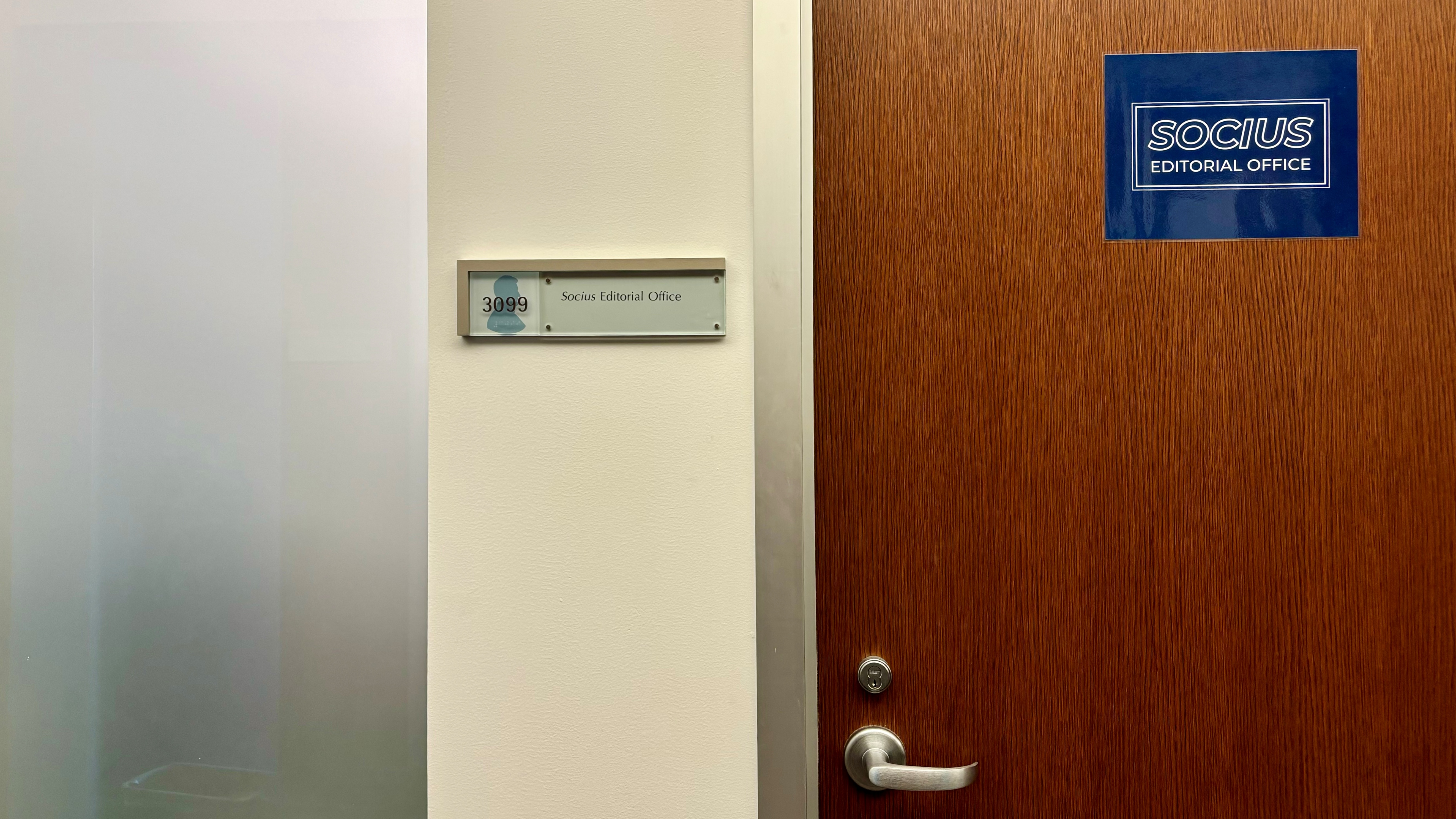
As with the Oregon editorial office, Socius’s Illinois editorial office has a dedicated email address, [email protected], for ease of authors’ communication. The journal also boasts a physical office, provided by the Illinois Department of Sociology, for its editorial staff in the campus’s beautifully renovated environmentally friendly Lincoln Hall (see Figure).
Tim F. Liao, Editor (2025)
Teaching Sociology
Teaching Sociology remains at the forefront of the scholarship of teaching and learning (SoTL) in sociology. We continued to offer free virtual webinars (webinars and smaller coffee and conversation discussions) on topics from articles recently published in Teaching Sociology that are relevant to individuals in higher education and others focused more on the teaching within the discipline of sociology. Topics this past year included DuBosian pedagogy and public sociology. These webinars were attended by over 100 different individuals (significantly more watched the recorded webinars) including people from outside of the discipline of sociology, directors of centers for faculty development, and faculty of all ranks from graduate students to professor emeriti representing all institution types. A special effort was made to reach out to graduate students and faculty of underrepresented groups.
Under the editorship of Michele Lee Kozimor and with deputy editor Barbara Prince, Teaching Sociology Volume 52 (2024) published 48 works, including conversations (7), articles (13), notes (8), editorials (2), as well as book, film, podcast, and website reviews (18). The special issue Teaching and Learning a Humanistic Sociology was published as the April 2024 issue. During the past year, due to the publication of another special issue and an increase in the quality of submissions, we used all the pages budgeted. We are now publishing more articles, notes, and conversations and slightly fewer book, film, and podcast reviews than in the past. Currently, most issues of the journal contain 6-7 articles, notes, and conversations, and 6-8 book, film, and podcast reviews. There was a healthy number of accepted or conditionally accepted manuscripts in the queue ready for the incoming editor, with 6 of the articles currently available online which facilitated a smooth transition. The editor, deputy editor, and editorial board have worked to encourage submissions and increase the quality of submissions by holding free virtual webinars and, when possible, conference sessions on a variety of topics, including demystifying the publication process for the journal.
The Teaching Sociology editorial team continues to work with the editorial team of the Teaching Resources and Innovations Library for Sociology to create linkages between these two resources. Searches performed in TRAILS identify Teaching Sociology citations. A reciprocal arrangement began in Summer 2017, with citations for new TRAILS resources published in two three-page promotions in each issue of Teaching Sociology as an ongoing practice. Our sincere appreciation to Stephanie Medley-Rath for her efforts.
Manuscript Flow
In 2024, excluding reviews, 96 manuscripts were received (54 new manuscripts and 42 revised manuscripts). The submissions for this volume are significantly higher than last year which is encouraging. For new submissions, 13 percent were rejected without peer review. Most rejections were accompanied with guidance from the editor to encourage future submission of a manuscript that would have greater prospects of receiving favorable reviews, often requiring new data collection or more rigorous assessment efforts. Of those manuscripts sent for peer review, 0 were accepted unconditionally, 14.9 percent were accepted conditional on minor changes, 51.1 percent rejected but invited to revise and resubmit, and 6.4 percent were rejected outright. These statistics on acceptance and revision decisions are comparable to recent previous years. In the opinion of the editorial team, the quality of manuscript submissions has increased since the webinars were initiated.
The mean time from submission to decision for 2024 is significantly longer than 2023. This is partly due to the editorial office transition which took place in August. In addition, the challenges of finding reviewers and reviews taking longer to be submitted due to the many challenges teaching faculty are facing still continues to be a barrier. The mean time from submission to first decision of all manuscripts submitted in 2024 was 16 weeks with revised manuscripts just 14.5 weeks. For new manuscripts that were rejected without peer review, decisions occurred within 1.4 weeks of receipt.
Editorial Board
There were 44 members on the Editorial Board comprised of 54.6 percent women, 34 percent men, 11.4 percent gender-queer/gender-nonconforming/other, and 33 percent were minorities. Individual members of the editorial board commonly performed 3-4 reviews in 2024.
Diversity, Equity, and Inclusion Initiatives
The free virtual Teaching Sociology webinars have been designed to build a community of teacher-scholars, make the publication process in Teaching Sociology more transparent, increase the quality of submissions, and provide mentoring and resources to underrepresented scholars. The goal of these webinars is to attracted a more diversified pool of submissions to the journal from unrepresented scholars and a set of different topics. A special effort was made to reach out to graduate students and faculty of underrepresented groups. We also worked to bring in faculty from community colleges and Hispanic Serving Institutions. We advertise the webinars on the journal’s Twitter (X) account, in various teaching and learning listservs, and through an email list of individuals interested in Teaching Sociology news that the journal maintains. Another initiative that was continued in 2024 was to work with teams of guest editors for the special issues allowing for more direct mentorship of the editing process for individuals from underrepresented groups. In 2024, this initiative included working with the guest editors for special issue Teaching and Learning a Humanistic Sociology. Beginning In 2023, and continuing in 2024, a new initiative was undertaken to further diversify the editorial board. In addition to taking recommendations for new editorial board nominations from the current board members, Teaching Sociology accepted self-nominations. A call for self-nominations was distributed through the Teaching Sociology email list. This initiative was found to be successful resulting in more high-quality self-nominations than open positions.
The editors express gratitude to the American Sociological Association for its continued support of the journal. A special thank you to Deputy Editor Barbara Prince; ASA Director of Publications Karen Gray Edwards; the Sage team; and editorial assistants Rena Rankin, Hannah Smith, Aleah Hoffman, and Willow Emig for their outstanding contributions to the work of the journal.
Michele Kozimor, Editor (2024) and Melinda Messineo, Editor (2025)