
Profiles for the current MFP Cohort can be found below. Click here to view previous cohorts.
 Daniel Cueto-Villalobos
Graduate Institution: University of Minnesota Twin Cities
Daniel Cueto-Villalobos is a PhD candidate in sociology at the University of Minnesota Twin Cities (expected May 2027), where he also earned his MA. He received his BA in Urban Studies at New York University. Cueto-Villalobos’s research sits at the intersection of religion, race and ethnicity, culture, and politics. His work examines three interconnected areas: the relationship between church and state in urban politics; religion’s influence on inequality attitudes; and identity and collective memory. His dissertation, The Antiracist Church: Race, Faith, and Memory in Minnesota, draws on ethnographic fieldwork and survey data collected across local religious organizations to examine how religious communities responded to discussions about policing, systemic inequality, and anti-Blackness that emerged after the police killing of George Floyd in 2020. He is currently a researcher on the American Mosaic Project, a long-running study of diversity, national identity, and belonging in the United States. His peer-reviewed work has appeared in the Journal for the Scientific Study of Religion, Sociology of Religion, and Social Problems. In addition to his scholarly research, Cueto-Villalobos is an award-winning teacher, having taught Social Theory and Sociology of Food at UMN since 2019. His research and teaching have been recognized by the American Sociological Association, the Society for the Scientific Study of Religion, and the College of Liberal Arts. He also contributes regularly to The Society Pages, The Conversation, and Minnesota Public Radio.
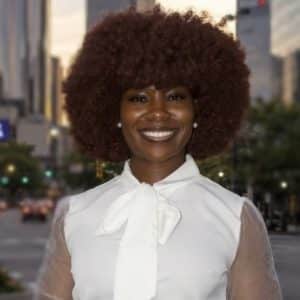
Akilah Flavors
Graduate Institution: University of California, Berkeley
Akilah Marie Favors is a PhD candidate in sociology at the University of California, Berkeley, where she also earned her MA. Akilah’s research interests include urban development, racial inequality, political economies of resistance, and organizational behavior. Her dissertation, Against All Odds: Black Nonprofits, Gentrification, and The Politics of Liberation in Modern Atlanta, investigates how Black-led nonprofits navigate complex power relations to resist displacement of the last predominantly Black region in Atlanta, Georgia – the Black Mecca of the South. Drawing on ethnographic, interview, and content analysis data, she compares three Black-led nonprofits’ strategies for challenging neoliberal forms of market exclusion – privatization, welfare retrenchment, and market-centered governance – that have repeatedly uprooted Black neighborhoods nationwide. She specifically illuminates how founders, employees, and beneficiaries transcend racialized market exclusion through exercising interclass solidarity, institutionalizing social, economic, and political support for the Black urban poor within gentrification processes that often alienate them. Black determination, innovation, and placemaking are theorized to function as institutional resistance to unaffordable housing, economic insecurity and cultural erasure. Akilah holds a BA in Sociology from Spelman College, where she became a UNCF Mellon Mays Fellow. The Institute for the Study of Societal Issues, the National Trust for Historic Preservation, and the Black Studies Collaboratory have supported her work. Beyond academia, Akilah enjoys weightlifting, traveling, cooking healthy soul food, supporting Black businesses, and encouraging loved ones.
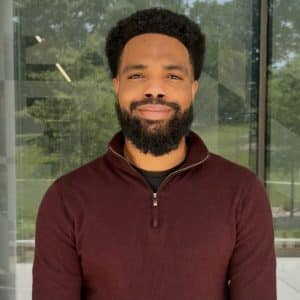
Deonté Hughes
Graduate Institution: University of Maryland – College Park
Deonté M. Hughes is a PhD candidate in sociology at the University of Maryland, College Park. His research interests broadly focus on family sociology, race, racism, stress, and health. Through three quantitative essays, his dissertation, titled “Familial Bonds, Black Families, and Well-Being: Three Essays on the Utilization of Familial Bonds in Black Families Across Social Contexts, examines how the effectiveness of kinship bonds as a source of strength on the health and well-being of Black families is influenced by social contexts created by structural racism over time. Hughes’s research has been supported by several University of Maryland sources including the University of Maryland Graduate School and the College of Behavioral and Social Sciences. His work has been published in the Journal of Family Issues and The Handbook of Social Psychology. Hughes earned his BA in sociology at Longwood University, and his MA in sociology at the University of Tennessee, Knoxville. Outside of research, Hughes enjoys attending poetry slams, playing video games, and spending quality time with his loved ones.
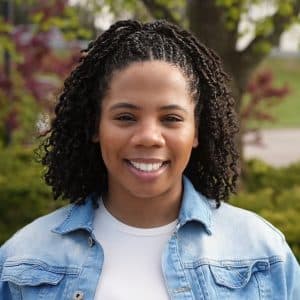
Deziree Jackson
Graduate Institution: Indiana University – Bloomington
Deziree Jackson is a PhD candidate in Sociology at Indiana University, Bloomington. Her research focuses on understanding racial disparities in health. Specifically, her dissertation, Inequitable Environments: Structural Racism, Disadvantage, and Racial Disparities in Biological Aging, utilizes a mixed-methods approach that integrates archival records, biomarkers, survey data, and in-depth interviews to examine how racialized environments contribute to disparities in biological aging among Black and White adults. Her dissertation develops measures of racialized space, including (1) county-level racial inequality, (2) exposure to sundown towns, and (3) proximity to historical Black settlements, to understand how environments shaped by histories of racial violence, as well as community formation, continue to influence health and aging outcomes across place and time. Although a sociologist at heart, she incorporates insights from public health, social epigenetics, geography, and Black studies to understand how structural racism and resilience become embedded in places and embodied in health outcomes. Deziree received her BA in Sociology from the University of Mary Washington, and her MA in Sociology from American University. At IU, she is also a fellow at the Irsay Institute for Sociomedical Sciences Research. In her spare time, Deziree enjoys puzzles, yoga, and spending time outside.
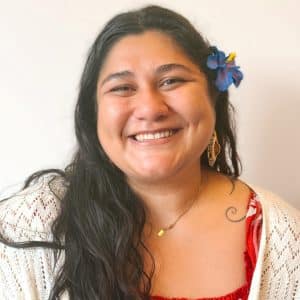
Sione Lister
Graduate Institution: Arizona State University
Sione Lynn Pili Lister is a PhD candidate in sociology at Arizona State University’s T. Denny Sanford School of Social and Family Dynamics. She earned her BA in Sociology from the University of Washington and her MA in Sociology from the University of Arizona. Sione is a Health Policy Research Scholar, funded through the Robert Wood Johnson Foundation. Her work is situated at the intersections of the state, race, colonialism, and everyday life-making practices. Incorporating relational method(ologies) and Pasifika epistemologies, her dissertation employs culturally informed conversations to examine how lived experiences of territorial status relate across the Pacific and Caribbean, and across the different political-legal statuses of the U.S. territories. Her research broadly seeks to understand how historical and contemporary colonial and racial structures shape peoples’ identities, relations, and visions of the future. As a Sāmoan woman, Sione is deeply committed to using scholarship to advance the wellbeing of Pasifika and other communities of color, and to honoring those who came before and those yet to come. Her work is published in Sociology of Race and Ethnicity, Critical Sociology, Sociological Forum, and Sociological Inquiry.
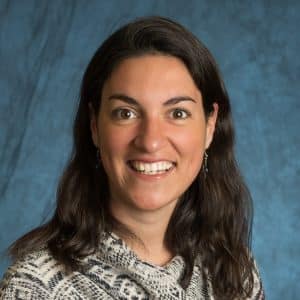
Emilia Ravetta
Graduate Institution: Colorado State University of California
Emilia Ravetta is a PhD candidate in Sociology at Colorado State University. She earned her BA in Argentina and her MA at Northern Arizona University. Ravetta’s resreach interets include energy tranistions, critical minerals mining, development projects and Latin American studies. Ravetta’s dissertation, Lithium mining in Argentina: a multi-scalar study of socio-cultural, economic, and political dimensions of extractive capitalism and local realities, draws on in-depth interviews and ethnographic fieldwork and investigates how extractive regimes reshape everyday life in the rural Andean community of Antofagasta de la Sierra, located near one of the country’s oldest and largest lithium projects. Her work traces how neoliberal and extractivist logics transform collective life and become embedded in labor practices, development narratives, and social relations, producing new forms of inequality, social disorganization, and differentiated access to resources and opportunities. Her scholarship sits at the intersection of environmental justice and green criminology, as well as the relationships between neoliberalism and settler colonialism in Latin America. Ravetta’s research has been supported by PEO International, and she has received additional funding for her work from InTERFEWS at Colorado State University. Outside of her research, Ravetta enjoys spending time outdoors exploring Colorado landscapes, including hiking, camping, biking, and running.