Gary Alan Fine, Visiting Scholar, Emory University
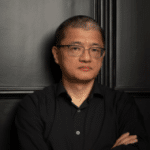 Bin Xu is a professor of sociology at Emory University. His research addresses the intersection of politics and culture, particularly in East Asia, with a strong emphasis on contemporary China. Many consider him among the most outstanding theorists in his discipline.
He arrived in Evanston at the Northwestern Sociology Department in the autumn of 2005, by way of the University of California-Davis and Nanjing University with a BA degree in politics from East China Normal University in Shanghai. Upon his arrival, Bin immediately made himself invaluable in our department. Aside from his keen interest in politics, disaster, emotions, culture, collective memory—and, oh yes, China—he was a committed social theorist. He built upon and critiqued Durkheim, Mead, Goffman, Bourdieu, Eliasoph and Lichterman, Randall Collins, and, perhaps also, the author of this profile.
Aside from his substantive interests in examining disasters, civil society, and ongoing challenges to political reputations in the People’s Republic of China, Bin established himself as a social theorist of high caliber and extraordinary range, a skill he brings to his term on the editorial team of Sociological Theory. Bin is a scholar whose theoretical orientation is grounded in contemporary pragmatism—an approach dependent on the continual examination of the relations between theory and data.
As an empirical researcher, Bin is a “theorist-plus;” he is not just someone who writes about ideas, but someone whose writing is based on his rigorous empirical research. While he has focused primarily on microsociology in his own writings, he has profitably engaged with a range of other approaches, including critical theory, Bourdieusian practices, and neofunctionalism. Every standpoint will receive a fair—even inspired—review by my former student and current colleague at Emory University.
Bin’s doctoral dissertation was a remarkable examination of how the then-liberalizing Chinese government attempted to gain popular support in the aftermath of the deadly 2008 earthquake in Sichuan Province. For the first time, government leaders (Grandpa Wen) felt the need to provide emotional support for the trauma that the disaster caused. One could hear Sino-echoes of Bill Clinton’s “I Feel Your Pain.” Bin’s dissertation-based book, The Politics of Compassion: The Sichuan Earthquake and Civic Engagement in China (Stanford University Press 2017), is a classic ethnographic intervention based on volunteers’ moral motives that captured the emotional dynamics of the moment. His book deservedly received the ASA Sociology of Culture Section’s 2018 Mary Douglas Prize for Best Book in the Sociology of Culture. His second book, Chairman Mao’s Children: Generation and the Politics of Memory in China (Cambridge University Press 2021), creatively examines how generations in post-Mao China remember and reinterpret the policy of forced migration to rural communities.
Much like his work in these publications, Bin’s current research examining biopolitics in China in the aftermath of the COVID-19 pandemic also speaks to the emotional self-presentation of government leaders. In explaining the aftermath of the COVID pandemic, Bin explores how it has been memorialized around the world, from Italy to Brazil to China to Atlanta. His project treats collective memory as a global enterprise, evolving and diverging as commemorations of loss and trauma migrate across cultures and states.
As a co-editor of Sociological Theory, Bin Xu, along with his colleagues, has a welcoming agenda. The journal will, as always, cover the best of social theory from macro to micro, from here to the world. As an empirical social scientist, Bin believes in deeply researched analyses that fall under the rubric of “theory.” Grand theories matter grandly, but so do other forms of local and middle-range theorizing. Although I am not sure what the margins in today’s capacious sociology might be, Bin promises that they have a home: big theories, small theories, local theories, global theories, and Goldilocks theories (those that are “just right”). Our beloved journal, with these newly minted leaders in place, is committed to publishing morsels that range from meaty insights to nuggets of delight to the most delectable sociological porridge.
When I asked ChatGPT about Bin Xu, it stated that, “Bin Xu is recognized as a leading voice in cultural and political sociology, noted for his interdisciplinary approach and insightful analysis of moral life, civic action, and collective memory under different political regimes.” But, heck, one doesn’t need artificial intelligence to tell us this; just good ol’ real intelligence would reveal this and more.
Bin Xu has been appointed initially for a three-year term running from 2027 through 2029.