
Calls for Papers: Publications
The Journal of Comparative Family Studies invites manuscript submissions for a special issue on “New Challenges in Time Use and the Korean Family.” Editors invite scholarly contributions that investigate the evolving patterns of time use within Korean families, drawing on the Korean Time Use Survey. Papers should adopt advanced methodologies and robust theoretical frameworks to deepen understanding of how family members allocate time across paid work, unpaid household labor, care activities, and leisure. The submission deadline for abstracts is February 14, 2026. To read the complete call for papers, including topics of particular interest, click here.
Social Sciences invites manuscript submissions for a special issue titled, “Restorative Justice Practices within Higher Education and the Arts: Addressing Complex Legacies of Harm.” Editors seek articles that examine the experiences of groups that have been marginalized in higher education and the arts, with authors exploring whether complex legacies of harm—along the lines of race, culture, citizenship, state and tribal sovereignty, globalization, and disability—require both personal and institutional reflexivity to unveil the multidimensional experiences of both perpetrators and survivors. The deadline has been extended to February 20, 2026. You can read the full call for papers here.
Demographic Research invites papers for an upcoming special issue on “De/Re-institutionalization of Asian Families” that seeks to fill critical gaps on the topic by offering new empirical evidence, introducing innovative data sources, advancing cross-country comparative perspectives, and employing multi-method approaches. Editors welcome empirical analyses on Asia broadly defined, and contributions on underrepresented Asian societies are particularly encouraged. Work that illuminates how global forces intersect with local norms to drive family change across diverse contexts and over time, comparative and/or trend studies is especially desirable. The submission deadline is February 26, 2026. Read the full call for papers here.
Work, Employment and Society seeks papers for a special issue on “Earning While Learning: Experiences, Patterns, and the Political Economy of Working students,” which aims to interrogate and fundamentally reconceptualize the relationship between earning and learning, bringing together different disciplinary approaches to interrogate student work and the global political economy that shapes it. Editors are interested in explorations of earning while learning that use different methodological approaches, as well as across diverse geographic and institutional contexts. Papers are due February 27, 2026. To read the full call for papers, including a list of possible topics, click here.
Population Research and Policy Review invites papers for an upcoming issue on “Contemporary Pronatalism in Demographic Context.” Editors welcome critical, theoretical, descriptive, and empirical submissions that explicitly focus on some aspect of pronatalism, including research on the evidentiary base upon which pronatalism rests; the social, political, and cultural inspirations and implications of pronatalism; and the support for, and effects of, pronatalist policies. The submission deadline is March 1, 2026. Read the full call for papers here.
Organization invites papers for an upcoming special issue on “Infrastructures of Labour and Social Reproduction: Governing Work through Circulation under Late Neoliberal Capitalism,” that aims to explore what critically oriented organization studies can learn from mobilizing an infrastructural lens, and what novel and original contribution can this discipline itself make to broader scholarly conversations. Editors welcome theoretical and theory-informed empirical contributions that rethink work and understand its changing nature in late neoliberal capitalism by putting physical, digital, institutional, social, ideological and affective infrastructures front and center. The submission deadline is April 1, 2026. Read the complete call for papers, including possible topics, here.
Gender & Society seeks papers for a special issue on “Global Fault Lines: Gender, Religion, and Nationalism.” Editors seek a wide range of scholarship—both empirical and theoretical—relevant to the discipline of sociology that engages entanglements between religion, nationalism, and gender across the world. Editors particularly encourage contributions that adopt a transnational focus. Completed manuscripts should be no longer than 9000 words and are due April 11, 2026. Read the full call for papers here.
ILR Review invites proposals for special issue themes. Proposals should aim to advance research and theory on work, labor, and employment and should fall within the aims and scope of the journal. Topics that have both an international and policy audience, and that draw on multidisciplinary and multimethod research are particularly encouraged. The deadline for submissions is April 15, 2025. Read the complete call here.
Organization Science invites submissions for a special issue on “Organizations in the Global South.” With 85 percent of the world’s population and some of the fastest-growing economies, the Global South is central to organizational life yet remains underrepresented in leading journals. This special issue seeks research that challenges, expands, and refines management theory by drawing on Global South contexts, including Indigenous populations in the Global North. Submissions are due April 30, 2026, and should be theoretically rigorous, empirically grounded, and relevant to the broad organizational studies community. Read the full call for papers here.
The Sociologist: Sociology From & About the DMV is an open access publication of the District of Columbia Sociological Society. It seeks submissions from sociologists working in or focusing on the Washington, DC metro region, including features intended to promote critical thinking about the social world; reviews casting a sociological eye on recent books and/or (other) cultural productions; photo essays focused on pertinent sociological themes; and advocacy/activism-oriented analyses of social policy issues. Submissions are accepted on an ongoing basis. For additional guidelines and how to submit, click here.
Calls for Papers: Conferences
The International Union for the Scientific Study of Population (IUSSP) invites abstracts for its Scientific Panel on Kinship Structures, Dynamics, and Inequalities, to be held at the Max Planck Institute for Demographic Research (MPIDR), June 8–9, 2026. The conference will bring together scholars from various disciplines to consider how large-scale sociodemographic shifts reshape family systems within and beyond the household and how these changes contribute to, reproduce, or mitigate social and economic inequality. The deadline for extended abstracts is January 21, 2026. To read the full call for papers, including a list of possible topics, click here.
The Society for Longitudinal and Life Course Studies seeks abstracts of no more than 300 words for its 15th annual conference, to be held on the theme “Structure and Change in Critical Times: Implications for the Life Course” on July 1-3, 2026. The conference is an in-person event hosted by the Université Libre de Bruxelles, and preconference workshops will take place on June 30, 2026. The aim of the event is to generate and exchange information on comparable data resources with information of early predictors on later outcomes across different domains and across different life stages. The deadline for paper abstracts is February 13, 2026. Papers which do not fit into regular sessions may be allocated as posters. To read the full call for submissions, click here.
The Race and Ethnicity Section of the Social Science History Association (SSHA) invites proposals for its meeting in Atlanta, November 19-22, 2026. On the theme “Decentering Modernity.” Organizers invite interdisciplinary papers and panels that address social, political, economic, and cultural processes from a historical perspective, broadly defined, and particularly welcome works that examine the convergence, divergence, and connections between multiple forms of modernity across the world, spanning long, medium, or short historical timeframes. Submissions that connect historical analyses to contemporary issues are also encouraged. The submissions deadline is March 1, 2026. Read the full call for proposals here.
Labor Rights in the 21st Century is an international conference to be held in Montevideo, Uruguay, on November 20, 2026. Organizers seek paper proposals on topics such as the history and present of labor rights, the labor movement, and workers’ struggles in Uruguay and around the world; tactics, strategies, and objectives for worker organizing; proposals and ideas for improving labor rights in the 21st century; the importance of international labor rights laws and agreements; and labor rights of digital and platform workers. The submission deadline is March 15, 2026. For more information, visit the website.
The 20th Junior Theorists Symposium, a one-day mini-conference held prior to the ASA Annual Meeting in New York City on August 7, 2026, that features the work of emerging sociologists engaged in theoretical work, broadly defined. Organizers invite ABD graduate students, recent PhDs, postdocs, and assistant professors (PhD 2022 onward) to submit a three-page précis (800–1000 words) and especially welcome submissions that broaden the practice of theory beyond its traditional themes, topics, and disciplinary function. The submission deadline is March 20, 2026. Read the full call here.
Calls for Applications
The Upjohn Institute’s Early Career Research Awards provide a resource for junior researchers (those within six years of earning a PhD) to conduct research related to policy on employment issues. The institute encourages research proposals on all issues related to employment and public workforce policy. Research of interest may examine how policies affect overall labor market outcomes or the labor market outcomes of different groups. Junior researchers in economics, sociology, public policy, political science, and related fields may apply. Early Career Research Award recipients are expected to write a research paper based on the funded work, submit the paper to the Institute’s working paper series, and prepare a synopsis of the research for as a policy brief and for possible publication in the Institute’s newsletter, Employment Research. Funding for an Early Career Research Award is $7,500. The deadline to apply is January 23, 2026. Visit the website here.
NextGenPop offers undergraduates an on-campus research training experience over the summer, virtual research and professional development workshops throughout the academic year, and varied opportunities for mentoring and networking with population scholars and practitioners from across the United States. NGP Fellows receive a $1,000 stipend for participation in the summer residential program. NextGenPop pays for room, board, and travel expenses associated with the summer program and offers travel support to the Population Association of America (PAA) Annual Meeting. In 2026, the summer program will be hosted by the University of Minnesota-Irvine (June 7—19, 2026), and the PAA Annual Meeting will be in Seattle (March 31-April 3, 2027). Applications are due by February 5, 2026. Read more about the program and apply here.
The Five College Consortium’s Women’s Studies Research Center invites applications for its 2026-2027 Research Associate Program. The center is the central node of feminist scholarship for Amherst College, Hampshire College, Mount Holyoke College, Smith College, and the University of Massachusetts-Amherst. Collectively, these institutions comprise the Five College Consortium, home to one of the largest concentrations of women, gender, and sexuality studies scholars in the world. Each year, the center hosts a cohort of local and international scholars and activists for three to eight months, providing office space, access to Five College resources, and cultivating a community in which feminist work can flourish. Currently in its thirty-fifth year, this initiative provides feminist writers and researchers with dedicated time, space, and intellectual community in which to develop major projects. Interested participants are welcome to apply for the Fall 2026 semester, the Spring 2027 semester, or the 2026-2027 academic year. Applications are due February 13, 2026. Find out more and access the full call for applications here.
Calls for Nominations
The Kohli Foundation for Sociology’s Kohli Prize for Sociology honors exceptional achievements in and contributions to the field and profession of sociology and calls for nominations of individuals who have made a significant imprint on sociological knowledge. The prize is worth 50,000 EUR. The nominee is expected to deliver an address at the awards ceremony, to be held at the Berlin Social Science Center (WZB), presumably on November 3, 2026. A nomination can be submitted by a scholar based at any institution of higher learning and research (university, research institution, academy of sciences). Submit via the form on the website by February 8, 2026.
The Kohli Foundation for Sociology’s Infrastructure Prize for Sociology honors people, projects, or organizations that have made a substantial contribution to an infrastructure in sociology. Such infrastructures can serve for data generation (e.g., large cross-national surveys), data preservation (e.g., archives), knowledge dissemination (e.g., learning platforms), fundamental research (e.g., setting up research institutes), or knowledge communication (e.g., science journalism). The prize is worth 10,000 EUR. The nominee is expected to deliver an address at the awards ceremony, to be held at the Berlin Social Science Center (WZB), presumably on November 3, 2026. A nomination can be submitted by a scholar based at any institution of higher learning and research (university, research institution, academy of sciences). Submit via the form on the website by February 8, 2026.
Event
The Futures of SOGI Data Forum aims to galvanize and empower researchers, policymakers, and activists and will be held online January 27, 2026, 11:00 a.m.-12:30 p.m. Eastern EST. The forum will include action-oriented reflections from key policy and research advocates, ideas and inspiration for approaches to SOGI data for 2026 and beyond, and practical tips for how we collectively move forward through this moment. Find out more and reserve your spot here.
Bridging the Gap? Rethinking Engagement between Migration Research, Policies, and Practices will be held April 23-24, 2026, at the Centre for Migration Studies, University of Ghana in Legon, and explore how knowledge is produced, mobilized, and acted on in African migration debates. In celebration of the centre’s 20th anniversary, in collaboration with the Migration Policy Centre (EUI), this two-day conference foregrounds African perspectives, power relations across scales, and decentered approaches that challenge entrenched narratives. Find out more and register here.
Accomplishments
Susan L. Brown, Bowling Green State University (BGSU), will serve as codirector of the new Center for Aging Families alongside principal investigators Hui Liu, Purdue University, and Sarah Hayford and Rin Reczek, the Ohio State University. The National Institute on Aging selected BGSU to receive a six-year grant to establish the center as a new research hub focused on how aging in the U.S. is shaped by family structures.
Barry Eidlin, McGill University, was invited to share his expertise and research on labor relations before the Canadian Senate’s Committee on Transport and Communications on October 29, 2025.
Guillermina Jasso, New York University, received the 2025 International Society for Justice Research Lifetime Achievement Award in recognition of “distinguished lifetime contributions to the scientific study of justice and for efforts to advance justice as a field of study.” The first sociologist to win the award, Jasso delivered the award lecture, titled “From Foundations of Justice Analysis to Current and Future Challenges,” in July 2025 at the society’s biennial conference in Seattle.
Charis E. Kubrin, University of California-Irvine, has been awarded the Stockholm Prize in Criminology—given in recognition of outstanding achievements in criminological research or for the application of research results by practitioners for the reduction of crime and the advancement of human rights—for her decades of research consistently challenging one of society’s most persistent myths: that immigrants bring crime to their new countries.
Gabriela León-Pérez, Virginia Commonwealth University, was one of the recipients of a 2025 “Persona de Poder” (People of Will and Power) award, given by Radio Poder in recognition of her contributions to the advancement and development of Virginia’s immigrant and Latino communities through example, word, and action.
Han Liu, University of Texas-San Antonio, received the E. Walter Terr Award for State and Local Demography from the Southern Demographic Association for his work focusing on social determinants of health, consequences of early-life health over the life course, and spatial disparities in health and socioeconomic outcomes.
Neha Lund, Brown University, received the Russell Sage Dissertation Research Grant for her project examining how advocates for migrants with Temporary Protected Status (TPS) make claims for expanding TPS protections, build coalitions, and legally advocate for immigrants with TPS.
Agustina Paglayan, University of California-San Diego, received the David Greenstone Best Book Prize (Politics and History Section of the American Political Science Association) and an Honorable Mention for the Jeffrey R. Henig Best Book Award (Education Politics and Policy Section of the American Political Science Association) for the book Raised to Obey: The Rise and Spread of Mass Education (Princeton University Press 2024).
Sharon Quinsaat, Grinnell College, received the 2025 Best Book Award (RC31 Sociology of Migration, International Sociological Association), 2025 Honorable Mention for Outstanding Book Award (Global Division, Society for the Study of Social Problems), 2025 Honorable Mention for Distinguished Book Award (Midwest Sociological Society), 2025 Honorable Mention for Lee Ann Fujii Book Award (International Studies Association), for the book Insurgent Communities: How Protests Create a Filipino Diaspora (The University of Chicago Press, 2024).
Qiaoyan Li Rosenberg, Harvard University, received the inaugural United States-Japan Foundation Scholar Dissertation Award for the work “Labor Migration Programs in Japan: A Three-Step Pathway to Permanent Residence, but Precarious Labor for All.” The award recognizes the best social sciences doctoral dissertation on Japan produced in the United States.
Zach Rubin, Lander University, was named Lander’s Distinguished Professor of the Year for 2025. The award recognizes a faculty member’s exemplary performance as a classroom teacher, as a scholar in his or her chosen field of study and service to the university and beyond
In the News
Larry Au, The City College of New York, was quoted in the January 2, 2026, article “The 8 Tell-Tale Symptoms of Long-Haul COVID, According to Experts” on MSN.
Susan L. Brown, Bowling Green State University, was featured on the October 28, 2025, episode of the Oprah Podcast titled “Gray Divorce (after 50) & Adult Children: The Fallout for the Family, with Oprah and Leading Experts” and was quoted in the December 9, 2025, piece “BGSU to Conduct New Study Focused on Changes in Aging” from Toledo’s WTOL 11 News.
Amber R. Crowell, California State University-Fresno, was quoted in the December 17, 2025, article “150 Fresno families received $500 per month for a year. Did it make a difference?” in the Fresno Bee.
Francesco Duina, Bates College; Marc Dixon, Dartmouth College; and Megan Tobias Neely, University of Colorado-Boulder, were guests on the December 2, 2025, episode of Maine Calling from Maine Public Radio on economic inequality.
Barry Eidlin, McGill University, was quoted in the November 4, 2025, article “Montreal Transit Strike Could Be First Test of New Quebec Labour Law” in the Chronicle Journal.
Jacob William Faber, New York University, was a guest on a segment of the December 10, 2025, episode of the Marketplace Morning Report titled “Watch out for these refinancing red flags.”
Nancy Foner, Hunter College, was a guest on the December 20, 2025, episode of All Things Considered titled “How Immigration Myths from the Past Still Shape Today’s Debates” on NPR.
Jeffrey Guhin, University of California-Los Angeles, was quoted in the December 15, 2025, article “Investors Are Keeping Faith” in the Los Angeles Business Journal.
Laura Theresa Hamilton, University of California-Merced, was quoted in the November 28, 2025, article “Study Proposes New Way of Targeting College Financial Aid in CA” from the California News Service.
Grace Kao, Yale University, was quoted in the December 16, 2025, article “Course on K-Pop Star ‘Signals Rise of Serious Academic Subject’” in Times Higher Education.
Lane Kenworthy, University of California-San Diego, authored the December 14, 2025, article “Everything You’ve Heard About Inequality Is Wrong” in the Boston Globe.
Jasmine Kerrissey, University of Massachusetts-Amherst, was quoted in the November 28, 2025, article “More Than 10% of Mass. Workers Use SNAP Food Aid, Report Says” from MassLive.com.
Jacob Lederman, University of Michigan-Flint, was quoted in the November 4, 2025, article “UM-Flint Hosts ‘Cracks in the Pavement’ Community Symposium on Nov 6” in the Flint Courier News.
Brian Mayer, University of Arizona, was quoted in the January 4, 2026, article “High Rents Among Major Concerns of Low-Income Tucsonans” on Tucson.com.
Ellen T. Meiser, University of Hawaii-Hilo, authored the December 5, 2025, article “Buying a Gift for a Loved One with Cancer? Here’s Why You Should Skip the Fuzzy Socks and Give Them Meals or Help With Laundry Instead” in the Conversation.
Alka Menon, Yale University, was quoted in the March 17, 2025, article “In Your Face: The Brutal Aesthetics of MAGA” in Mother Jones and was quoted in the October 23, 2025, article “Boob Jobs are Shrinking” in the Washington Post.
Shannon M. Monnat, Syracuse University, and Tim Slack, Louisiana State University, authored the December 9, 2025, article “6 Myths About Rural America: How Conventional Wisdom Gets It Wrong” in the Conversation.
Michelle S. Phelps, University of Minnesota-Twin Cities, was quoted in the November 22, 2025, article “Deep Dive: How Public Safety Is Served by Appropriate Response Teams” in the Minnesota Women’s Press.
Michael S. Pollard, RAND Corporation, had research cited in the December 4, 2025, article “China Is Struggling to Reverse Its Birth Rate Crisis, Researchers Say” in Newsweek and in the December 4, 2025, article “Gendered Legacies of Control: How China’s Population Policies Reshaped Women’s Lives” posted on the Council on Foreign Relations website.
Carmel E. Price, University of Michigan-Dearborn, provided commentary for the November 3, 2025, segment “Michigan Experts Speak on Trump Administration Tapping into Contingency Fund For SNAP” on CBS News Detroit.
Alexandrea J. Ravenelle, University of North Carolina-Chapel Hill, was quoted in the November 13, 2025, article “Workers turn to ‘polyworking’ to combat frozen salaries and inflation” from the Associated Press.
Anya Mikael Galli Robertson, University of Dayton, authored the November 21, 2025, article “The Plague of Frog Costumes Demonstrates the Subversive Power of Play in Protests” in the Conversation.
Andrew Seeber, University of the Virgin Islands, authored the November 4, 2025, article “Executive Order on Gender Marker Changes is Encouraging, But Limitations Remain” in the St. Thomas Source.
Randa Serhan, Barnard College, was quoted in the December 3, 2025, article “Mass Wedding in Gaza Celebrates New Life After Years of War and Tragedy” from the Associated Press.
Tony Silva and Emily Huddart, University of British Columbia, authored the October 28, 2025, article “New Research Reveals That Almost Half of Canadians Believe in the Paranormal — Ghosts And All” in the Conversation.
Jill Suitor, Purdue University, was quoted in the December 23, 2025, article “Do Parents Have Favorite Children? Of Course They Do” in the New York Times.
Lourdes Annette Vera, University at Buffalo, was quoted in the November 3, 2025, article “Early-Career Researchers Strive to Bring Environmental Justice to Communities” from the American Public Health Association.
Rob Warren, University of Minnesota-Twin Cities, was quoted in the November 21, 2025, article “New Study Exposes Truth About Fluoride Exposure and Kids’ Test Scores” in the New York Post and the December 7, 2025, article “More Colleges Are Offering Classes Helping Students Identify Truth in a Confusing World” in the Minnesota Star Tribune.
Canton Winer, Northern Illinois University, authored the October 30, 2025, article “‘My Gender Is Like an Empty Lot’ − The People Who Reject Man, Woman and Any Other Gender Label” in the Conversation.
Yu Xie and Junming Huang, Princeton University, had research cited in the November 6, 2025, article “Why Trump’s Cuts to Scientific Research Are a Big Win for China” in the Washington Post.
Cristobal Young, Cornell University, authored the December 1, 2025, article “New York’s Wealthy Warn of a Tax Exodus After Mamdani’s Win – But the Data Says Otherwise” in the Conversation.
New Books
Jean Beaman, the City University of New York-Graduate Center, and Ilke Adam and Mariska Jung, Vrije Universiteit Brussel (Belgium), Eds. A New Wave of Antiracism in Europe? Racialized Minorities at the Centre (IMISCOE Springer Books 2025).
Laure Bereni, CNRS (French National Center for Scientific Research), Managing Corporate Virtue: The Politics of Workplace Diversity in New York and Paris (Oxford University Press 2025).
Philipp Brandt, Sciences Po, Inside Data Science: Hackers and the Making of a New Profession (Columbia University Press 2025).
Nikita Carney, Bentley University, All Work Is Cultural Work: Diasporic Haitian Women, Paid Labor, and Cultural Citizenship (Rutgers University Press 2025).
Zhiwu Chen, University of Hong Kong; Cameron Campbell, Hong Kong University of Science and Technology; and Debin Ma, Fudan University, Quantitative History of China: State Capacity, Institutions, and Development (Springer 2026).
Yan Z. Ciupak, Northern Michigan University, Death, Dying, and Grief: Theories, Tools, and Cases (Springer Nature 2025).
Robert Crosnoe and Shannon Cavanagh, University of Texas at Austin, The Journey into Adulthood in Uncertain Times (Russell Sage 2025).
Zophia Edwards, Johns Hopkins University, Fueling Development: How Black Radical Trade Unionism Transformed Trinidad and Tobago (Duke University Press 2025).
Carrie E. Friese, London School of Economics and Political Science, A Mouse in a Cage: Rethinking Humanitarianism and the Rights of Lab Animals (New York University Press 2025).
Kati L. Griffith, Shannon Gleeson, and Patricia Campos-Medina, Cornell University; and Darlène Dubuisson, University of California-Berkeley, Legalized Inequalities: Immigration and Race in the Low-Wage Workplace (Russell Sage Foundation Press 2025).
Nazneen Khan, Randolph-Macon College, and Marie Jipguep-Akhtar, Howard University, Eds., Fifty Key Scholars in Black Social Thought (Routledge 2025).
Caitlin Killian, Drew University, Understanding Reproduction in Social Contexts (Bloomsbury 2025).
Charles C. Lemert, Wesleyan University (retired), Americans Thinking America: Elements of American Social Thought and Silence and Society (Routledge 2025).
Bernadette Ludwig, Western Connecticut State University, Unwelcome Shores: Black Refugees in America (Rutgers University Press 2025).
Neil J. MacKinnon, University of Guelph (retired), The Social Psychology of Morality (Edward Elgar Publishing 2025).
James McElvain, University of Virginia, Practical Statistics for Public Safety Professionals: Data Driven Results and Artificial Intelligence (Kendall Hunt 2025).
Rory McVeigh, William Carbonaro, Chang Liu, and Kenadi Silcox, University of Notre Dame, Politics and Privilege: How the Status Wars Sustain Inequality (Columbia University Press 2025).
Cody R. Melcher, Loyola University-New Orleans; Olivier Maheo, University of Paris 8 and CNRS (French National Center for Scientific Research); and Esther Cyna, University of Versailles-Paris-Saclay (France), Eds., Class, Race, and the U.S. South (Haymarket 2026).
Ben Merriman, University of Kansas, The Kansas Court of Industrial Relations: Interwar America’s Dangerous Experiment in Social Control (Cambridge University Press 2025).
Gudmundur Oddsson, University of Akureyri (Iceland); Jenny M. Stuber, University of North Florida; and James Michael Thomas, University of Mississippi, The Power of Sociology: Grasping Our Unequal World (SAGE Publications 2026).
Xiaoying Qi and Jack Barbalet, Australian Catholic University, Obligated to Care: Intergenerational Family Relations in Contemporary China (Sage 2025).
Madee Salehi, independent scholar, HuMachine Era: Artificial Intelligence and the Reshaping of Society’s Future (independently published 2025).
Kerilyn Schewel, University of North Carolina-Chapel Hill, Moved by Modernity: How Development Shapes Migration in Rural Ethiopia (Oxford University Press 2025).
Christopher Han Fei Seto, Purdue University, The Chocolatier’s Curse (Tule Publishing 2025).
Heather Shay, South Carolina State University, Identity Building among Role-Playing Gamers: Slaying Goblins in the Real World (Bloomsbury Publishing 2025).
Mary Ellen Stitt, University at Albany-SUNY, Trial by Treatment: Punishing Illness in an Age of Criminal Legal Reform (University of Chicago Press 2025).
Fatima Suarez, University of Nevada-Las Vegas, Latino Fathers: What Shapes and Sustains Their Parenting (New York University Press 2025).
Abe Walker, Fayetteville State University, Reassembling the UAW: Insurgency, Contention and the Struggle for Unionism in the American South (Temple University Press 2026).
Emily C. Walton, Dartmouth College, Homesick: Race and Exclusion in Rural New England (Stanford University Press 2025).
Kevin A. Whitehead and Geoffrey Raymo, University of California-Santa Barbara; and Elizabeth Stokoe, London School of Economics and Political Science, Categories in Social Interaction (Routledge 2025).
Mary-Collier Wilks, University of North Carolina-Wilmington, Reimagining Aid: Foreign Donors, Women’s Health, and New Paths for Development in Cambodia (Stanford University Press 2026).
Cham David Willer, University of South Carolina, and Pamela Emanuelson, North Dakota State University, The Logic of Theoretical Sociology: An Historical Assessment (Palgrave Macmillan 2025).
Roger A. Wojtkiewicz, Ball State University (retired), Modeling Nonlinearity and Interaction in Regression Analysis using Spline Variables (Sage 2026).
Myungji Yang, University of Hawaii-Manoa, Reactionary Politics in South Korea: Historical Legacies, Far-Right Intellectuals, and Political Mobilization (Cambridge University Press 2026).
David Zaret, Indiana University-Bloomington, Petitioning and Power Relations in Pre-Modern Eurasia (Oxford University Press 2025).
In Memoriam
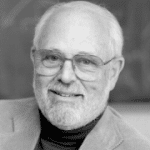
Kai T. Erikson, former president of the American Sociological Association (ASA), died peacefully on November 10, 2025. He was 94 years old. Erikson spent 45 years at Yale University, where he was the William R. Kenan, Jr. Professor of Sociology and American Studies. He edited the Yale Review for 12 years, reading and sharpening the work of many literary luminaries. Erikson’s sociology influenced the trajectory and vernacular of our discipline with his uniquely beautiful and deeply humane prose. He wrote some of the most renowned works in modern sociology. Erikson’s first book, Wayward Puritans: A Study in the Sociology of Deviance (John Wiley and Sons 1966), received the ASA McIver Award (now the Distinguished Scholarly Book Award). His second book, Everything in its Path: The Destruction of Community in the Buffalo Creek Flood (Simon & Schuster 1976), received the 1977 Sorokin Award from ASA. Erikson retired from Yale in 2000. Five years later, at the age of 74, he formed and chaired the Social Science Research Council Task Force on Hurricane Katrina and Rebuilding the Gulf Coast. For nearly two decades after the storm, he shepherded this major research program on the most telling disaster of our time. That effort culminated in the publication of the University of Texas Press’s Katrina Bookshelf series, which Erikson edited, also co-authoring the final book in the series, The Continuing Storm: Learning from Katrina (University of Texas Press 2022) with Lori Peek. The Times of London referred to Erikson as “Professor Catastrophe from America.” Those of us who knew him best called Kai a friend, colleague, mentor, inspiration, and guide. Obituaries for Kai were published in the New York Times, Wall Street Journal, and Yale News, among many other outlets.
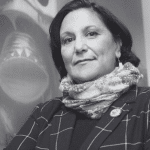 Dwanna Lynn McKay, citizen of the Muscogee (Creek) Nation and a leader in the sociology of Indigenous peoples and Native Nations, passed away on November 11, 2025. She was 62. McKay served as associate professor and chair of the Race, Ethnicity, and Migration Studies Program at Colorado College, where she was recognized for her commitment to students and her dedication to addressing inequality through scholarship and public action. As a founding member and current chair of the ASA Section on Indigenous Peoples and Native Nations (IPNN), she helped shape a community within the discipline that foregrounded Indigenous knowledges, methodologies, and lived experiences. You can read her full obituary here.