
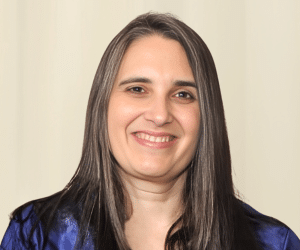
It is with profound pleasure that I introduce Joya Misra as a new member of the American Sociological Review (ASR) editorial team. Misra joins Donald Tomaskovic-Devey, Laurel Smith-Doerr, and David Cort in leading the American Sociological Association’s flagship journal. She brings extensive editorial and leadership experience, as well as broad scholarly expertise and commitment to global research excellence. The continuing editors say, “We are over-Joya’ed to have Joya Misra join the ASR team! Our vision to expand ASR’s global reach connects to Joya’s strengths in scholarship on intersectional inequalities, migration, and political economy.”
Misra is the distinguished professor of sociology and public policy at the University of Massachusetts-Amherst (UMass). She earned her PhD at Emory University and her bachelor’s degree at Centenary College of Louisiana.
Editorial Experience and Service to the Discipline
Misra has an extensive record of leadership the discipline, having served as president, vice president, and Council member of ASA, as well as in leadership roles for multiple ASA Sections. She has also held leadership roles in several other organizations, including Sociologists for Women in Society (SWS), the Society for the Study of Social Problems (SSSP), the Carework Network, and the Eastern Sociological Society (ESS). At UMass, Misra served as director of NSF ADVANCE programming and director of the Institute for Social Science Research. During her career, Misra has received nearly 30 awards and fellowships in recognition of the excellence and international impact of her scholarly work, and has received virtually every award that UMass offers in recognition of exceptional scholarship, mentorship, or teaching.
Misra brings decades of editorial experience that complement the existing team. She served as editor of Gender & Society (2011–2015), where she worked to advance antiracist, decolonial, queer, and transnational feminist theorizing. Prior to this post, she was editor of Pine Forge’s Sociology for a New Century Book Series (2004–2009) and the ASA Rose Book Series in Sociology (2001–2005), as well as the book review editor for the Journal of World-Systems Research, and on the editorial boards of American Sociological Review, Contemporary Sociology, Gender & Society, Journal of Poverty, Social Currents, Social Problems, Social Forces, and Socius.
 Misra’s scholarly work has had profound and far-reaching impact, shaping the literature on international comparative policy analysis and placing her work in sustained conversation with scholars from around the world. She uses a multimethod, intersectional approach to analyze inequality, showing how cultural attitudes and gendered policies create differential outcomes across parenthood, partnership, and class. She is a leading scholar on race and gender inequalities in the workplace, including for retail workers and faculty members.
Sociological Perspectives
As an editor of ASR, Misra joins a team committed to the highest promise of the discipline— inclusive, rigorous scholarship that reflects the breadth of this vibrant field as it is practiced globally. She looks forward to showcasing work using emerging methods and addressing social problems, while ensuring that the journal continues to publish the very best emerging sociological research.
American sociology faces a particularly challenging environment. Misra views protecting academic freedom and resisting efforts to suppress the teaching and practice of sociology as the most pressing problems currently facing the profession. As ASA president she developed the Value of Sociology initiative to emphasize the importance of sociological research and promote academic freedom.
Misra has been particularly influenced by Patricia Hill Collins’s work “Learning from the Outsider Within: The Sociological Significance of Black Feminist Thought” (Social Problems 1986) and Black Feminist Thought: Knowledge, Consciousness, and the Politics of Empowerment (Routledge 1990). These works persuaded her that she belonged in the discipline. She continues to be grounded and inspired by transformational scholars, including Evelyn Nakano Glenn and Mary Romero, whose transnational scale, intersectional insight, methodological innovation, and disciplinary boundary‑blurring expand the possibilities and promise of the field.
ASR stands to benefit immensely from Misra’s conceptual clarity, methodological range and rigor, transnational engagement, and deep commitment to advancing the highest ideals of sociology.
Joya Misra will serve as co-editor of the American Sociological Review beginning immediately through December 31, 2028.