
One film device I always appreciate is when a character in a science fiction movie explains a complex concept in overly simple terms. One of the best satirical examples appears in an episode of the TV show Futurama, in which one character lays out an elaborate plan: “If we can reroute engine power through the primary weapons and configure them to Melllvar’s frequency, that should overload his electro-quantum structure—.” Another character cuts him off: “It’s like pumping hot air into a balloon!” The analogy lands instantly and memorably in a way that the technical explanation could not.
Analogy-as-translation is one of many ways to connect complex ideas to familiar knowledge, improving retention and recall. Other techniques involve using vivid sensory or emotional associations to make information more memorable. Examples include familiar stories, images, metaphors, or analogies that anchor feelings or emotions to unfamiliar or complex concepts. When and how to use these devices were valuable takeaways for me from the 2026 Social Science Advocacy Day, which is organized by the Consortium of Social Science Associations (COSSA), a nonprofit advocacy organization founded in the 1980s to protect the social and behavioral sciences from federal budget cuts and to advance them in policymaking.
Social Science Advocacy Day
The first day of this year’s event opened with a welcome from COSSA Executive Director Wendy Naus and a keynote address by Sudip Parikh, CEO of the American Association for the Advancement of Science. The day included updates from federal agencies and a panel of science policy experts covering current funding priorities across institutions such as the National Science Foundation, Census Bureau, and National Endowment for the Humanities. The afternoon closed with sessions on preparing for congressional meetings, small-group work on messaging, and closing remarks.
What I appreciated most about the first day was that every speaker drove home the importance of research funding and the need not to overwhelm representatives with data. Speakers advised we pick one or two themes and anchor them to a personal, memorable story. In practice, this is about how our research can be communicated to shape policy conversations, which affects funding priorities, the production and preservation of public data, and the distribution of resources that follow from those decisions.
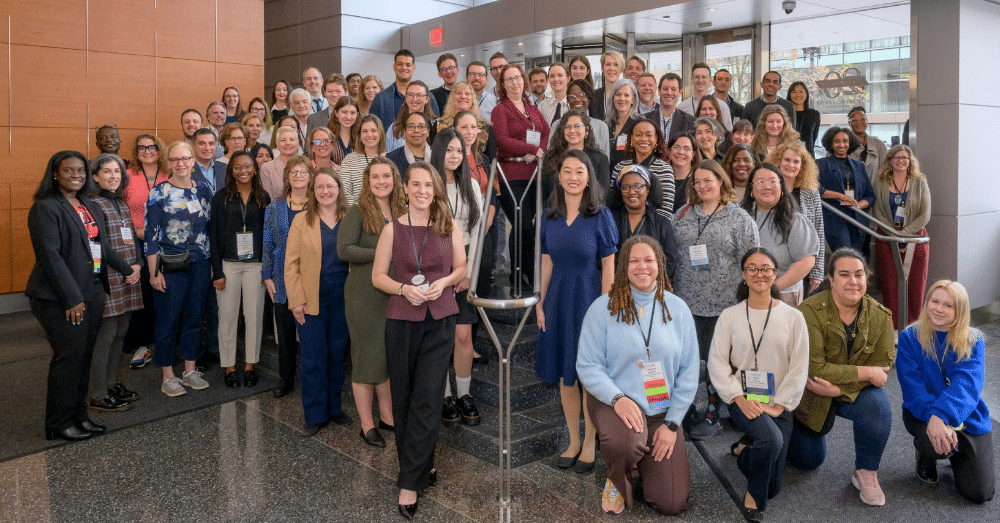
Day two began early with a team breakfast and final prep before attendees walked to Capitol Hill for congressional meetings that ran throughout the day. Altogether, there were 85 social and behavioral science researchers, faculty, students, and advocates from 24 U.S. states scheduled to meet with approximately 90 U.S. congressional offices.
Here I should stop and note that I am a sociologist “in the wild,” working in an industry where MBAs far outnumber social scientists. I incorporate social theory into the problems I solve for leaders on an almost daily basis, but it is challenging to land these points in a way that changes their minds. Sometimes the challenge is a lack of familiarity with the discipline; other times, it is skepticism toward concepts such as social capital, power dynamics, and structural constraints. And sometimes the barrier is neither unfamiliarity nor skepticism, but different political views, competing incentives, or ideological commitments that make certain sociological frameworks unwelcome. Decision-makers can be invested in not seeing the structures around them too clearly, and no analogy, however vivid, resolves that.
Making It Stick
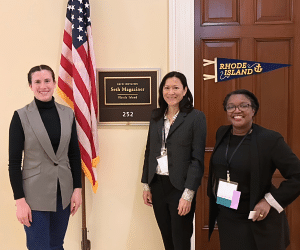
During my day on the Hill, I joined a small team representing Rhode Island, a state whose representatives are long-standing supporters of the social sciences and the many higher education institutions that are home to them. My goal was to convey the importance of social science research broadly and then to emphasize the value of public data sets as tools for researchers to track trends, inform programming and initiatives, and ensure taxpayers get the services they need. These messages, thankfully, were well received in the offices we visited. This reception was not something we took for granted. The current federal administration has cut research funding, restricted access to public datasets, and in some cases removed them entirely. For social scientists, this is a direct dismantling of the infrastructure on which our work depends.
Several days later, I returned to my day job. I sat in a conference room with a nonprofit leader, discussing the value of the global, multiyear data at their fingertips. We agreed the data was valuable. I emphasized that it only becomes impactful when used intentionally and analyzed with rigor. Data does not create impact on its own; it must be actively used. When aligned with a clear goal, data can help uncover new insights, shift decisions, and drive systemic change. It can strengthen the effectiveness of social impact interventions. In that sense, data is only as powerful as its application.
Without skipping a beat, I said, “Think of data as the heated air in a hot air balloon . . .”
Editor’s Note: As part of ASA’s Policy Outreach Program Fellowship, fellows had the opportunity to attend Social Science Advocacy Day on Capitol Hill with a group from the Consortium of Social Science Associations (COSSA). The following is a reflection on that experience, which took place March 23–24,2026, in Washington, DC.