
We are pleased to introduce you to the distinguished winners of ASA’s 2025 awards. Every year, awardees are honored during a ceremony at the ASA Annual Meeting. Each of the pieces below was submitted by the relevant award selection committee, and we thank the committees for their good work.
Cox-Johnson-Frazier Award
Jualynne E. Dodson, Michigan State University
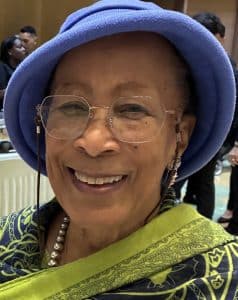
Across a four-decade career, Jualynne E. Dodson has engaged in research, built programs, mentored widely, and influenced generations of students in ways that embody the legacies of Oliver Cox, Charles S. Johnson, and E. Franklin Frazier. The selection committee is proud to recognize Dodson as the recipient of the 2025 American Sociological Association’s Cox-Johnson-Frazier Award, named after these pioneering African American sociologists.
Born in Florida and having received her graduate training in sociology in California, Dodson has held professorships at institutions including the Union Theological Seminary and the University of Colorado. She is currently professor of sociology emerita at Michigan State University. Dodson first made her mark in the study of religion and the global Black diaspora. She has completed groundbreaking qualitative research on Black religions in Cuba. Her influential books include Sacred Spaces and Religious Traditions in Oriente Cuba (University of New Mexico Press 2008) and Engendering Church: Women, Power, and African Methodism (Rowman & Littlefield Publishers 2002).
Dodson’s scholarship has had a global reach in settings including China and Brazil. She has been involved in professional communities based in the United States and abroad, including as a delegate to the World Council of Churches and as a member in the Association for the Study of the Worldwide African Diaspora and the International Sociological Association.
As Mary Pattillo, who wrote in support of Dodson’s nomination, observes, Dodson “has devoted her scholarly work to elevating underserved communities, and promoting institutional equity, particularly within higher education.” The selection committee could not have agreed more. As the founder of the African Atlantic Research Team at Michigan State University, Dodson has for more than 20 years supported nearly 50 students from historically marginalized backgrounds on the path to receiving a PhD. In 2001, she received the A. Wade Smith Award for Teaching, Mentoring, and Service from the Association of Black Sociologists. Indeed, Dodson has been a beloved mentor at her own institutions and for students on other campuses. As Afe Adogame writes, “at professional meetings, Prof. Dodson stands out in mentoring early-career scholars and graduate researchers. She often volunteers and participates in providing professional guidance during special career trainings sessions for young sociologists and at workshop sessions on research methodology.”
Please join the selection committee in applauding Jualynne Dodson’s legacy of research and mentoring, and for being recognized this year as the winner of the 2025 Cox-Johnson-Frazier Award!
Dissertation Award
Mary Shi, University of Michigan, for the dissertation titled “Settlers’ Republic: Land, Infrastructure, and the Emergence of New Technologies of Government in the United States, 1789-1862,” completed at University of California-Berkeley
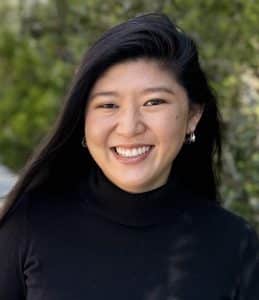 This year, the selection committee for the 2025 American Sociological Association’s Dissertation Award reviewed nearly 30 dissertations. The winner of this year’s award is “Settlers’ Republic: Land, Infrastructure, and the Emergence of New Technologies of Government in the United States, 1789-1862” by Mary Shi of the University of Michigan.
This is a fantastic piece of scholarship. In this bold retelling of the early history of the United States, Shi argues that the drive to acquire land, and to dispossess native people of this land, must be understood as central to the formation of the U.S. as a nation-state. The author provides us with new theoretical tools to think about settler colonialism writ large, as well as its central role in driving U.S. state formation and subsequent logics of governance.
In her nomination letter, Professor Mara Loveman, University of California, Berkeley writes, “’Settlers’ Republic’ is an ambitious, bold, provocative, and highly original dissertation that intervenes in interdisciplinary scholarly debates over the early development, foundational character, and enduring nature of the American state. The dissertation makes generative sociological interventions on a set of questions that are typically claimed to be within the domain of Political Science and History.”
Through both original historical research and critical sociological engagement with secondary scholarship from history, political science, and historical sociology, Shi shows how the American state developed as a settlers’ republic defined by the clash of imperial and republican impulses. She argues that the collision of imperial and republican impulses placed land at the center of American state formation and produced the paradoxical situation where “a people wary of centralized authority” nonetheless “found themselves building an expansive, bureaucratized, and increasingly developmental American state.”
Early American statesmen and their accomplices devoted much more governmental effort to the work of “acquiring, surveying, and selling land; promoting infrastructure projects such as canals and railways; and managing western territories” than previously recognized. By centering the ways that land and territory emerged as “the orienting object of government,” Shi documents previously unrecognized and subsequently obscured ways that settler colonial logics combined with principled republicanism to structure early American state formation.
“Settlers’ Republic” forces a broad scholarly rethinking of the fundamental nature of the U.S. developmental state that places land—its acquisition, development, and management—and dispossession (of all who stand in the way of the settler republican developmental telos) at its center. Thus, the dissertation is the foundation for a book that will engage scholars across multiple disciplines. The projects put forth a distinctive sociological argument for rethinking the fundamental character of the U.S. state that is deeply informed by the encounter between classical and postcolonial theories of the state, and by a creative synthesis of ideas from critical political geography, American studies, and Native American studies. The dissertation advances a creative and original thesis that contributes to a small but sophisticated set of works in historical sociology; to political scientists in the field of American political development; to historians of colonial and early republican U.S.; and to scholars in political geography, American Studies, and Native American Studies.”
Committee members agreed that this dissertation rose above all others, expanding the boundaries of the discipline in important and meaningful ways. Shi tells a story that is theoretically and methodologically rich, innovative, and sophisticated. In our view this work checks all the requisite boxes for excellent scholarship—in terms of the significance of its argument, its contribution to sociological knowledge, its presentation of important new theoretical frameworks, and the refreshingly well-crafted nature of its prose.
Congratulations Mary Shi.
The committee also offers the designation of Honorable Mentions to:
Miriam Gleckman-Krut, Harvard University, for the dissertation titled “The Rainbow Nation and The Gays it Excludes: South Africa’s Management of Sexuality and Migration (1913-2020),” completed at the University of Michigan
Devin Rutan, Princeton University, for the dissertation titled “Rising Ineligibility for Social Security: Drivers and Consequences of Elderly Poverty,” completed at Princeton University
Distinguished Career Award for the Practice of Sociology
Carole Joffe, University of California-San Francisco
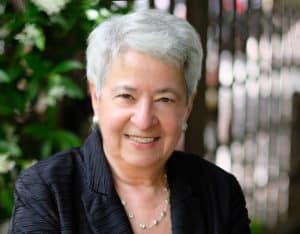 The selection committee for the 2025 American Sociological Association’s Distinguished Career Award for the Practice of Sociology has proudly selected Carole Joffe, professor of obstetrics and gynecology at the University of California-San Francisco, and professor emerita of sociology at the University of California-Davis. It is rare that a committee gets the opportunity to award such a fitting candidate at such a pressing time, but Joffe’s tremendous body of research and advocacy on behalf of reproductive health and rights serves as an exemplar for a sociological career as decorated in accolades as it is measured by its impact on social change.
Joffe’s lifelong work models how sociological research can be transformed into public knowledge. The core of her work, which has been fundamental to understanding and proving that abortion is health care and critical to maintaining reproductive health overall, has furnished a central claim for women’s rights advocates and health care providers alike. Along with four sole-authored books and dozens of peer-reviewed articles and chapters, her co-authored book (with David Cohen), Obstacle Course: The Everyday Struggle to Get an Abortion in America (University of California Press 2020), has swayed the public debate on abortion rights and established Joffe as one of its most tireless champions.
Beyond her dazzling corpus of academic publications, Joffe has been a leading voice in the public domain. In the past 15 years alone, she’s authored more than 100 editorials in outlets such as the New York Times, the Washington Post, the Hill, Huffington Post, the Guardian, Time, and Rolling Stone. There is no objective measure for the greatest impact that public sociology can make, but if there were, it would have to compare to the late Supreme Court Justice Ruth Bader Ginsburg citing Joffe’s writings directly in an abortion-related case heard before the U.S. Supreme Court.
Her commitment to educating the public is rivaled only by her commitment to the teaching and mentorship of dozens of students across research and clinical fields, ranging from doctoral precandidates to post residency physicians and junior faculty. In recognition of the vast footprint her teaching has made on the field, the National Abortion Federation established the Carole Joffe-Stanley Henshaw Award for the Social Science Study of Abortion, to be given annually to an advanced graduate student or someone within a year of completing their thesis
Knowing the urgency of her work and its potential to change the tides of one of the country’s cornerstone human rights issues, Joffe has consistently placed herself on the embattled frontlines of advocacy and activism. She previously served as chair for a task force on “Planning for a Post-Roe World” for the National Abortion Federation. She additionally serves on advisory boards and/or boards of directors for numerous advocacy organizations, including Physicians for Reproductive Health, the Center for Reproductive Rights (University of California Berkeley School of Law), and the Center for Engaged Scholarship.
Both nationally and internationally, she is one of the most sought-after panelists, educators, and keynote speakers on abortion health and access, with more than 23 presentations in the COVID-slowed spring 2020 alone. As tireless as she is courageous, more than 50 of her talks have occurred since her recent retirement. In presenting Carole Joffe with the Distinguished Career Award for the Practice of Sociology, ASA stands in fine company (Joffe has received three lifetime achievement awards to date) but also bestows this award as a call to action for all sociologists to intentionally aim our own life’s works at the people, organizations, and causes that need it most. As much as it is our honor to recognize Carole Joffe’s contributions to sociology, it is a greater honor still to count her as a sociologist and a champion for our field.
Distinguished Contributions to Teaching Award
Mary S. Senter, Central Michigan University

The selection committee for the 2025 American Sociological Association’s Distinguished Contributions to Teaching Award is proud to honor Mary Scheuer Senter in recognition of her extraordinary and enduring impact on the teaching of sociology.
Over a career spanning more than four decades, Senter has helped shape the national conversation around what it means to effectively teach sociology, how we prepare our students for meaningful careers, and how we evaluate and improve our programs. She is a rare scholar whose work has reached well beyond her own institution—transforming the ways educators across the country think about pedagogy, assessment, curriculum, and applied sociology.
Senter’s leadership in the scholarship of teaching and learning (SoTL) is evident in a prolific body of work that includes dozens of peer-reviewed articles, book chapters, research briefs, technical reports, and national presentations. Her publications—such as “The Impact of Social Relationships on College Student Learning during the Pandemic” and “The Pandemic Classroom and Supportive Relationships: Antidote to Neoliberalism in Higher Education?”—blend rigorous empirical analysis with humane, equity-minded insights. She confronts head-on the structural challenges educators face by offering concrete, evidence-based models for responding with care and creativity to the challenges faced by students and instructors.
A hallmark of Senter’s contribution is her sustained focus on preparing sociology students for life after college. Long before “career readiness” became a higher education buzzword, Senter was developing curricula, writing faculty guides, and conducting research to ensure sociology majors could translate their academic learning into meaningful work. From the ASA-published 2010 faculty manual Launching Majors into Satisfying Careers to her widely cited articles in Teaching Sociology, her work has influenced the design of sociology programs, supported the success of countless students, and guided a generation of faculty.
Equally significant is Senter’s national leadership in program review and assessment. As a co-author of ASA’s 2017 report The Sociology Major in the Changing Landscape of Higher Education and the author of multiple articles in academic journals focused on institutional assessment, she has helped departments across the country navigate increasingly complex demands for accountability and improvement. Through her work as a program reviewer, ASA committee member, and author of practical tools for faculty leaders, Senter has modeled how to make assessment not just manageable but meaningful.
Senter’s impact also reflects her deep commitment to professional service. She has served on the editorial board of Teaching Sociology, advised the ASA Program Reviewers and Consultants group, and contributed as a member of the ASA Task Force on Liberal Learning and the Sociology Major III. Her long-standing involvement in the North Central Sociological Association has helped cultivate a regional culture of pedagogical innovation, effective program assessment, and collaboration.
Perhaps most impressively, Senter’s many accomplishments are grounded in a clear sociological vision: that teaching is not merely about content delivery, but about human connection, equity, and transformation. Her work invites us to reimagine our classrooms as sites where students can flourish not only intellectually, but socially and professionally.
Mary Senter’s contributions are as wide-ranging as they are deep. She is a teacher, mentor, scholar, administrator, and advocate whose work exemplifies the best of our discipline. The selection committee is honored to recognize her as the 2025 recipient of the Distinguished Contributions to Teaching Award.
Distinguished Scholarly Book Award
The Last Human Job: The Work of Connecting in a Disconnected World by Allison J. Pugh, Johns Hopkins University
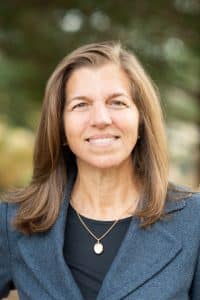
The selection committee is proud to present Allison J. Pugh’s The Last Human Job: The Work of Connecting in a Disconnected World (Princeton University Press 2024) as the winner of the 2025 American Sociological Association’s Distinguished Scholarly Book Award
Pugh is a research professor in the Department of Sociology at Johns Hopkins University. Drawing on 108 interviews with various professionals and hundreds of hours of rich ethnographic observations of spaces and interactions (and across several states and even continents), Pugh’s The Last Human Job: The Work of Connecting in a Disconnected World explores the nature of “connective labor.” Connective labor—jobs that involve working with others, such as teachers, primary care physicians, and therapists—is the essence of making a human connection across what could be cold and impersonal interactions; such effort “involves ‘seeing’ the other and reflecting that understanding back.” Pugh shows how connective laborers employ emotions, strategically but often contingently and out of a sense of being human, to make personal bonds to carry out their jobs of helping other real people—sometimes paying a personal cost. This rich study demonstrates the continuing importance of such labor for maintaining senses of belonging and dignity that ultimately are central to the social sciences.
Pugh begins by documenting the significance of the “human” in human interactions, threats to such work, and how “humanness” is difficult to turn into formulae and “best practice” guidelines (central to the “crisis of depersonalization”). Doctors who treat patients, teachers who reach out to students, chaplains who feel the pain of their charges look not only at physical symptoms, but also at the entire person. Connection involves recognizing the other and their perspectives to create empathy and intimacy. This can create dignity, purpose, and understanding to treat, train, and educate others effectively and even holistically. Connective labor involves a creative use of one’s body, emotions, and psyche creatively and responsively connective labor is labor that technology cannot entirely replace.
Yet, connective labor faces a constant and growing contradiction. Employers often consider emotional connections to be “soft skills” to help perform a job effectively, rather than at the heart of such work. Technology, including AI, disrupts connective labor by setting artificial rules or taking the place of the people making the connections. Technology, it is claimed, can provide access to help for those worse off; or it can be less biased than people; or that it can complement human interaction. Often apps and similar technology get in the way, add burdens, or do not adequately replace the human touch. Connective labor comes with other costs as well: burnout, risks (including personal vulnerability), feelings of limits when trying to help. Organizational structures and routines can add to burdens, and the laborer’s desire to help can invite employers to exploit them. Life becomes the organizational mission as well as the connection. The desire to help is torn between reaching out to real people (underappreciated) and delivering the organizational plan (power and accountability). Possible autonomy in choosing clients can lead to uncertainties and insecurities akin to those of the gig economy. Scripts and systems designed to standardize, measure, and even aid become constraints on human connections. Finally, connective labor risks a power dynamic: helping can become judgment and defeat the goal of creating a connection and providing real aid. To meet these challenges, Pugh offers suggestions: leadership that facilities relations and care; common values of connection and care reinforced by meaningful collective rituals and routines; and sufficient resources to carry out such work.
Connective labor requires the capacity to feel, and as creatures of feeling, we need such labor. Max Weber feared rationalization would overpower the magic of human meaning; Pugh shows the modern form of that threat and how those doing important connective labor adapt, resist, and try to survive, while giving us ideas about how to respond.
The committee also offers the designation of Honorable Mentions to:
Colonizing Palestine: The Zionist Left and the Making of the Palestinian Nakba by Areej Sabbagh-Khoury, University of California-Berkeley and The Hebrew University of Jerusalem
Offshore: Stealth Wealth and the New Colonialism by Brooke Harrington, Dartmouth College
Jessie Bernard Award
Manisha Desai, Stony Brook University-SUNY
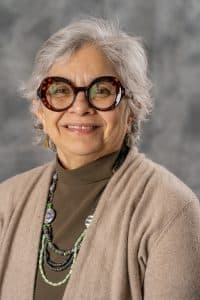
During her distinguished career of scholarship, service, and teaching on gender and globalization, transnational feminisms, global climate justice movements, and contemporary Indian society, Manisha Desai has tirelessly advanced decolonial feminist praxis and women’s human rights. Her work has expanded sociology’s horizon to include radical epistemology and subaltern perspectives. For these reasons and many others, the selection committee has enthusiastically selected Desai as the recipient of the 2025 American Sociological Association’s Jessie Bernard Award.
Desai serves as the Empowerment Charitable Trust Endowed Professor of Global Citizenship and professor of sociology and women, gender, and sexuality studies at Stony Brook University, as well as the executive director of the Center for Changing Systems of Power. She uses a critical feminist lens to decolonize knowledge production and theorize with and through the language of marginalized communities’ struggles for social justice. Her current research focuses on how Dalit women farmers in India and women farmers of color in the United States bring together issues of land rights and women’s economic, social, and political rights in their efforts to address climate change. This research informs her work with the Global Research and Action Network for a New Eco-Social Contract at the United Nations Research Institute for Social Development where she collaborates with academics, community members, and policymakers across the Global North and South to further climate justice.
With two monographs, four edited book collections, four special journal issues, and 45 articles in peer-reviewed journals and edited volumes, Desai’s publication record is truly stellar in both quantity and impact. As colleagues. Kathleen Fallon and Liz Montegary write, “Dr. Desai’s scholarship has been truly transformative in pushing U.S.-based gender studies to interrogate its narrow nationalist focus. … [and offering] compelling models for situating the present within the longer histories of hybridity and global exchange.”
Desai’s service record is also outstanding. Barret Katuna and Sylvanna M. Falcón highlight her decades-long service to Sociologists for Women in Society (SWS) as past-president, past-chair of the International Committee, founding participant of the Sister-to-Sister initiative, Publications Committee co-chair, and participant in current efforts to rebuild SWS in line with its feminist values. Past The 2019 Jesse Bernard Award recipient Bandana Purkayastha likewise notes, “Professor Desai has been on the leading edge of transforming U.S. gender scholarship towards a more global orientation for decades” by opening professional spaces for historically marginalized groups, including in the American Sociological Association, International Sociological Association, human rights research groups, and communal spaces outside academia.
The selection committee was also especially impressed by Desai’s outstanding mentorship. As a collective of Desai’s current and former advisees—Rianka Roy, Koyel Khan, Asmita Aasaavari, Lauren Danielowski, and Gaëlle Aminata Colin—highlight, “she also brings to her teaching and research a keen sense of social justice, commitment to diversity, and intentional centering of community building … [that] fosters a culture of inclusiveness.” She prioritizes a “diversity of intellectual traditions … and focuses on social contexts that are not given adequate scholarly attention … by teaching sociological literature written by women theorists, theorists of color, and theorists from the Global South who have historically been excluded from the white-male dominated canon.” By practicing a feminist ethic of care rooted in an ability to integrate the epistemic, aesthetic, and social dimensions of justice advocacy in all she does, she is “one of the most effective and caring mentors one might encounter in higher education.”
For this exceptional career forged at the nexus of feminist scholarship, service, activism, mentoring, teaching, and community-building, one that exemplifies how to enlarge the horizons of sociology to encompass fully the role of women in society with broad feminist impact, Manisha Desai is the deserving recipient of the ASA 2025 Jessie Bernard Award.
Public Understanding of Sociology Award
Gregory D. Squires, George Washington University
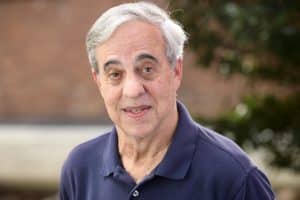
The recipient of the 2025 American Sociological Association’s Public Understanding of Sociology Award is Dr. Gregory Squires, recognized by both his nominators and the selection committee for his involvement in policy research and a career as a public sociologist that have advanced the public understanding of sociology, sociological research, and scholarship among the general public. Squires is a professor emeritus and research professor in the department of sociology at George Washington University and has published or co-published more than 17 books and more than 36 reports for various audiences. He’s been an expert witness in six different cases and has consulted for a variety of public sector entities such as fair housing organizations in 10 cities, the Office of the New York State Attorney General, and more. According to one of his letters of recommendation, he served for seven years as a research/writer for the U.S. Commission on Civil Rights and as an Intergovernmental Personnel Act consultant to the U.S. Department of Housing and Urban Development’s Office for Fair Housing and Equal Opportunity.
While this award is often recognition for a long career of public service and sociology, Squires already has a plethora of awards, including the 2011 Robert and Helen Lynd Awards for Lifetime Achievement from the Community and Urban Sociology Section of the American Sociological Association. And one letter writer went further to say, “In my opinion, he has done more than anyone else in the field (me included) to document the persistence of racial discrimination in mortgage lending and to elaborate the consequences of this discrimination for African Americans and other minorities.”
Squires’s research focuses on insurance redlining, reverse redlining, the Hurricane Katrina disaster, the subprime mortgage crisis, and the causes and consequences of racial segregation. His two most recent books reflect his appeal and reach to the general public. He co-authored Meltdown: The Financial Crisis, Consumer Protection, and the Road Forward (Bloomsbury Academic 2017), which includes an introduction by Elizabeth Warren, and edited The Fight for Fair Housing: Causes, Consequences, and Future Implications of the 1968 Federal Fair Housing Act (Routledge 2017), both of which were provided to attendees at events held at the National Museum of African American History and Culture. Not many people can boast about these scholarly and public facing accomplishments.
One nominator also noted that “for most of his major scholarly contributions, Dr. Squires has written spin-off versions that appear as op-eds or in public testimony” for outlets such as the New York Times, the Washington Post, the Chicago Tribune, and American Banker. And for many of you searching for an opportunity to be publicly engaged in this challenging time, I encourage you to read a chapter from the Oxford Handbook of Sociology and Social Justice (Oxford Academic 2024) that was submitted as evidence of his approach titled “Wins, Losses, and Lessons of Engaged Social Justice Research: How Academic Institutions Nurture and Undermine Collaborative Community-Based Scholarship.”
In addition to all his academic accomplishments, Squires was tapped to support local government—joining the mayor-elect of Philadelphia’s transition team in 2022, serving on the Subcommittee on Housing, Planning, and Development and you can read more about that in the Philadelphia Inquirer. One nominator also noted that, “Dr. Squires is continuously asked to provide testimony and expertise on these issues for various organizations including the U.S. Commission on Civil Rights, the National Association of Insurance Commissioners, the NAACP, the U.S. Department of Housing and Urban Development, the Board of Governors of the Federal Reserve System, and many more.” Congratulations to Gregory D. Squires, recipient of the 2025 ASA Public Understanding of Sociology Award.
W. E. B. Du Bois Career of Distinguished Scholarship Award
David A. Snow, University of California-Irvine

The selection committee for the 2025 American Sociological Association’s W.E.B. Du Bois Career or Distinguished Scholarship Award recognizes David A. Snow for his decades-long professional trajectory that includes a steadfast commitment to the discipline of sociology, theoretical and methodological innovations, and lasting contributions to a wide range of subfields. His scholarly output—including numerous monographs and edited collections and more than 100 peer-reviewed essays—is both prolific and influential. Notable for its volume but also for its enduring reach and impact, this body of work establishes Snow as one of the most distinguished sociologists of his generation. As one nominator notes, “his dedication to producing theory based on an interactional, dynamic, and compassionate understanding of the human experience has shaped the discipline as we know it today.”
Snow is widely recognized as a preeminent scholar in the field of social movements and protest. His widely cited work pioneered the framing approach in the study of social movements, introducing the importance of culture and meaning to analysis of protest and mobilization. These contributions fundamentally reshaped scholarly understandings of how actors construct, interpret, and promote collective action, while offering new lines of research and theoretical development in the field. His theoretical innovations not only redefined the field of social movements but have also reverberated across multiple subfields in which the framing approach has become central.
A vital contributor to the study of social inequality, Snow has brought critical attention to houselessness as a central axis of socioeconomic inequity in the United States. His co-authored book, Down on Their Luck: A Study of Homeless Street People (University of California Press 1993), remains an influential and multi-award-winning sociological study, bringing to light the resilience and determination of the unhoused. By emphasizing sociological factors in understanding the mobilization of the unhoused, his work has contributed to urban sociology as well as social psychology. Along with his scholarship in this area, Snow has been a deeply committed community activist, working directly with and on behalf of unhoused populations. Snow’s influence extends to methodological innovation, and his studies model the rigors and creativity of qualitative research. These contributions to ethnographic fieldwork and qualitative methods have shaped generations of researchers, making it difficult to engage in qualitative research without encountering his scholarship.
In addition to his intellectual contributions, Snow has provided vital leadership to the discipline. He has served in numerous roles, including as 2011 Vice President and Council Member (1996-1998) of the American Sociological Association; Chair of the ASA’s Section on Collective Behavior and Social Movements, president of both the Pacific Sociological Association and the Society for the Study of Symbolic Interaction, and as a member of editorial boards for 14 journals, including the American Sociological Review, Annual Review of Sociology, and Social Psychology Quarterly. He has received many honors, including the 2008 Lee Founders Award from the Society for the Study of Social Problems, the 2013 John D. McCarthy Award for Lifetime Achievement in the Scholarship of Social Movements and Collective Behavior from the University of Notre Dame’s Center for the Study of Social Movements, and the 2016 George Herbert Mead Award for Lifetime Achievement from the Society for the Study of Symbolic Interaction.
Beyond his own scholarship, Snow has mentored and inspired generations of sociologists. He has fostered award-winning work across the study of social movements, inequality, and qualitative methods. Colleagues and former students consistently describe him as approachable, generous, and deeply supportive—always seeking to collaborate and create opportunities for others. As both a leading thinker and an exemplary mentor, Snow’s contributions have helped shape the direction of U.S. sociology, leaving a legacy that will guide the discipline for years to come. Congratulations to David A. Snow, recipient of the 2025 ASA W.E.B. Du Bois Career or Distinguished Scholarship Award.